What Does the Purple Awareness Ribbon Pin Represent?
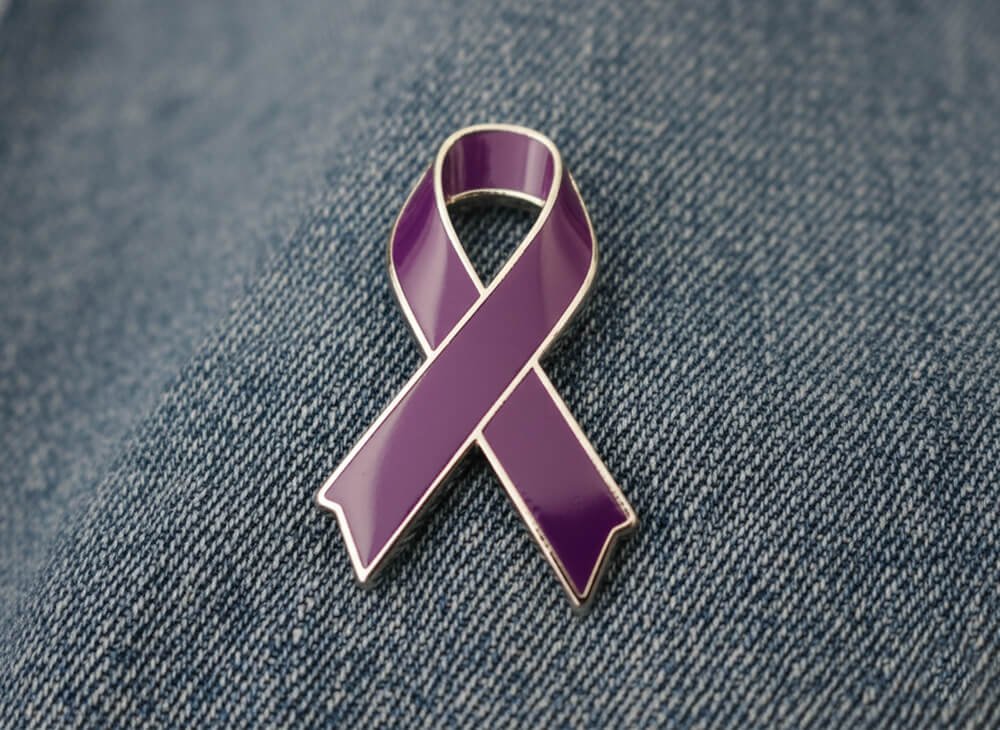
At first glance, a ribbon is just a loop of fabric or metal. But peel back the layers, and you find a rich tapestry of meaning. The purple awareness ribbon pin is a universal symbol that transcends borders and languages. It is primarily a conversation starter, a way to say “I care” or “I remember” without speaking.
The Core Symbolism
Why do we wear these pins? The reasons are as varied as the people who don them, but they generally fall into three emotional pillars:
- Courage and Survival: Many of the conditions associated with the purple ribbon—such as pancreatic cancer or domestic violence—are formidable adversaries. Wearing the pin signifies the bravery required to wake up every day and fight these battles. It honors the survival instinct in the face of overwhelming odds.
- Hope and Solidarity: For patients and victims, the journey can feel incredibly isolating. Seeing others wear a purple pin acts as a beacon of solidarity. It tells them they are not alone, that there is a community standing behind them, rooting for their recovery and well-being.
- Honor and Dignity: The pin is often worn to honor the memory of those who have been lost. It is a mark of respect, ensuring that their stories and struggles are not forgotten by society.
The Psychology of the Color Purple
The choice of purple is far from accidental. Color psychology plays a massive role in why this specific hue was chosen for such complex causes. Historically, purple dye was incredibly expensive to produce, made from rare sea snails. This scarcity meant it was reserved for royalty and the nobility. Today, that association translates into dignity. We use purple to show that patients, regardless of their physical state, deserve to be treated with the utmost respect and nobility.
Furthermore, purple is a unique balance on the color spectrum. It combines the fiery, energetic intensity of red with the calm, stable stability of blue. This harmony represents the balance needed to navigate chronic illness or trauma—the energy to fight combined with the calm resilience to endure. In many cultures, purple is also linked to wisdom, spirituality, and enlightenment, making it a fitting choice for neurological conditions like Alzheimer’s and epilepsy, where the mysteries of the brain are central to the cause. It represents the complexity of these conditions and the wisdom gained through the difficult journey of navigating them.
Comprehensive List of Causes Supported by Purple Ribbon Pins

Unlike the pink ribbon which is almost exclusively tied to breast cancer, the purple ribbon is a “generalist” in the best possible way. It lends its support to a vast array of medical and social issues. Here is a detailed breakdown of the causes that rally behind the purple banner.
1. Cancer Awareness
The purple ribbon is a critical symbol in the oncology community, representing several aggressive and often overlooked types of cancer.
- Pancreatic Cancer: Perhaps the most urgent association with the purple ribbon. Pancreatic cancer is often called the “silent killer” because symptoms like jaundice and weight loss rarely appear until the later stages. It is the fourth leading cause of cancer-related death in the United States, with a survival rate that remains heartbreakingly low. Campaigns like “Wage Hope” and “Purple for a Purpose” rely on this pin to drive funding for early detection research.
- Testicular Cancer: Recognized primarily in April, the purple (sometimes violet) ribbon helps break the stigma surrounding men’s health, encouraging young men to perform self-exams for early detection.
- Leiomyosarcoma: This is a rare form of soft-tissue cancer. The purple ribbon helps shine a light on these “orphan diseases” that often receive less funding than major cancers.
- Thyroid Cancer: While sometimes represented by a teal/pink/blue tricolor, the purple ribbon is also used to encourage neck checks to detect lumps early.
- Hodgkin’s Lymphoma: This cancer of the lymphatic system uses the purple (often violet) ribbon to support patients undergoing chemotherapy and radiation.
2. Neurological and Brain Conditions
Because purple symbolizes the mind and wisdom, it is the standard bearer for many conditions affecting the brain.
- Alzheimer’s Disease: The “Long Goodbye.” Purple ribbons here symbolize the fading memories of patients and the immense burden placed on caregivers. The Alzheimer’s Association adopted purple to signify the fight for the first survivor of the disease.
- Epilepsy: March 26th is “Purple Day,” a global grassroots event dedicated to increasing awareness about epilepsy. The ribbon aims to dispel myths about seizures and reduce the social stigma that patients face.
- Migraines and Headaches: Often dismissed as “just a headache,” chronic migraines can be debilitating. The purple ribbon validates the pain and quality-of-life impact these conditions have.
- Chiari Malformation: This structural defect in the cerebellum (the part of the brain that controls balance) is represented by purple to educate the public on this often invisible disability.
- ADD/ADHD: The purple ribbon supports neurodiversity, advocating for better educational environments for children and adults with attention deficit disorders.
3. Autoimmune and Chronic Illnesses
For diseases where the body attacks itself, or where pain is chronic and invisible, the purple pin serves as a badge of validation.
- Lupus: Celebrated in May, Lupus awareness uses the purple ribbon to highlight the mystery of this disease, which can damage any part of the body (skin, joints, organs).
- Crohn’s Disease and Colitis: These Inflammatory Bowel Diseases (IBD) affect millions. The purple ribbon helps bring these “bathroom diseases” out of the shadows and into public discourse.
- Cystic Fibrosis: A genetic disorder that affects the lungs and digestive system. The purple ribbon represents the resilience of those fighting for every breath.
- Fibromyalgia & Neuropathy: For conditions characterized by widespread musculoskeletal pain, the ribbon is a symbol that the pain is real, even if it cannot be seen on an X-ray.
4. Social and Humanitarian Causes
Beyond health, the purple ribbon is a staunch defender of human rights and safety.
- Domestic Violence Awareness: Adopted in the late 1980s, the purple ribbon is the primary symbol for the battered women’s movement. It represents the bruises inflicted on victims, but more importantly, the honor of survivors. Campaigns like “No Excuse for Abuse” use the pin to break the silence surrounding family violence.
- Animal Abuse Prevention: Just as it protects vulnerable people, the purple ribbon symbolizes a commitment to the humane treatment of animals and the fight against cruelty.
- Elder Abuse: This cause focuses on protecting older adults from neglect, physical harm, and financial exploitation.
- Opioid Crisis: In recent years, purple has been used to raise awareness about addiction recovery and the overdose epidemic, signaling that recovery is possible.
- Spirit Day (Anti-Bullying): Specifically within the LGBTQ+ community, wearing purple (or a purple pin) in October sends a message of support to youth who face bullying and harassment.
The Awareness Calendar: When to Wear Your Purple Pin
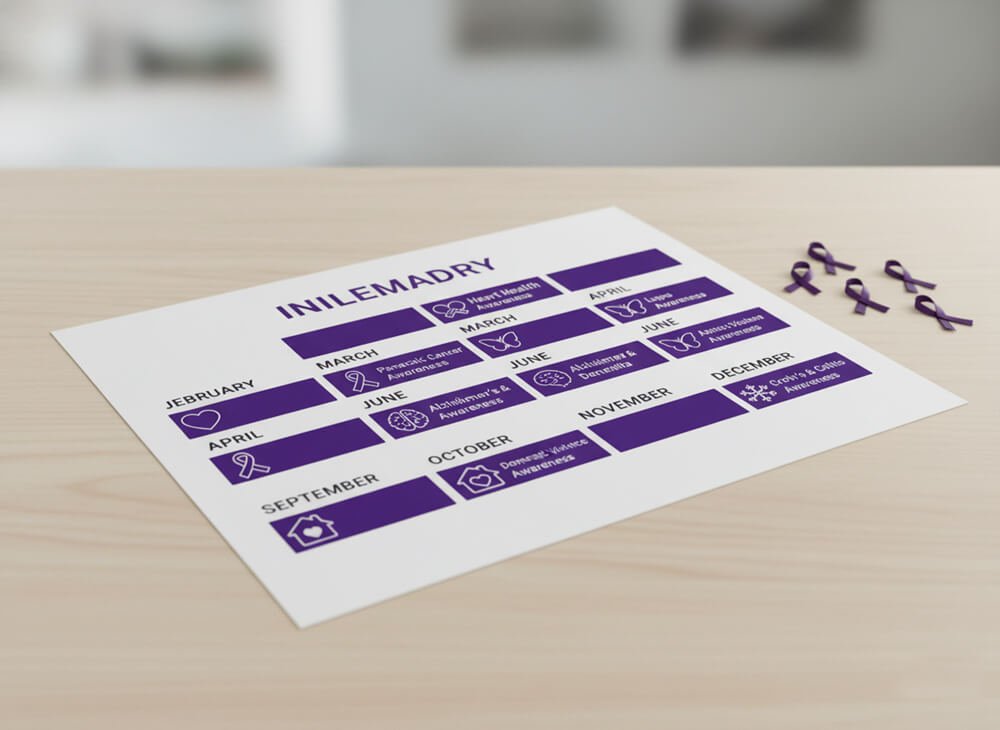
While you can certainly wear your awareness pin year-round, specific months are designated to amplify the voices of these causes. Wearing your pin during these times helps contribute to a global wave of support.
| Month | Primary Purple Ribbon Causes |
|---|---|
| January | Cervical Cancer Awareness |
| February | Eating Disorders Awareness |
| March | Epilepsy Awareness (Purple Day is March 26); Kidney Cancer; Multiple Myeloma |
| April | Testicular Cancer; Animal Abuse Prevention; Month of the Military Child |
| May | Lupus Awareness; Cystic Fibrosis; Brain Cancer (Often Gray, but Purple is used) |
| June | Alzheimer’s and Brain Awareness; Migraine/Headache Awareness; Elder Abuse Awareness (June 15) |
| July | Sarcoidosis Awareness |
| August | Overdose Awareness; Spinal Muscular Atrophy |
| September | World Alzheimer’s Month; Gynecologic Cancer; Suicide Prevention (Purple/Teal mix) |
| October | Domestic Violence Awareness (Major Campaign); Liver Cancer (Emerald/Purple) |
| November | Pancreatic Cancer Awareness; National Epilepsy Month; Prematurity Awareness |
| December | Crohn’s and Colitis Awareness |
The History and Evolution of the Awareness Ribbon
The concept of wearing a ribbon to signal support isn’t a modern invention. Its roots go back to the 19th century, where yellow ribbons were worn by families of soldiers to signify hope for their safe return. This tradition was immortalized in marching songs and folklore. However, the modern iteration of the awareness ribbon—the loop of colored fabric pinned to a chest—really took shape in the 1970s. This was sparked by Penne Laingen, who tied yellow ribbons around trees to support her husband, a hostage in Iran.
The 1990s saw an explosion of visual advocacy. The red ribbon became the iconic symbol for the HIV/AIDS crisis in 1991, creating a visual language for activism. Shortly after, the pink ribbon was adopted for breast cancer. The purple ribbon emerged during this era of colorful advocacy.
One poignant story regarding the purple ribbon’s connection to pancreatic cancer involves Rose Schneider. After her diagnosis, her daughter took a glamour photo of her wearing purple to remind her of her beauty despite the illness. Following Rose’s passing, this personal family symbol grew into a national movement, eventually being adopted by the Pancreatic Cancer Action Network. Similarly, the battered women’s movement adopted purple to reclaim the color of bruises as a badge of courage and survival, transforming a sign of pain into a symbol of power.
Manufacturing: Types of Purple Enamel Pins
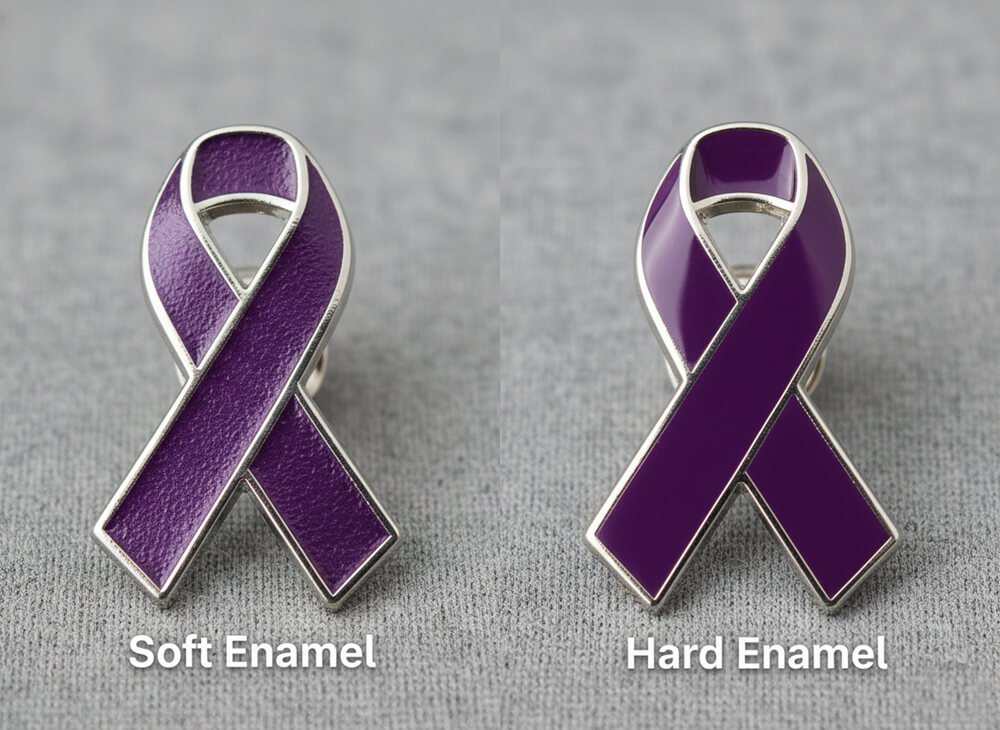
When you decide to buy or design a purple ribbon pin, you will quickly encounter industry terms regarding how they are made. Understanding the difference between soft and hard enamel is crucial for getting the look and durability you want.
1. Soft Enamel Pins
This is the most common and cost-effective style. In soft enamel pins, the metal lines are raised, and the purple enamel paint fills the recessed areas. This creates a textured, dimensional surface that you can feel when you run your thumb over it.
Best For: Fundraising events, large-scale distribution, and designs where you want a “3D” feel. The light catches the ridges, making the design pop.
2. Hard Enamel Pins (Cloisonné)
If you are looking for jewelry quality, this is the choice. During manufacturing, the enamel is filled slightly higher than the metal lines and then baked at a high temperature. Afterward, the pin is ground down and polished until the metal and the paint are flush and level. The result is a smooth, glass-like finish.
Best For: Corporate gifts, years-of-service awards, and pins meant for long-term daily wear on lapels or bags. They are highly scratch-resistant.
3. Other Manufacturing Styles
- Die Struck: These pins use no color at all. They are made of metal (like antique gold or silver) that is stamped with the ribbon design. They offer a classic, understated look.
- Offset Printed: If your design includes a gradient (fading from light to dark purple) or a photograph (like an image of a loved one on the ribbon), this method prints the image directly onto the metal and covers it with a clear epoxy dome.
- 3D Cast: These are sculptural pins. Instead of a flat drawing, the pin looks like a miniature statue of a ribbon, perhaps wrapped around a heart or a dove.
Customization: Designing Your Own Purple Ribbon Pin
While a plain purple ribbon is powerful, customizing it adds a layer of personal narrative. Whether you are ordering for a charity walk or a memorial service, you can tailor the design to tell your specific story.
Adding Symbolic Elements: You don’t have to stick to just the ribbon.
Butterflies: Often added for Lupus (symbolizing the “butterfly rash” and transformation) or general hope.
Brain Icons: Perfect for Alzheimer’s or Mental Health advocacy.
Puzzle Pieces: Frequently used to represent the complexity or mystery of conditions like Autism (though check community preferences) or unknown medical ailments.
Angel Wings: A touching addition when the pin is a memorial for a lost loved one.
Text and Typography:
Adding text makes the message explicit. You might include dates of birth and passing, the name of a survivor, or powerful slogans like “Hope,” “Survivor,” “Break the Silence,” or “Warrior.”
Backing Attachments:
How the pin attaches matters.
Butterfly Clutch: The standard pinch clasp. Good for everyday use.
Magnetic Back: Essential if you are wearing the pin on expensive fabrics like silk blouses or suit lapels, as it prevents poking holes in the material.
Safety Pin: Better for heavy coats or activewear where a clutch might pop off.
Decoding Multi-Color Ribbon Meanings
Sometimes, life isn’t monochrome. You may see purple paired with other colors on a single pin. These combinations represent specific intersectional causes or conditions.
- Purple + Teal: This combination is the symbol for Suicide Prevention awareness. It represents the hope of recovery (teal) and the mourning of loss (purple). It is also used for sexual assault awareness in certain contexts.
- Purple + Blue: Often used for Pediatric Stroke awareness or Rheumatoid Arthritis.
- Purple + Green: Represents Hospice and Palliative Care, symbolizing comfort and dignity at the end of life.
- Purple + Black: A somber symbol used for mourning victims of violence or homicide.
- Purple + Gold: A powerful combination representing Epilepsy (Purple) alongside Childhood Cancer (Gold).
- Purple + Silver: Used for Parkinson’s Disease and International Overdose Awareness.
- Rainbow + Purple: Used specifically for LGBTQ+ Spirit Day to stand against bullying.
How to Use Purple Pins for Advocacy and Support
Owning the pin is step one. Using it to drive change is step two. Here is how you can utilize these metal emblems for maximum impact.
Individual Action:
Wear your pin on your lapel, collar, or lanyard at work. It acts as a “silent handshake.” When you encounter another survivor or family member, they will recognize the symbol immediately, creating an instant bond of trust. It also invites questions from those who don’t know, giving you an opening to educate them.
Community Events:
Fundraising: Pins are excellent low-cost, high-reward items to sell. Organizations like PanCAN or the Alzheimer’s Association often sell pins to fund vital research.
Memorials: Distributing custom pins at a funeral is a touching way to honor a loved one’s battle. It gives attendees a physical token of remembrance to take home.
Walks/Runs: Use pins as “medals” for participation or as incentives for reaching fundraising goals.
Institutional Use:
Schools can distribute purple pins on Spirit Day to foster an anti-bullying culture. Hospitals and hospices often have staff wear them to show solidarity with patients and families, signaling that the medical team is emotionally invested in the care.
Buying Guide: Bulk vs. Individual
Buying Individually:
If you are looking for a single pin for yourself or a gift, focus on quality. Look for Hard Enamel (Cloisonné) pins. They look like jewelry and will last for years without fading or scratching.
Buying in Bulk (100+):
If you are organizing a walk or a fundraiser, buying in bulk is the only way to go.
Cost Efficiency: The price per unit drops drastically when you order 100 or more. A pin that costs $10 individually might drop to less than $1 in bulk.
Consistency: Ordering a batch ensures everyone is wearing the exact same shade of purple, creating a unified visual front.
Sourcing: For custom designs, specialized pin manufacturers are best. For standard ribbons, online marketplaces can offer good deals, but be wary of quality. Don’t believe the myth that “cheap means bad quality”—many affordable pins are made on durable zinc alloy bases that hold up incredibly well.
Frequently Asked Questions (FAQ)
1. What does wearing a purple ribbon at a funeral mean?
Wearing a purple ribbon at a funeral typically signifies that the deceased passed away from a condition associated with the color, such as pancreatic cancer, cystic fibrosis, or complications from Alzheimer’s. It can also signify a death related to domestic violence or overdose. It is a gesture of honoring their specific battle.
2. Is there a difference between the purple and violet ribbon?
In the context of awareness ribbons, the terms are often used interchangeably. However, specifically for Hodgkin’s Lymphoma, the ribbon is sometimes described as “violet.” For most general purposes (Alzheimer’s, Lupus, etc.), “purple” is the standard term used.
3. Can I create my own awareness campaign using a purple ribbon?
Yes. Awareness ribbons are public domain symbols. If you are advocating for a rare disease or a local cause that aligns with the symbolism of purple (dignity, hope, survival), you can adopt the ribbon. Adding text or a unique icon to the pin can help distinguish your specific campaign.
4. Does the purple ribbon represent addiction recovery?
Yes, specifically regarding the Opioid crisis and general overdose awareness. While teal is sometimes used for addiction recovery generally, purple has been widely adopted by the recovery movement to signify the spiritual and dignified journey of overcoming addiction.
5. Where should I place my purple ribbon pin on my clothes?
The standard placement for any awareness pin is on the left lapel or the left side of the chest, over the heart. This placement symbolizes that the cause is dear to you. However, they can also be worn on collars, hats, or lanyards for visibility.
Conclusion
The purple enamel awareness ribbon pin is small in physical size, but its impact is massive. It is a symbol that carries the weight of memory, the brightness of hope, and the strength of survival. Whether you wear it to honor a parent fading away into the fog of Alzheimer’s, a friend fighting the daily pain of Lupus, or a personal victory over cancer or abuse, you are not just wearing a piece of metal. You are wearing a story.
You are joining a global community of warriors and advocates who refuse to stay silent about the issues that matter. By understanding the history and the diverse causes this ribbon represents, you give deeper meaning to the symbol.