Aveți un design frumos și complex - o fotografie a unui animal de companie iubit, o pictură detaliată cu degrade subtile sau o opera de artă complicată cu zeci de culori. Îl trimiți unui producător de ace, doar pentru a ți se spune că nu poate fi făcut ca un ac de email tradițional. Acesta este un punct mort comun și frustrant pentru mulți creatori. Dar dacă nu este deloc o fundătură? Ce se întâmplă dacă există o tehnologie diferită concepută special pentru această provocare?
Bine ați venit în lumea acelor imprimate. Acesta este ghidul tău definitiv pentru înțelegerea acestui stil de pin puternic și versatil. Vom explora exact ce sunt ace imprimate, tipurile specifice de modele „imposibile” pe care le aduc la viață, cum sunt realizate și cum se compară cu emailul tradițional. Până la sfârșitul acestui ghid, veți putea determina cu încredere dacă un ac tipărit este soluția perfectă pentru proiectul dvs. și veți evita capcanele comune pe care le discutăm în ghid pentru a comanda ace de peste mări.
Cuprins
Ce este un PIN imprimat în cei mai simpli termeni?
O pin imprimat este un ac personalizat în care designul nu este umplut cu vopsea email. În schimb, opera de artă este imprimată direct pe o bază metalică folosind tehnologia de imprimare de înaltă rezoluție. Imaginea imprimată este apoi aproape întotdeauna sigilată sub un dom epoxidic transparent. Acest lucru are ca rezultat un produs final neted, lucios și foarte detaliat, care poate reproduce cu fidelitate orice imagine digitală.
Tabel de concept de bază: Ace imprimate vs email
Diferențele cheie dintr-o privire
| Caracteristică | Pin imprimat | Pin tradițional emailat (dur & Moale) |
|---|---|---|
| Stilul de culoare | Nelimitat, fotografic, degrade (CMYK). | Culori solide, plate (Pantone/PMS). |
| Nivel de detaliu | Extrem de înalt. Poate reproduce perfect fotografiile și textul fin. | Limitat de grosimea liniilor de matriță metalice. |
| Textură | Netezi & Lucios (datorită cupolei epoxidice de protecție). | Variază: texturat (smalț moale) sau perfect plat (smalț dur). |
| Caracteristica cheie | Replicare perfectă, pixel pentru pixel, a imaginilor digitale complexe. | Blocuri îndrăznețe și vibrante de culoare separate fizic de metal. |
| Când să utilizați | Fotografii, degrade, lucrări de artă cu peste 20 de culori. | Logo-uri, ilustrații grafice și modele care se bazează pe culori solide. |
Lista de verificare definitivă: de 5 ori un pin imprimat este cea mai bună (sau singura) opțiune
Acesta este miezul deciziei tale. Știfturile tradiționale de email sunt fantastice, dar au limitări fizice. Dacă designul dvs. se încadrează în oricare dintre următoarele cinci categorii, un ac imprimat nu este doar o alternativă; este soluția superioară.
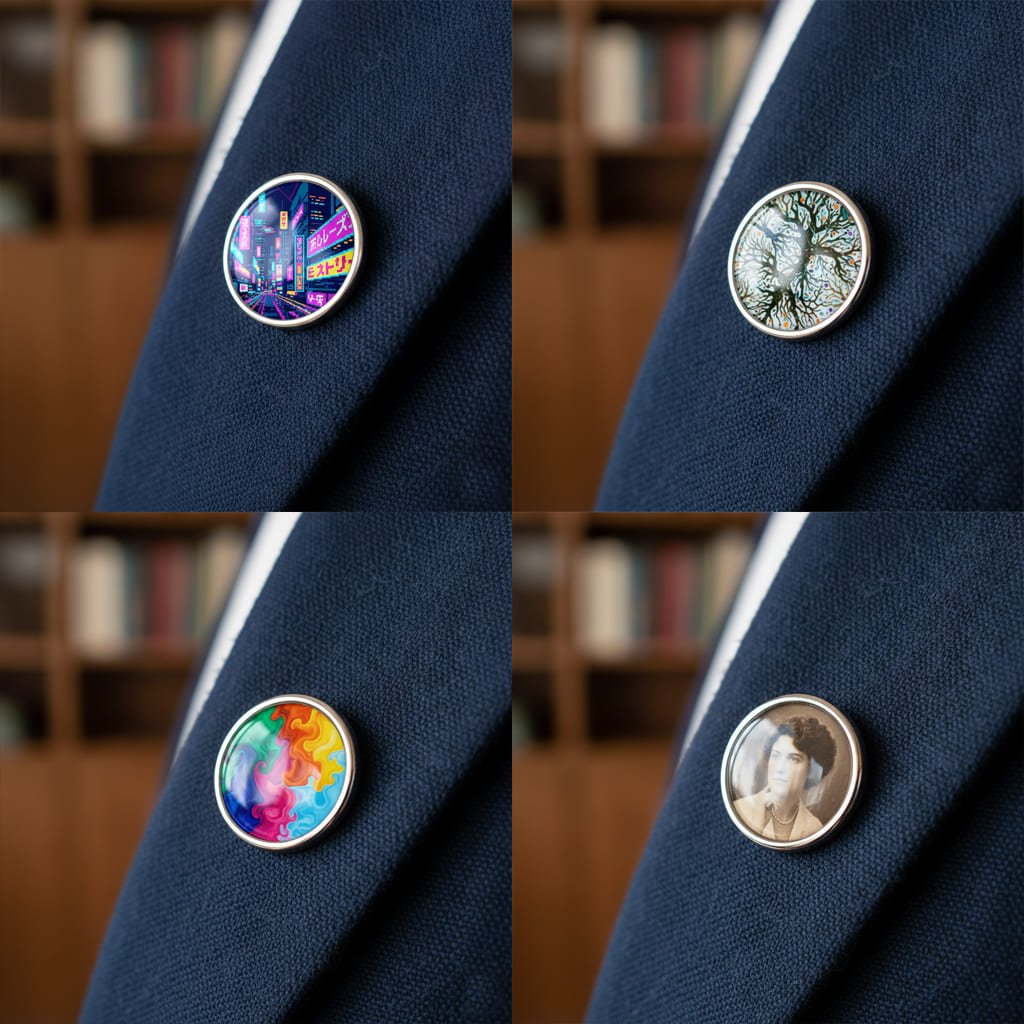
Scenariul 1: Designul dvs. este o fotografie
This is the most common reason to choose a printed pin. A photograph is composed of millions of tiny pixels, each with a slightly different color, creating subtle shifts in tone and light. The enamel process, which requires solid blocks of color separated by metal lines, simply cannot replicate this.
The printed pin solution uses high-resolution digital printers that can perfectly reproduce those millions of pixels onto the metal surface, creating a crisp, clear, and faithful reproduction of your original photo. For a complete look at all pin styles, visit our Ghid definitiv pentru ace personalizate.
- Common Use Cases: Ace comemorative cu portretul unei persoane, ace de campanie politică, ace pentru prezentarea unui animal de companie iubit, ace imobiliare cu imaginea unei case sau ace promoționale cu un produs nou.
Scenariul 2: Designul dvs. conține degrade de culoare și umbrire
Într-un ac de email tradițional, „liniile de matriță” metalice acționează ca pereți fizici. Acest lucru face imposibilă amestecarea fără probleme a unei culori în alta. Dacă logo-ul sau opera dvs. de artă prezintă degrade - cum ar fi un apus de soare care se estompează de la portocaliu la violet sau umbrirea 3D realistă pe un obiect - emailul nu este o opțiune.
The CMYK printing process, however, is specifically designed to create these effects. Just like a high-quality magazine print, it uses tiny dots of color to create the illusion of a smooth, seamless transition from one shade to another. This is something that even the most premium ac de email dur cannot do.
Scenario 3: Your Design Has Extremely Fine, Non-Enclosed Details
This is a more technical, expert-level point. As we’ve established, enamel colors must be in a “pool” completely surrounded by a metal wall. But what if you have a tiny detail, like a sprinkle on a donut, that you want to be a different color but don’t want a metal line around it? Or what if you have very small, delicate text that would be filled in by a metal outline?
Since the design on a printed pin is printed directly onto the surface, no metal walls are needed between colors. This allows for tiny, free-floating details and text to be rendered perfectly, without the need for a containing metal line. This is a critical point we cover in our 10 sfaturi critice de design pentru ace.
Scenario 4: Your Design Has a Massive Number of Colors (20+)
While enamel pins can be made with many colors, each color is typically filled by hand and often requires a separate baking cycle. A design with 20, 30, or 50+ distinct colors becomes incredibly labor-intensive and expensive to produce as an enamel pin. The cost would be prohibitive.
A CMYK printer, on the other hand, can produce a million colors just as easily as it can produce four. With printed pins, the number of colors in your design has virtually no impact on the cost. This makes it the most economical choice for reproducing intricate illustrations, stained-glass window designs, or complex flags and seals.
Scenario 5: You Need a Perfect, Pixel-for-Pixel Replication of Digital Art
The process of turning digital art into a metal mold and solid enamel colors always involves some degree of simplification and interpretation. The final enamel pin is a beautiful representation of the art, but it is not a 1:1, pixel-perfect copy.
If your goal is an exact, faithful reproduction of your original digital artwork—including every subtle texture, digital brush stroke, and color variation—offset printing is the only way to achieve it. It respects the integrity of the original art without compromise.
Inside the Factory: The Technology Behind Printed Pins
Understanding the manufacturing process helps you appreciate the capabilities of this versatile pin style. There are two main methods for printing pins, each with its own strengths.
Offset Printing vs. UV Printing: What’s the Difference?
- Offset Printing (The Traditional Method): This is the same technology used to print high-quality magazines and brochures. It uses tiny dots of Cyan, Magenta, Yellow, and Black (CMYK) ink transferred from plates to the metal surface to create a full-color image. It is the best method for achieving photographic realism and smooth gradients.
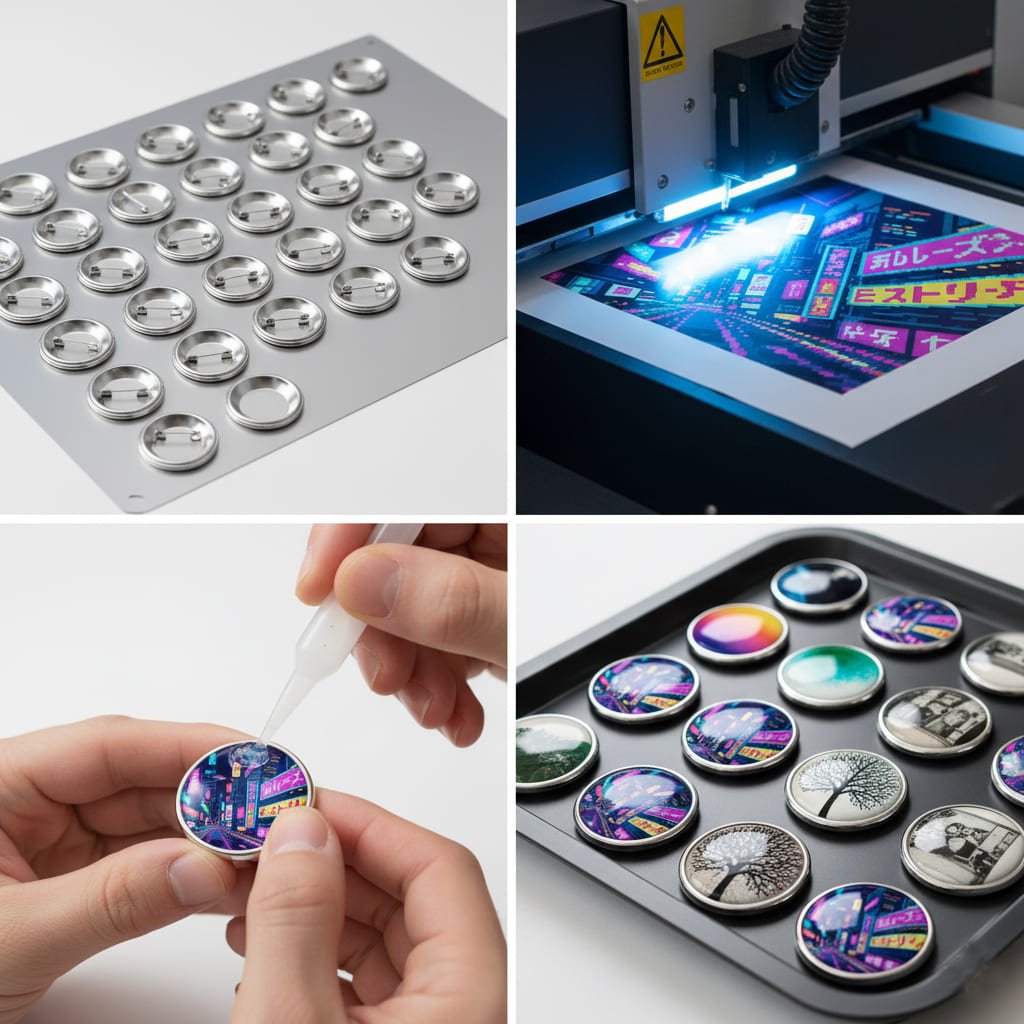
- UV Printing (The Modern Method): This process uses a sophisticated inkjet method to apply ink directly to the metal surface. Immediately after the ink is applied, a high-intensity ultraviolet (UV) light passes over it, instantly curing and hardening the ink. This results in incredibly crisp, sharp, and vibrant designs.
The Step-by-Step UV Printing Process
- Creating the Blank: First, a sheet of metal (stainless steel or brass) is stamped and cut into the custom shape of your pin.
- Priming (Optional): To make the colors even more vibrant, a white primer coat may be sprayed onto the metal surface first.
- Imprimare: Your high-resolution digital file is sent to the UV printer, which applies the ink directly onto the metal blank with incredible precision.
- UV Curing: The UV light instantly cures the ink, making it hard and durable.
- The Epoxy Dome: This is a crucial step. A crystal-clear, protective layer of epoxy resin is applied over the entire printed surface.
- Final Curing & Assembly: The epoxy is cured, the suport de știft is attached, and the pin goes through final quality control.
A Designer’s Guide to Printed Pins
The rules for designing a great printed pin are different from those for an enamel pin. By preparing your artwork correctly, you can ensure a stunning final product.
Resolution is King: The Importance of 300 DPI
Unlike enamel pins, which require a fișier vectorial, printed pins need a high-resolution raster file (like a JPG or PNG). The most important specification is the resolution, measured in DPI (Dots Per Inch). For a sharp, crisp print, your file must be at least 300 DPI at the final print size. A low-resolution file (like an image saved from a website) will result in a blurry, pixelated pin.
The Correct Color Mode: Designing in CMYK
For the most accurate color results, your artwork file should be set up in CMYK color mode. This most closely represents how the colors will look when they are physically printed with ink. If you provide an RGB file, the colors may shift slightly during the automatic conversion to CMYK for printing.
Printed Pins vs. Other Styles: The Strategic Comparison
How do printed pins stack up against the competition? This table will help you make a final, strategic decision based on the specific needs of your project.
Tabelul de comparație principal
Die-Struck vs. email vs. ace imprimate
| Caracteristică | Pin lovit cu matriță | Pin de email moale | Pin de email dur | Pin imprimat |
|---|---|---|---|---|
| Utilizarea culorii | Niciuna (100% metal) | Da, culori solide vibrante | Da, culori solide premium | Da, culoare fotografică completă |
| Estetică primară | Clasic, elegant, formal | Texturat, Vibrant, Jucăuș | Neted, lustruit, asemănător cu bijuteriile | Fotografic, Detaliat |
| Caracteristica cheie | Textura metalică & Relief | Linii de metal înălțate | Suprafață netedă, plană | Gradiente pline de culoare |
| Durabilitate | Extrem de înalt | Bun | Extrem de înalt | Bun (cu epoxi) |
| Cost relativ | $-$$ (Eficient din punct de vedere al costurilor) | $ (Cel mai accesibil) | $$$ (Premium) | $$ (gama mijlocie) |
| Cel mai bun pentru detalii | Bun pentru detaliile texturale. | Excelent pentru detaliile liniilor fine. | Bine, dar lustruirea poate înmuia liniile. | Cel mai bun pentru detaliile fotografice. |
Practicalities, Cost, and Expert-Level Hybrids
Let’s cover the final details you need to know before placing an order.
The Cost Structure of Printed Pins
The pricing for printed pins is still primarily based on mărime și cantitate. However, there is one major advantage: unlike enamel pins, the number of colors in your design has no impact on the price. A pin with 100 colors costs the same as a pin with 4. This makes it incredibly cost-effective for complex art. Be aware that some manufacturers may charge a one-time setup fee for the printing process. For a full pricing overview, please see our Detaliere completă a prețurilor personalizate pentru PIN.
The “Best of Both Worlds”: The Hybrid Pin (Enamel + Printing)
For a truly premium and unique product, it’s possible to combine technologies. We can create a high-quality hard enamel pin and then use UV printing to add very fine, detailed text or logos on top of the smooth enamel surface. This combines the weight and perceived value of hard enamel with the fine detail of printing, creating a stunning final product.
Conclusion: Your Solution for Limitless Creativity
Printed pins are not a “lesser” or “cheaper” alternative to enamel pins. They are a powerful, specialized tool in the custom merchandise world, specifically designed to bring your most complex, detailed, and photographic visions to life with perfect accuracy. The final step to a professional product is presentation, a topic we cover in our Ghidul cumpărătorului pentru ambalarea personalizată cu pin.
By understanding when to choose this versatile style, you are no longer limited by the constraints of traditional manufacturing. You can confidently create a pin that is a true, faithful reproduction of your art, a capability that empowers brands, artists, and organizations alike.
Have a Complex Design? Let’s Make It Happen.
If you’ve been told your design is “too complex” for a pin, we have the solution. Send us your artwork—whether it’s a photograph, a detailed illustration, or a logo with gradients—and our team will provide a free digital proof showing you exactly how it will look as a stunning, high-resolution printed pin.