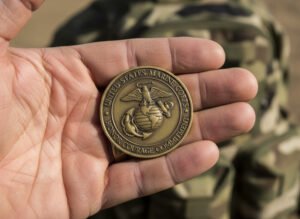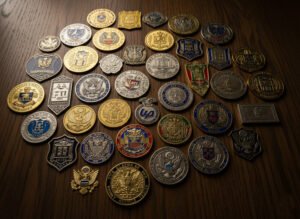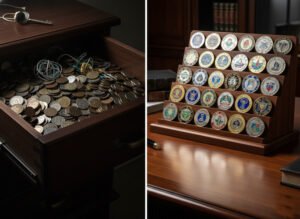
Capitolul 1: Înțelegerea scopului și a audienței

Care este scopul unei monede de provocare?
Înainte de a alege culori sau metale, trebuie să definiți “De ce.” O monedă de provocare este un instrument, iar designul său ar trebui să reflecte funcția sa. În general, aceste monede servesc unuia dintre cele cinci scopuri principale:
- Recunoaştere: Aceasta este poate cea mai comună utilizare. Un comandant sau un CEO înmânează o monedă unui subordonat să spună “Lucru bine făcut.” Este un premiu instantaneu, tangibil, care are mai multă greutate decât un certificat de hârtie.
- Calitatea de membru & Identitate: Monedele sunt adesea folosite pentru a dovedi că aparțineți unui anumit grup, echipă sau club. Purtarea monedei este un semn de mândrie și exclusivitate.
- Camaraderie & Morala: În cercurile militare și de prim răspuns, “Cec de monede” este o tradiție legendară. Dacă ești la un bar și cineva își trântește moneda pe masă, trebuie să o produci pe a ta. Dacă nu poți, vei cumpăra următoarea rundă de băuturi. Acest lucru construiește o legătură distractivă și competitivă între membri.
- Comemorare: Monedele sunt perfecte pentru a îngheța un moment în timp. Ele sunt adesea batute pentru evenimente specifice, cum ar fi nunți, reuniuni, memoriale sau aniversari semnificative (cum ar fi cel de-al 100-lea an al unei companii).
- Marketing: Gândiți-vă la “Monedă de carte de vizită.” Spre deosebire de un card de hârtie care este aruncat la coșul de gunoi, o monedă de metal grea cu logo-ul și informațiile de contact este păstrată pe birou ani de zile. Este un instrument de marketing de mare impact.
Cine este publicul țintă?
Alegerile dvs. de design trebuie să se alinieze cu persoana care primește moneda. Dacă proiectați pentru a unitate militară sau un departament de poliție, sunt adesea preferate stilurile tradiționale cu finisaje antice, margini de frânghii și simboluri heraldice. Ele transmit istorie și seriozitate.
Pe de altă parte, dacă publicul tău este un startup de tehnologie modernă sau un clan de jocuri, s-ar putea să-ți dorești un finisaj elegant și strălucitor de nichel negru, cu email strălucitor, care strălucește în întuneric. Înțelegerea destinatarului asigură că moneda rezonează cu el din punct de vedere emoțional.
Capitolul 2: Elementele de proiectare de bază (Blocuri de construcție)
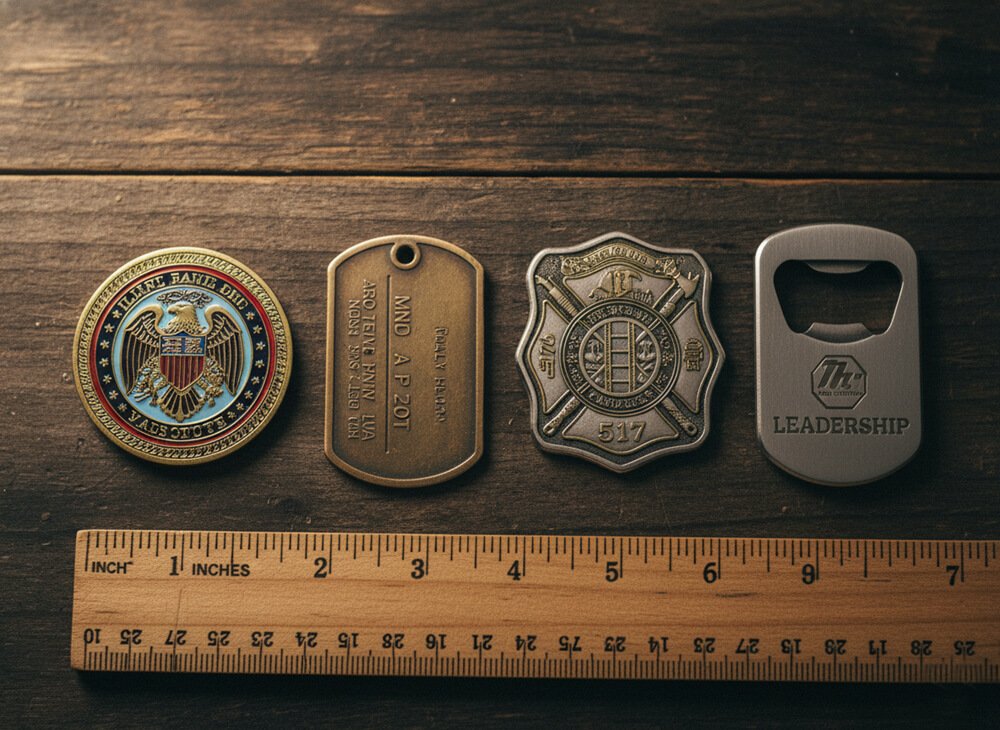
Cum să alegi dimensiunea potrivită pentru o monedă de provocare?
Mărimea contează. Dictează cât de multe detalii puteți include și cum se simte moneda în buzunar.
- Dimensiune standard (1,75″ – 2″): Acesta este punctul ideal al industriei. O monedă de 1,75 inci sau 2 inci are aproximativ dimensiunea unei mingi de golf. Este suficient de mare pentru a afișa logo-uri și text detaliate, dar suficient de mic pentru a încăpea confortabil într-un buzunar sau portofel.
- Monede mici (1.5″): Acestea sunt mai compacte și mai ușoare. Cu toate acestea, aveți grijă la lizibilitate. Dacă aveți o siglă complexă sau mult text, o pânză de 1,5 inchi ar putea fi prea aglomerată.
- Monede supradimensionate (2.5″ – 9″): Da, poți merge mare. Am văzut monede mari de 9 inci cântărind peste trei lire! Monedele care sunt de 2,5 inci sau mai mari sunt de obicei folosite ca “Monedele comandantului” sau piese de afișare pentru birouri, mai degrabă decât pentru a le transporta în buzunar.
Care sunt cele mai bune forme pentru monede personalizate?
În timp ce cercul este clasic, nu ești limitat la el. Fabricația modernă permite o creativitate incredibilă în formă.
- Runda tradițională: Alegerea atemporală. Este ușor de proiectat și se potrivește tuturor vitrinelor standard.
- Forme geometrice: Pătratele, ovalele, octagooanele și triunghiurile sunt alternative populare care oferă încă o suprafață bună pentru design.
- Decupare personalizată la formă: Vrei o monedă în formă de avion de luptă, de stat, de cap de mascotă sau de logo-ul unei companii? Putem crea matrițe personalizate care să taie metalul după conturul exact al designului dumneavoastră.
- Forme funcționale: De ce să nu faci moneda utilă? Putem integra cârlige pentru deschizătoare de sticle, vârfuri de șurubelniță sau funcții cu instrumente multiple direct în forma monedei.
Cât de gros ar trebui să fie o monedă de provocare?
Grosimea monedei contribuie semnificativ la aceasta “valoare percepută.” O monedă subțire pare ieftină, ca un jeton dintr-o arcade. O monedă groasă se simte ca o comoară.
- Standard (3 mm): Aceasta este valoarea implicită pentru majoritatea monedelor. Oferă o senzație solidă, de calitate.
- Premium (3,5 mm – 5 mm): Creșterea grosimii la 4 mm sau chiar 5 mm adaugă o greutate substanțială. Monedele mai grele sunt asociate psihologic cu o valoare și un prestigiu mai ridicat. Dacă bugetul dvs. permite, adăugarea de grosime este una dintre cele mai ușoare modalități de a îmbunătăți impactul monedei dvs.
| Atribut | Recomandare standard | Cel mai bun caz de utilizare |
|---|---|---|
| Dimensiune | 1,75 inci – 2 inci | Se potrivește în buzunar, vizibilitate bună a detaliilor. |
| Formă | Rundă | Tradițional, se potrivește cu carcasele standard. |
| Grosime | 3 mm | Senzație solidă, rentabil. |
Capitolul 3: Material, placare și finisaje
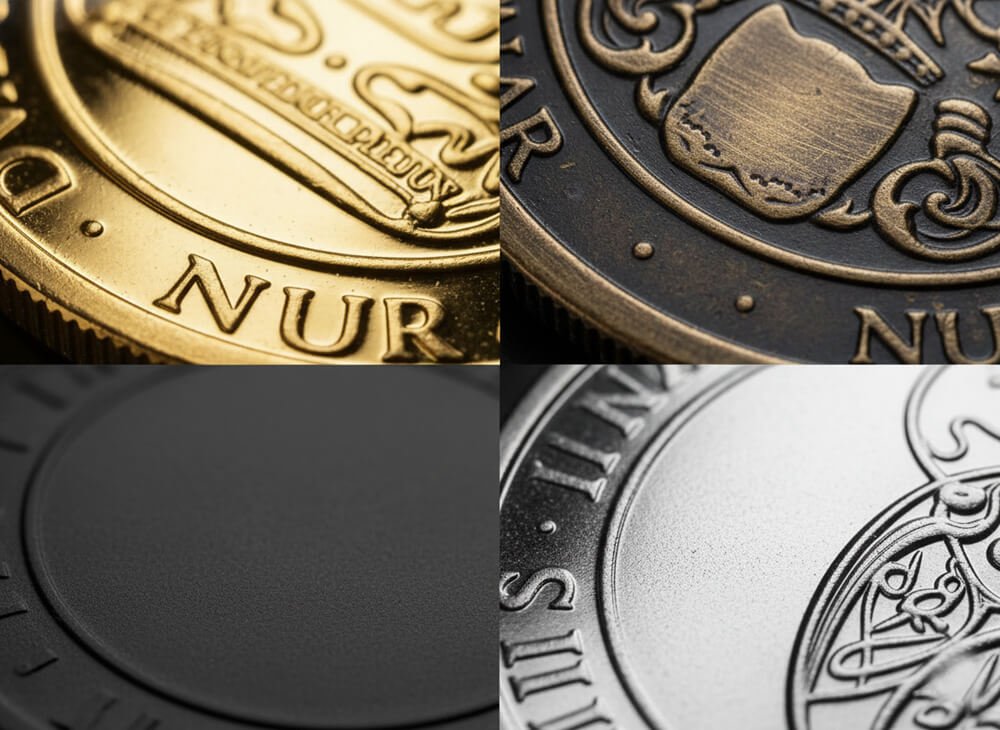
Care este cel mai bun metal pentru monedele de provocare?
Materialul de bază este pânza artei tale. Cele mai frecvente materiale folosite sunt:
- Alamă: Aceasta este alegerea premium. Alama este un aliaj greu, dens, de cupru și zinc. Permite detalii incredibil de clare și relief 3D. Dacă doriți o monedă grea, de calitate pentru bijuterii, alama este calea de urmat.
- Aliaj de zinc: Aceasta este o alternativă versatilă, rentabilă. Este mai ușor decât alama, dar funcționează excepțional de bine pentru monedele care au nevoie de decupaje sau forme personalizate unice. Procesul de turnare pentru aliajul de zinc este flexibil și precis.
- Fier: Adesea folosit pentru proiecte care respectă bugetul. Un avantaj unic al fierului de călcat este că este magnetic, ceea ce îl face alegerea perfectă pentru marcatoarele de mingi de golf care se atașează la cleme magnetice pentru pălărie.
Ce opțiune de placare ar trebui să aleg?
Odată ce metalul de bază este lovit sau turnat, acesta este placat. Aceasta definește culoarea și caracterul părților metalice ale monedei tale.
1. Poloneză înaltă (lucioasă): Disponibil în aur, argint, nichel și cupru. Aceste finisaje sunt foarte reflectorizante și asemănătoare oglinzii. Arată regal și scump. Dezavantajul este că uneori pot fi greu de citit în lumină puternică din cauza strălucirii și arată cu ușurință amprentele digitale.
2. Antic (mat/învechit): Disponibil în aur antic, argint, bronz și cupru. Pentru a realiza acest lucru, moneda este placată și apoi spălată cu o spălare antică neagră. Spălarea întunecată se instalează în zonele îngropate, creând un contrast ridicat față de metalul înălțat. Acesta este cea mai bună opțiune pentru lizibilitate, în special pentru modele grele de text sau relief 3D.
3. Metal negru/Nichel negru: Un finisaj elegant, modern. Arată ca un metal întunecat. Când este asociat cu culori strălucitoare de email, contrastul este uimitor. Este foarte popular în comunitățile tactice și de jocuri.
4. Placare dublă: De ce să alegi unul? Putem placa jumătate din monedă cu aur și jumătate cu argint. Acest efect în două tonuri este sofisticat și atrăgător, adesea folosit pentru a evidenția logo-uri specifice.
Capitolul 4: Opțiuni de culoare și email
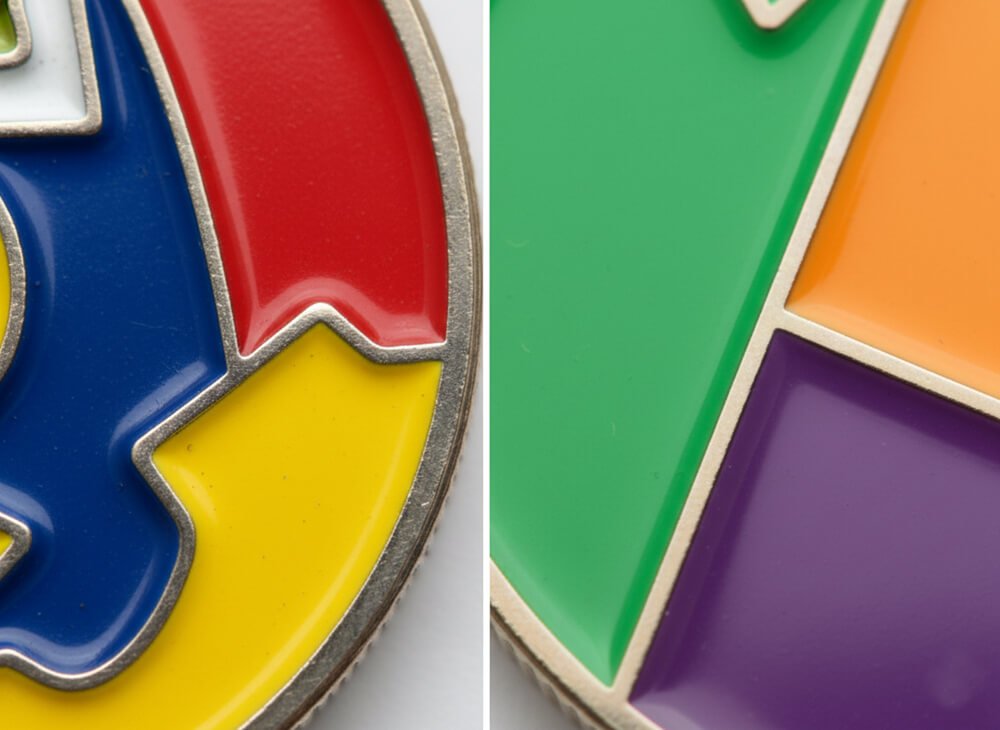
Email moale vs email dur: care este mai bun?
Aceasta este cea mai frecventă întrebare pe care o primim. Nici nu este “mai bine,” dar oferă aspect și senzații foarte diferite.
Email moale: În acest proces, smalțul colorat este așezat în zonele adâncite ale monedei. Se așează mai jos decât pereții metalici înălțați. Când treceți degetul mare peste monedă, puteți simți “denivelări” și crestele designului. Acest lucru creează un aspect dimensional, texturat pe care mulți oameni îl iubesc. De asemenea, este, în general, mai rentabil.
Email dur (stil cloisonné): Aici, smalțul este supraumplut și apoi lustruit până când este perfect la nivel cu liniile metalice. Suprafața devine netedă și plană, ca sticla. Acest lucru creează un finisaj de înaltă calitate, de calitate pentru bijuterii. Este extrem de durabil și rezistent la zgârieturi.
Fără email (toate metal): Nu trebuie să folosiți culoarea. Unele dintre cele mai elegante monede se bazează în întregime pe metal. Folosim sablare pe fundal pentru a crea o textură mată, care face ca metalul în relief lustruit să iasă. Acesta este elegant și atemporal.
| Caracteristică | Email moale | Email dur |
|---|---|---|
| Textura suprafeței | Aspect texturat / 3D | Neted/plat |
| Durabilitate | Ridicat | Foarte ridicat (rezistent la zgârieturi) |
| Cost | Buget-friendly | Preț Premium |
| Uite | Dimensional | asemănător cu bijuteriile |
Opțiuni speciale de culoare
Vrei să-ți faci designul să iasă și mai mult în evidență? Luați în considerare aceste upgrade-uri:
- Email translucid: O culoare transparentă este aplicată pe un fundal metalic texturat. Arată ca o sticlă colorată.
- Strălucire în întuneric: Pulberile speciale sunt amestecate în smalț. Pare alb lăptos la lumina zilei, dar strălucește verde în întuneric.
- Email cu sclipici: La vopsea se adaugă fulgi metalici pentru un efect strălucitor.
- Potrivire Pantone: Folosim sistemul de potrivire Pantone (PMS) pentru a ne asigura că culorile mărcii dvs. sunt afectate exact. Dacă logo-ul tău este “Roșu Coca-Cola,” potrivim acel cod specific.
Capitolul 5: Personalizare avansată (Margini, 3D și Texturi)
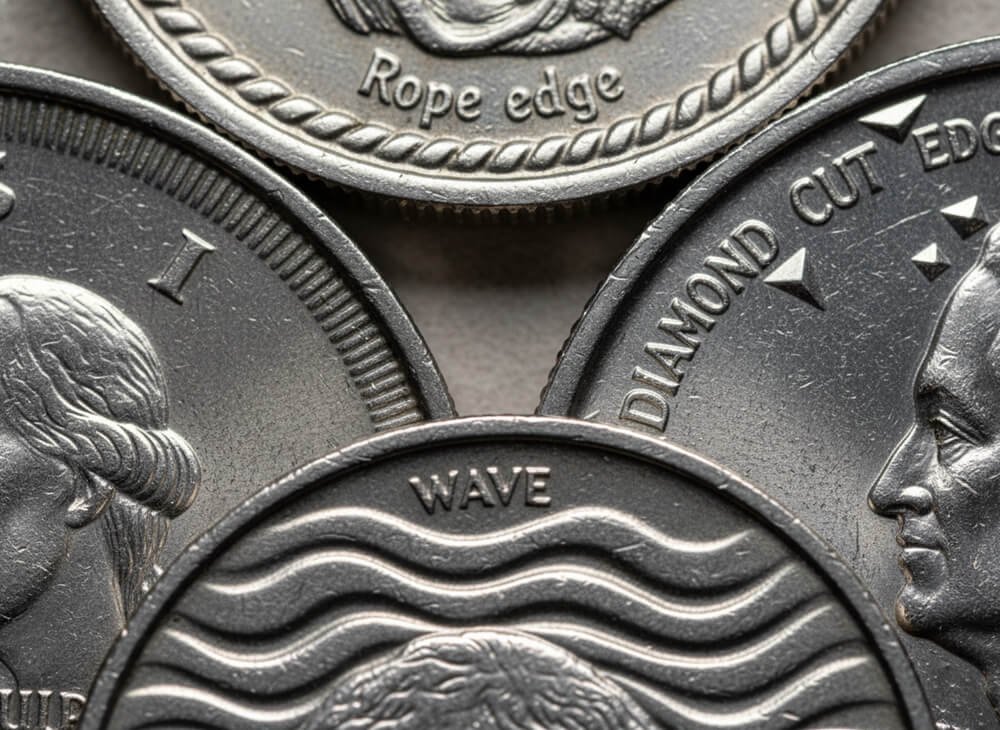
Care sunt diferitele opțiuni de margine a monedelor de provocare?
Marginea monedei tale este ca rama de pe un tablou. O margine plată standard este în regulă, dar modernizarea marginii poate schimba drastic estetica.
- Tăierea frânghiei: Arată ca o frânghie nautică răsucită. Esențial pentru monedele Marinei, Garda de Coastă sau Marinei.
- Diamant/Tăiere în cruce: În jantă sunt făcute tăieturi fațetate, reflectând lumina ca un diamant. Acest lucru atrage imediat atenția asupra monedei.
- Val / Scallop / Petală: Acestea sunt margini curbate, decorative, care conferă monedei o siluetă mai moale și mai ornamentată.
- Marginea cu stuf: Caneluri verticale, exact ca marginea unui Quarter sau Dime.
- Oblic / Pinten: Tăieturi agresive, unghiulare, care oferă o senzație modernă și dinamică.
- Margine gravată: Dacă rămâneți fără spațiu pe fața monedei, putem grava text (cum ar fi un motto sau o dată) direct pe marginea marginii.
Design 2D vs. 3D: când să folosiți pe care?
Design 2D: Aceasta utilizează două niveluri: metal înălțat și metal încastrat. Este perfect pentru logo-uri curate, text și ilustrații vectoriale. Oferă linii clare și clare.
Design 3D: Aceasta implică sculptarea metalului cu niveluri infinite de relief. Este necesar dacă doriți să prezentați chipul unei persoane, o mascota, o statuie sau un peisaj (cum ar fi un lanț muntos). Permite curbe rotunjite și adâncime realistă.
Capitolul 6: Proiectarea operei de artă (procesul creativ)
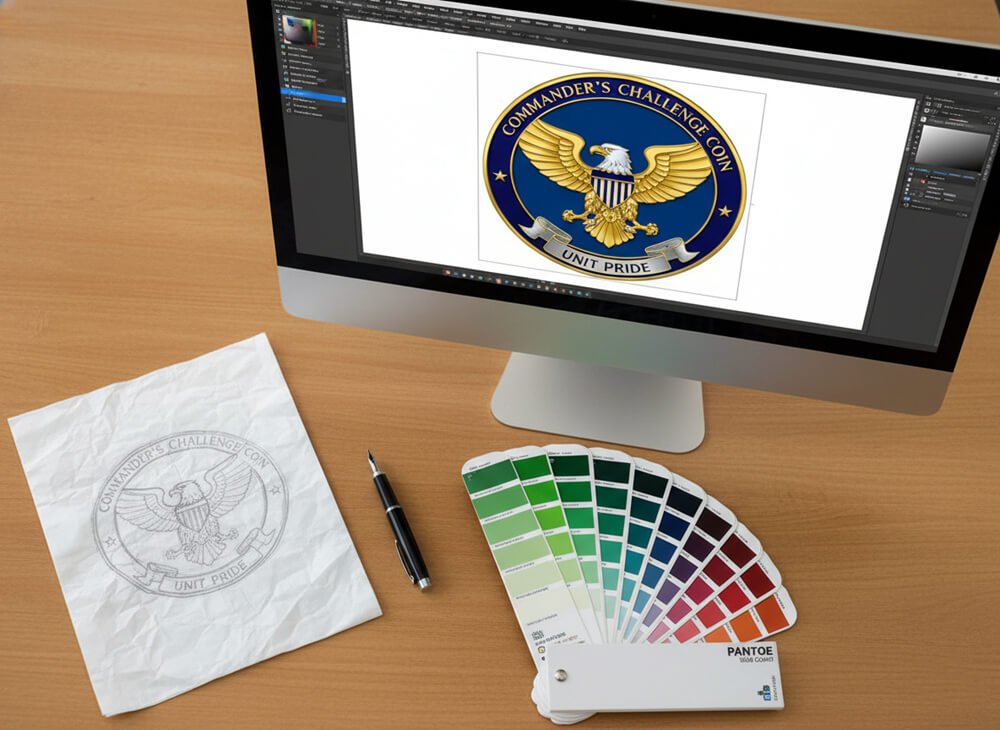
Cum să creezi un design fără a fi artist?
Iată un secret: nu trebuie să fii designer grafic. Majoritatea producătorilor oferă servicii de artă gratuite. Avem nevoie doar de un punct de plecare.
- Schița șervețelului: Cifrele stick și mâzgălile aspre sunt absolut în regulă. Artiștii noștri interpretează instrucțiunile de aspect.
- Șabloane: Oferim șabloane descărcabile care vă permit să desenați în interiorul unui cerc pentru a vizualiza spațierea.
- Imagini: Colectați imagini de pe Google, Pinterest sau propriile fișiere. Trimite-ne sigle, mascote sau fotografii ale echipamentelor pe care vrei să le fie prezentate.
Crearea unui Brief de proiectare (Ghid pas cu pas)
Pentru a obține moneda perfectă la prima încercare, copiați și inserați acest șablon în e-mailul dumneavoastră. Completați spațiile libere pentru a crea un design clar ca cristalul:
Șablon de scurt de proiectare:
“As dori sa comand [Cantitate] monede.”
“Vreau să fie forma monedei [Cerc / Personalizat / Scut].”
“Vreau să fie mărimea [1,75 inchi / 2 inchi].”
“Vreau ca finisajul metalic să fie [Aur antic / Argint strălucitor / Nichel negru].”
“Pe FRONT, vă rugăm să utilizați sigla atașată. Vreau textul „[Inserați textul aici]’ de-a lungul marginii superioare.”
“Pe spate, creați o imagine 3D a [Fotografie atașată].”
“aș dori o [Frânghie/Diamant] margine.”
Capitolul 7: Evitarea greșelilor obișnuite de proiectare
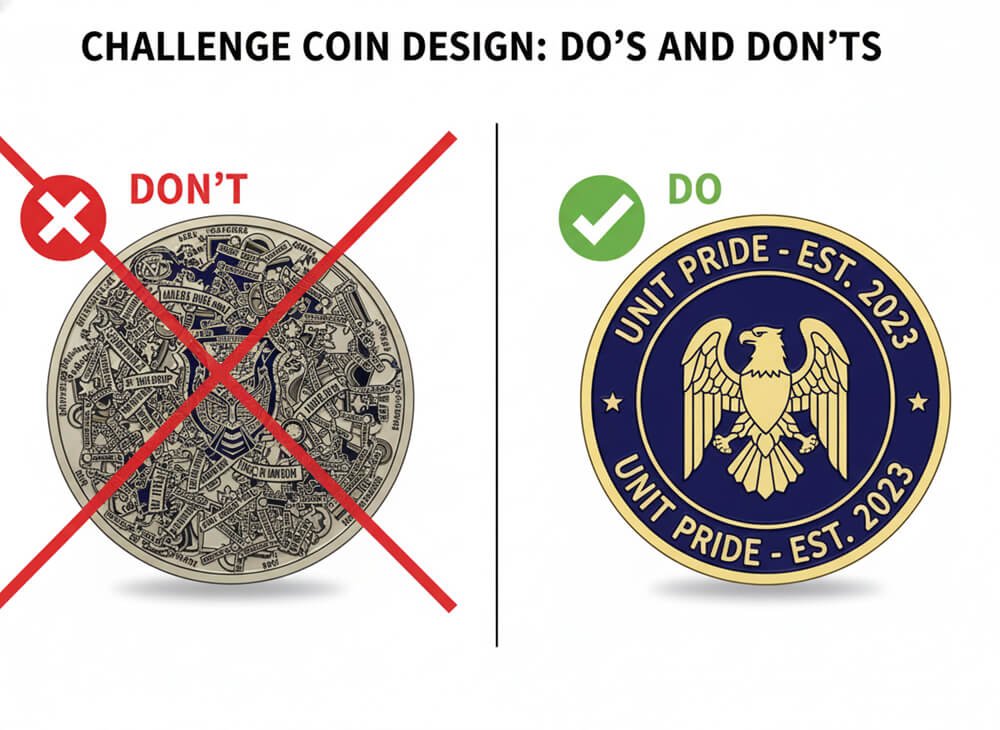
Care sunt cele mai frecvente greșeli de proiectare a monedelor de provocare?
Vrem ca moneda ta să fie perfectă. Evita aceste capcane:
- Lizibilitate slabă: Nu încercați să înghesuiți un roman pe o monedă de 2 inci. Păstrați textul scurt și puternic. Asigurați-vă că dimensiunile fonturilor sunt suficient de mari pentru a fi citite fără lupă.
- Ciocnirea culorilor: Aveți grijă la smalțul închis la culoare pe metal închis (cum ar fi bleumarin pe nichel negru). Devine invizibil. Utilizați culori contrastante sau contururi metalice pentru a le separa.
- Excesul de metale prețioase: Nu întotdeauna ai nevoie de aur. Uneori, un finisaj din bronz antic se potrivește mai bine cu o temă istorică și costă mai puțin. Potriviți metalul cu mesajul.
- Ignorarea dovezii: Când vă trimitem dovada operei de artă digitală, priviți-o cu atenție! Verificați ortografia, datele și culorile. Aceasta este ultima șansă de a remedia erorile înainte ca metalul să fie tăiat.
- Dezordine: “Mai puțin înseamnă mai mult.” Un design curat și îndrăzneț arată de obicei mai profesionist decât unul aglomerat cu detalii minuscule.
Capitolul 8: Procesul de producție și comandă
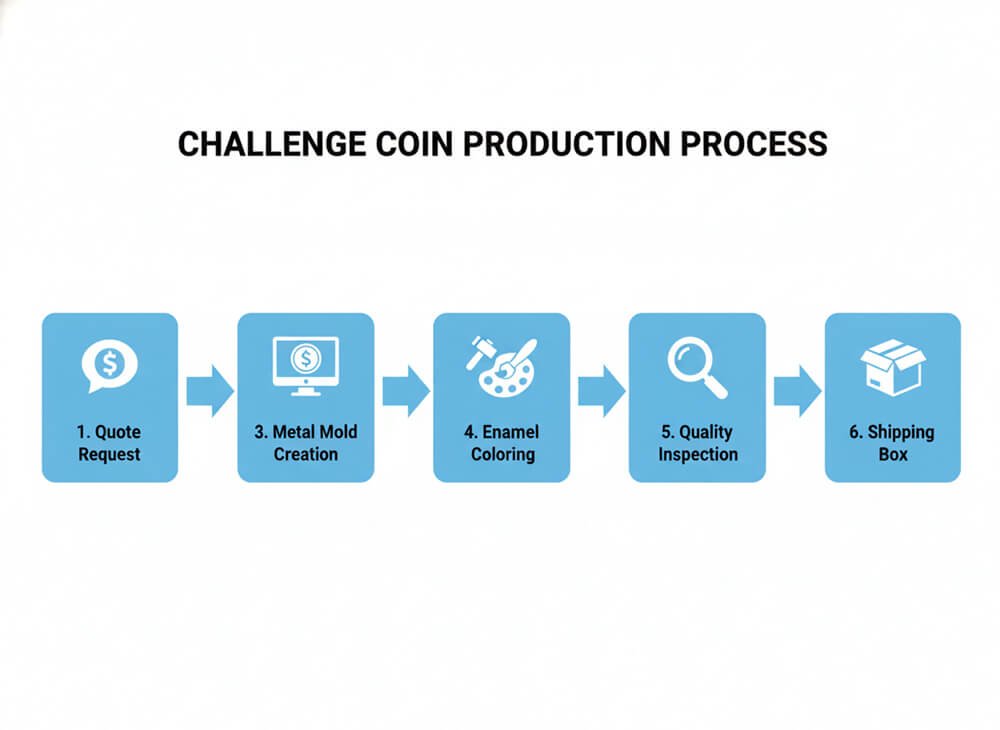
Cum să comanzi monede de provocare personalizate?
Procesul este mai simplu decât ați crede:
- Pasul 1: Citat & Opera de artă: Trimite-ne ideea/brief-ul tău. Oferim o cotație de preț și o dovadă de artă digitală în câteva zile.
- Pasul 2: verificarea: Revedeți arta. Puteți cere revizuiri nelimitate până când este perfect.
- Pasul 3: Mucegai & Mint: Odată aprobată, tăiem o matriță din oțel (molă) după designul dvs. Apoi ștampilăm sau turnăm monedele de metal.
- Pasul 4: Colorare & Lustruire: Artizanii umplu manual vopselele emailate și coac monedele pentru a le vindeca. Ele sunt apoi lustruite până la strălucire.
- Pasul 5: Controlul calității & Transport: Inspectăm fiecare monedă pentru defecte, le ambalăm și vi le trimitem.
Cât timp îi ia?
În general, producția durează 2 până la 4 săptămâni după ce aprobi opera de artă. Dacă aveți un anumit termen limită pentru eveniment, anunțați-ne imediat - opțiunile urgente sunt adesea disponibile.
Capitolul 9: Ambalare și prezentare
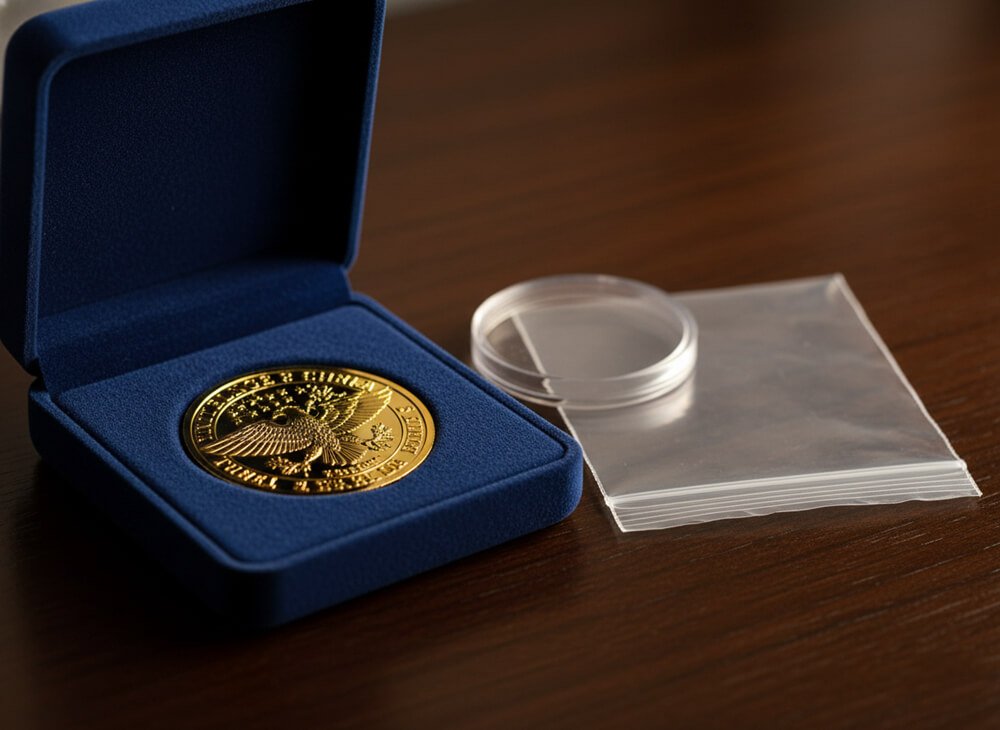
Care sunt cele mai bune modalități de a afișa monede de provocare?
Nu aruncați o monedă frumoasă într-o cutie de carton. Prezentarea adaugă valoare.
- Husă standard din PVC: Acest plic din plastic transparent este de obicei gratuit și protejează moneda de zgâriere în timpul transportului.
- Genți de catifea & Cutii: O geantă de catifea neagră sau albastră adaugă o notă de clasă. O cutie de prezentare din catifea este upgrade-ul suprem pentru ceremoniile de premiere.
- Capsule acrilice: Aceste carcase din plastic dur sunt etanșe și protejează moneda de amprente și praf - perfecte pentru colecționari.
- Suporturi pentru monede: Suporturile simple din plastic sau lemn permit destinatarului să afișeze moneda pe birou sau pe raft.
Întrebări frecvente (FAQ)
Da! În timp ce emailul tradițional folosește culori solide, putem folosi un proces numit Imprimare offset. Acest lucru ne permite să imprimăm o fotografie de înaltă rezoluție direct pe metal, care este apoi acoperit cu un dom epoxidic transparent pentru protecție.
Din punct de vedere tehnic, sunt făcute la fel. “Monede de provocare” sunt de obicei mai mici (1,5″ – 2″) și menit să fie purtat. “Medalioane” sau “Medalii” sunt adesea mai mari sau au o buclă/panglică atașată pentru a fi purtate la gât.
Da, de obicei există o singură dată “taxa de mucegai” sau “taxa de moarte” pentru a crea ștampila de oțel pentru designul dvs. specific. Cu toate acestea, dacă re-comandați același design mai târziu, de obicei nu trebuie să plătiți această taxă din nou, deoarece păstrăm matrița la dosar.
Absolut. Decupajele personalizate sunt o caracteristică de design foarte populară. Putem decupa zonele interioare pentru a crea spații deschise sau chiar forme care funcționează ca deschizători de sticle.
Aici gravăm un număr unic pe fiecare monedă (de exemplu, #001, #002, #003). Acesta este perfect pentru seturile în ediție limitată, adăugând o valoare semnificativă pentru colecționari.
Da, monedele standard de provocare sunt cu două fețe. Puteți avea un logo pe față și o imagine 3D, text sau emblemă complet diferită pe spate. Este complet personalizabil.