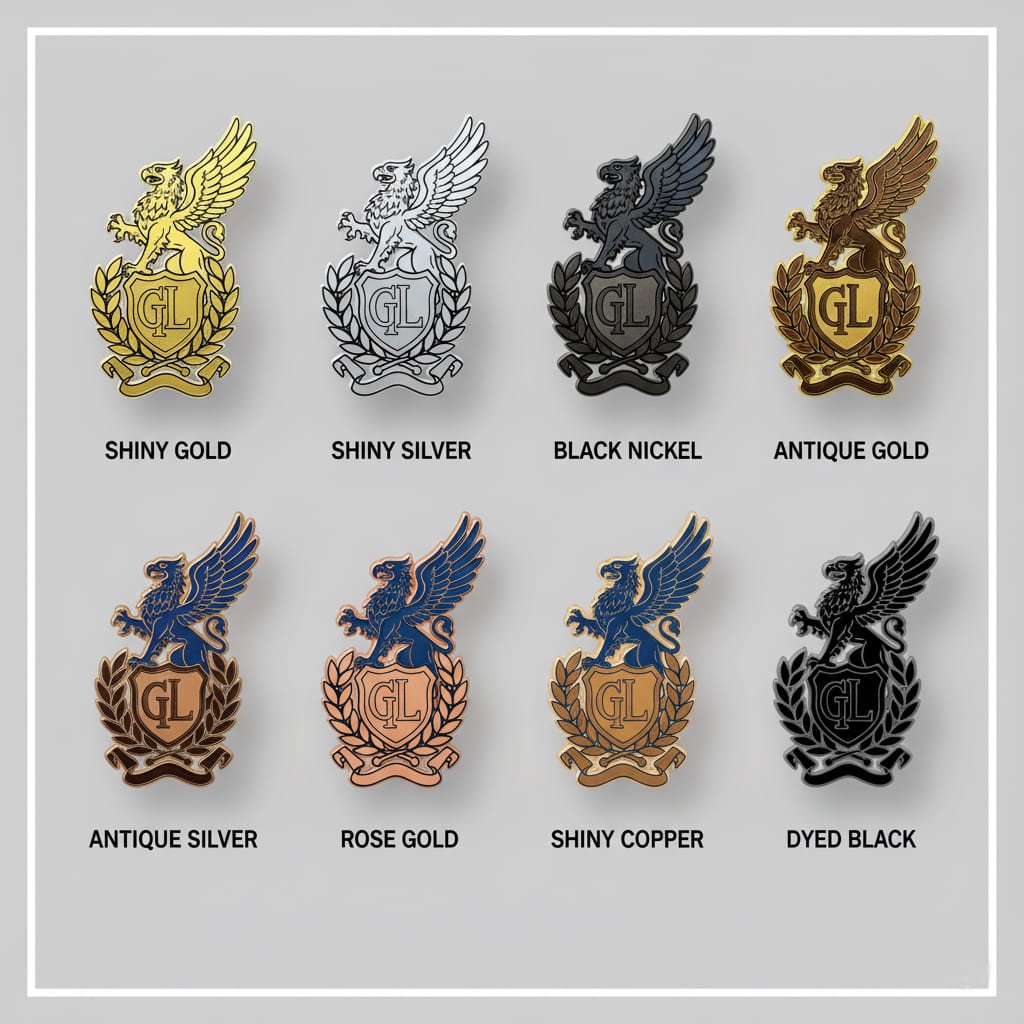
Klasyka: wysoki połysk i błyszczące wykończenia
Są to opcje podstawowe, najpopularniejsze i wszechstronne w przypadku szerokiej gamy projektów. Wykończenie na wysoki połysk jest jasne, odblaskowe i natychmiast przyciąga wzrok, co czyni go idealnym wyborem do przypinek, które muszą się wyróżniać.
Polerowane złoto: ponadczasowy standard prestiżu
- Wygląd: Luksusowy, jasny i wysoce odblaskowy, z niepowtarzalnym wyglądem 24-karatowego złota. To klasyczny wybór, jeśli chodzi o przekazywanie wartości i elegancji.
- Najlepsze dla: Marka korporacyjna, nagrody za lata pracy, pamiątkowe przypinki, herby uniwersytetów i wszelkie projekty, które muszą komunikować osiągnięcia i prestiż.
- Strategia projektowania: Polerowane złoto tworzy oszałamiający kontrast, który podkreśla ciemne kolory emalii. Pięknie komponuje się z granatem, leśną zielenią, głęboką czerwienią i czernią, nadając im bogaty, królewski charakter.
Polerowane srebro & Nikiel: elegancki, nowoczesny i wszechstronny
- Wygląd: Czysty, wyrafinowany i jasny. Posrebrzanie zapewnia klasyczne wykończenie w chłodnej tonacji, podczas gdy nikiel jest często nieco jaśniejszy i ma bielszy, bardziej błyszczący połysk.
- Najlepsze dla: Logo firm technologicznych, organizacje zawodowe, nowoczesna tożsamość marki oraz jako tańsza, ale równie elegancka alternatywa dla złota.
- Strategia projektowania: Jest to koń pociągowy w zakresie opcji powlekania, uzupełniający niemal każdą paletę kolorów. Szczególnie dobrze sprawdza się w przypadku chłodnych kolorów, takich jak błękit i fiolet. Należy pamiętać, że bardzo jasne kolory, takie jak bladożółty lub biały, mogą czasami mieć niski kontrast na błyszczącym srebrnym tle.
Polerowana miedź: ciepła, bogata i wyjątkowa
- Wygląd: Ciepły, czerwonawy i bardzo charakterystyczny ton. Ma charakter zarówno rustykalny, jak i nowoczesny, często przypominający różowe złoto w określonym oświetleniu.
- Najlepsze dla: Projekty z motywami ziemi, estetyką vintage lub marki, które chcą wyróżnić się na tle standardowego złota i srebra.
- Strategia projektowania: Ciepłe odcienie miedzi pięknie komponują się z emaliami w kolorze zielonym, brązowym, turkusowym i kremowym, tworząc harmonijny i organiczny wygląd.
Polerowany brąz: klasyczny i wyróżniający się
- Wygląd: Podobny do złota, ale z cieplejszą, nieco bardziej stonowaną i ziemistą barwą. Zapewnia klasyczny wygląd bez wysokiego połysku czystego złota.
- Najlepsze dla: Przypinki wojskowe i służbowe, motywy historyczne i nagrody wymagające klasycznego, wyróżniającego się charakteru.
Wygląd vintage: antyczne i wyblakłe wykończenia
A co jeśli chcesz, żeby Twój pin miał wrażenie, że ma jakąś historię? Powlekanie antykami to specjalny proces mający na celu nadanie Twoim przypinkom wyblakłego, zabytkowego charakteru od razu po wyjęciu z pudełka. Proces polega na pokryciu szpilki, a następnie nałożeniu ciemnego roztworu, który osadza się we wgłębieniach. Uniesione powierzchnie są następnie ręcznie polerowane, tworząc piękny kontrast, który podkreśla drobne szczegóły Twojego projektu.
Podstawową zaletą wykończenia antycznego jest jego wyjątkowa zdolność do eksponowania szczegółów. Przyciemnione, wgłębione obszary sprawiają, że cienkie linie i skomplikowany tekst są znacznie bardziej czytelne niż na szpilce o wysokim połysku, co czyni ją idealnym wyborem do projektów wykrojnikowych bez żadnego wypełnienia kolorem. Więcej o tym stylu dowiesz się z naszego
Przewodnik po tworzeniu klasycznych, kolorowych metalowych szpilek.
Antyczne złoto: wygląd cennej pamiątki
- Wygląd: Stonowane, postarzane złoto z ciemnymi, zacienionymi zagłębieniami. Wygląda mniej jak nowa moneta, a bardziej jak cenny artefakt.
- Najlepsze dla: Upamiętnienia historyczne, emblematy masońskie, herby uniwersytetów i wszelkie projekty mające na celu nadanie klasycznego, tradycyjnego i dostojnego charakteru.
Antyczne srebro: styl rustykalnej cyny
- Wygląd: Miękkie, wyblakłe srebro z wgłębieniami przypominającymi węgiel drzewny lub brąz. Jest wyrafinowany, ale nie rzuca się w oczy.
- Najlepsze dla: Bardzo szczegółowe, wycinane przypinki, projekty z dużą ilością tekstu i logo firmowe, które wymagają wyrafinowanego, ale mniej błyszczącego wyglądu. Świetnie radzi sobie także z ukrywaniem drobnych zadrapań i odcisków palców.
Anticzna miedź & Brąz: ziemisty i historyczny
- Wygląd: Głębokie, ciepłe odcienie z autentyczną patyną, która wygląda, jakby powstawała przez dziesięciolecia.
- Najlepsze dla: Wzory steampunkowe, insygnia oddziałów wojskowych, rustykalne brandingi i wszelkie przypinki, które muszą sprawiać wrażenie historycznego artefaktu.
Nowoczesna krawędź: wykończenia w kolorze czarnym, kolorowym i tęczowym
Oprócz tradycyjnych metali, nowa paleta nowoczesnych wykończeń stała się niezwykle popularna, szczególnie wśród artystów i współczesnych marek. Opcje te polegają na tworzeniu odważnych, kontrastowych stwierdzeń, których nie da się zignorować.
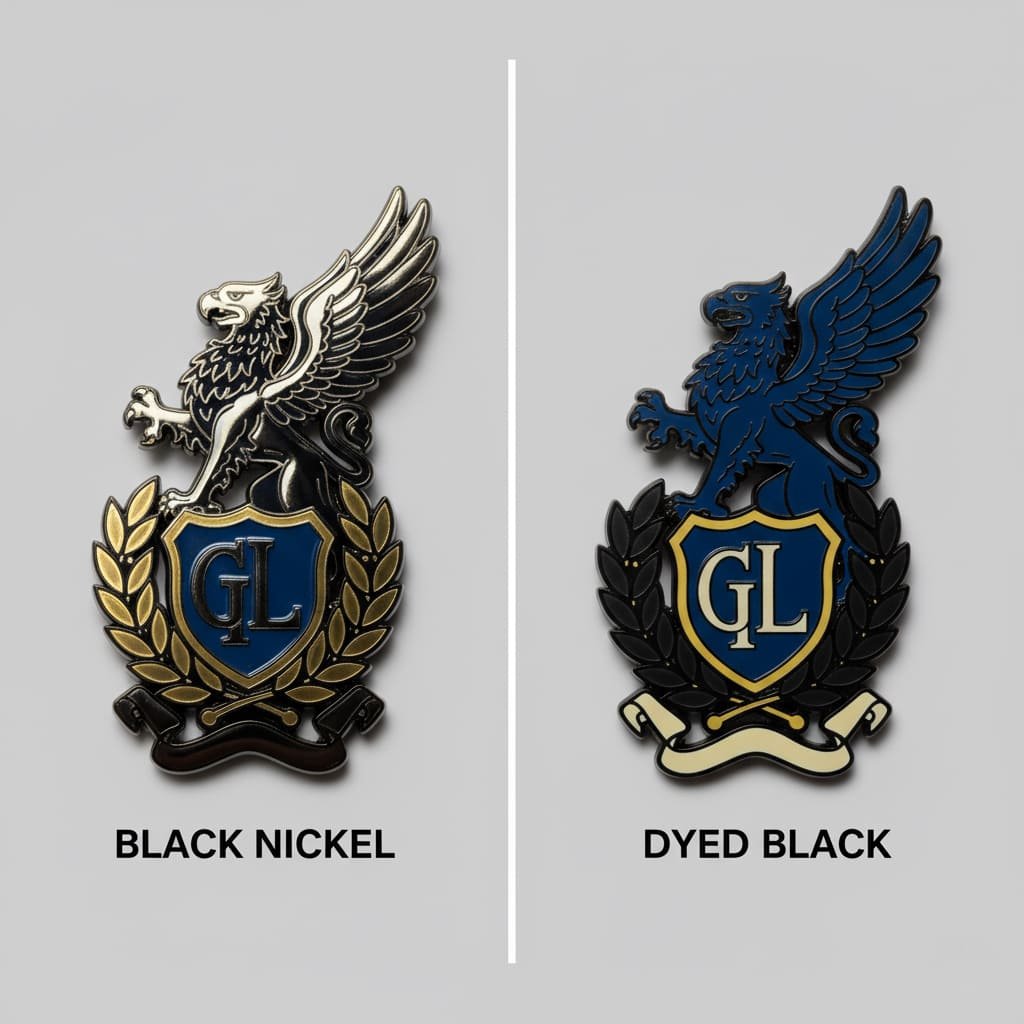
Czarny nikiel kontra barwiony black metal: krytyczne rozróżnienie
Jest to jeden z najczęstszych punktów dezorientacji kupujących, więc wyjaśnijmy to sobie doskonale. Chociaż oba dają „czarną” szpilkę, wygląd i proces są zupełnie inne.
- Czarny niklowany jest płyta elektryczna. Ma bardzo błyszczące, mocno wypolerowane, ciemne, brązowe wykończenie. Jest metaliczny i odbija światło. Pomyśl o tym jak o czarnym chromie.
- Barwiony Black Metal jest malowanie proszkowe. Daje to prawdziwe, głębokie, matowe (nieodblaskowe) czarne wykończenie. Nie jest metaliczny i pochłania światło.
Twój wybór zależy całkowicie od pożądanego efektu. Wybierz opcję Czarny nikiel, aby uzyskać elegancki, nowoczesny, metaliczny wygląd. Wybierz Dyed Black Metal, aby uzyskać najwyższy możliwy kontrast, który sprawia, że jasne kolory emalii eksplodują wizualnie.
Dyed Metal: świat niestandardowych kolorów
Moc barwionego metalu wykracza poza czerń. Metal szpilki można powlekać tak, aby pasował do niemal każdego koloru Pantone (PMS) – białego, czerwonego, niebieskiego, różowego, jak tylko chcesz. To potężne narzędzie do projektowania, które rozwiązuje typowy problem: co by było, gdyby standardowy metaliczny kontur kolidował z Twoją grafiką? Na przykład projekt składający się głównie z elementów czarno-białych często wygląda znacznie lepiej z białą lub barwioną na czarno metalową obwódką niż z rozpraszającą złotą lub srebrną linią.
Tęczowa powłoka (anodowana): najbardziej przyciągająca wzrok
- Wygląd: Opalizujący, wielokolorowy efekt „plamy oleju”, w którym kolory mienią się i zmieniają w miarę poruszania się szpilki w świetle. Nie ma dwóch identycznych szpilek z tęczą.
- Proces: To wyjątkowe wykończenie uzyskuje się poprzez proces elektrochemiczny zwany anodowaniem, który zmienia warstwę powierzchniową metalu.
- Najlepsze dla: Sztuka psychodeliczna, przypinki z dumą, motywy fantasy i wszelkie projekty, które muszą być żywe, niepowtarzalne i łatwe do kolekcjonowania.
Poza kolorem: teksturowane i specjalne wykończenia
Czasami faktura samego metalu może stać się kluczową częścią projektu, tworząc subtelne, eleganckie efekty, które świadczą o wyższym poziomie rzemiosła.
Piaskowanie: klasyczna matowa tekstura
Piaskowanie to technika zwykle stosowana w przypadku szpilek wybijanych (bez emalii) w celu uzyskania wizualnego kontrastu. Zagłębione obszary wzoru są piaskowane drobnym piaskiem, tworząc ziarnistą, matową teksturę. Uniesione obszary są następnie polerowane na wysoki połysk. Tworzy to piękny, subtelny efekt „ton w ton”, który definiuje projekt bez użycia żadnego koloru.
Szczotkowane wykończenia & Efekty satyny
Zamiast lustrzanego polerowania, te wykończenia nadają metalowi nieodblaskowy, ziarnisty wygląd z drobnymi, jednolitymi liniami, podobnymi do powierzchni wysokiej klasy urządzeń ze stali nierdzewnej. Tworzy to raczej miękki połysk niż jasny połysk, co skutkuje nowoczesnym, wyrafinowanym i profesjonalnym wyglądem, który minimalizuje odblaski.
Przy tak wielu możliwościach, jak dokonać ostatecznego wyboru? Najlepszym podejściem jest myślenie strategiczne. Właściwe platerowanie nie tylko będzie dobrze wyglądać, ale także wzmocni tożsamość Twojej marki i przeznaczenie przypinki.
Metalowe wykończenie przekazuje wiadomość. Upewnij się, że jest odpowiedni dla Twojej marki.
Skorzystaj z podstawowej teorii kolorów, aby stworzyć harmonijny projekt. Świetny wybór powłok sprawi, że kolory emalii będą wyglądać jeszcze lepiej.
Jest to niezwykle ważny szczegół na poziomie eksperckim, który może uchronić Cię przed kosztownymi błędami projektowymi. Nie wszystkie opcje platerowania są kompatybilne ze wszystkimi typami pinów. Powód leży w procesie produkcyjnym.
Wymagany intensywny proces polerowania w wysokiej temperaturze
szpilki gładkie są bardzo ścierne. Może zniszczyć delikatniejsze powłoki. Dlatego,
Użyj tej tabeli jako przewodnika. Jeśli wiesz, że chcesz szpilkę z twardej emalii, musisz wybrać jedną z kompatybilnych opcji powlekania.