Hva er en utfordringsmynt? Definisjon og forklaring
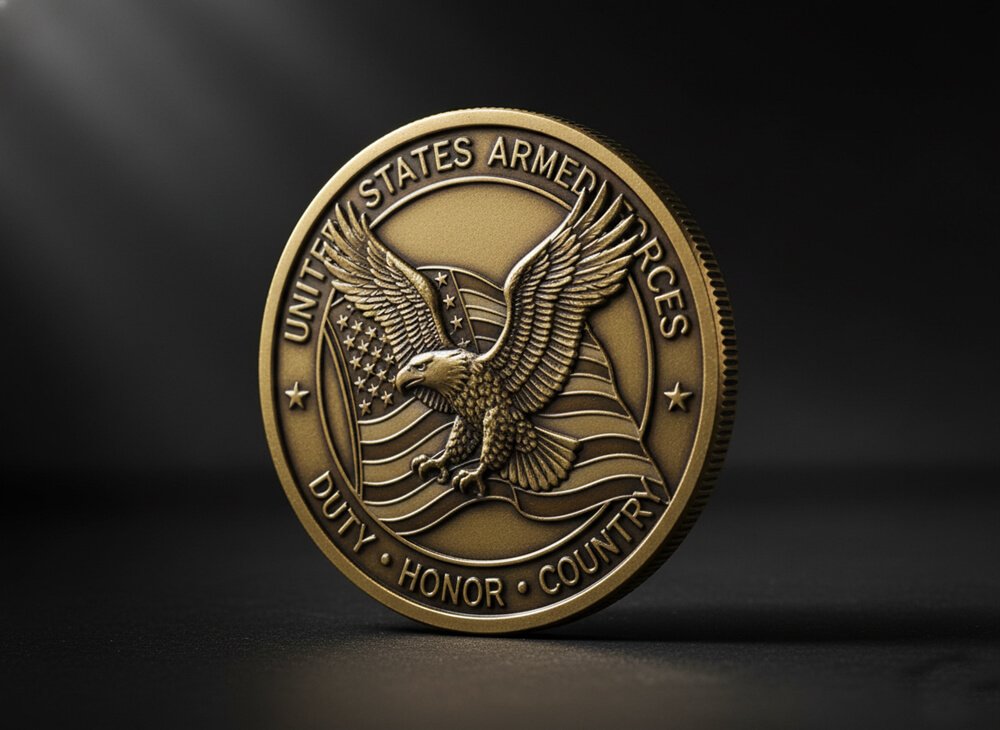
Før vi utforsker den rike historien, la oss starte med en klar utfordre myntdefinisjon. En utfordringsmynt er en liten, spesialdesignet metallmedaljong eller mynt, vanligvis med en organisasjons insignier, emblem eller motto, båret av organisasjonens medlemmer.
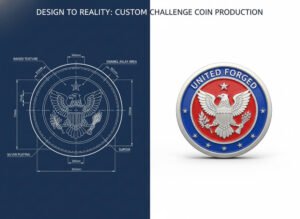
For å gi en dypere utfordre myntforklaring: Disse varene er ikke lovlig betalingsmiddel. Du kan ikke bruke dem i en butikk. I stedet er de symbolske symboler. Tradisjonelt utstedes de for å bevise medlemskap i en bestemt enhet eller gruppe, eller de blir presentert av en leder for å anerkjenne spesiell prestasjon. De er vanligvis laget av bronse, messing, kobber eller sinklegering og kan ha fargerik emaljemaling, 3D-former og forskjellige metalliske overflater.
Men hva er en utfordringsmynt utover det fysiske objektet? Det er en fysisk manifestasjon av et bånd. De utfordre myntformål er tredelt:
- Bevis på medlemskap: Det bekrefter at du tilhører et spesifikt brorskap eller søsterskap (som Navy SEALs eller et brannvesen).
- Moralforsterker: Det inngir stolthet og “esprit de corps” i et team.
- Erkjennelse: Det fungerer som en umiddelbar, uformell pris for fortreffelighet.
Betydningen og betydningen av utfordringsmynter
Når du spør om betydningen av utfordringsmynter, vi må se forbi metallet. De betydningen av utfordringsmynter ligger i deres evne til å representere tilhørighet, fortreffelighet og delt offer.
Medlemskap og ubrytelig tilhørighet
En av hovedbetydningene bak å motta en utfordringsmynt er bekreftelsen av medlemskap. I elitegrupper, som Navy SEALs, britiske SAS eller spesialstyrker, er tilhørighet alt. Disse gruppene opererer på tillit og en delt tillit til hverandre. EN utfordring mynter betydning i denne sammenhengen er enkel: Bevis. En mynt som bærer enhetens insignier er det fysiske beviset på medlemskapet.
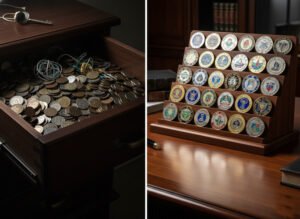
Tenk på det som et permanent ID-kort som aldri utløper. Det betyr at du har holdt ut den samme treningen, møtt de samme vanskelighetene og opprettholdt de samme verdiene som personen som ga deg den. I en verden der folk ofte føler seg frakoblet, er utfordringsmynten en håndgripelig påminnelse om det “vi er i dette sammen.”
Anerkjennelse av fortreffelighet: The “Uformell pris”
I de væpnede styrkene og offentlige etater er det å gi en offisiell medalje en lang, byråkratisk prosess. Det innebærer papirarbeid, komiteer og måneder med venting. Men noen ganger skjer fortreffelighet i øyeblikket. En soldat kan gå utover plikten under en treningsøvelse, eller et teammedlem kan utføre et mirakel for å overholde en tidsfrist.
Det er her utfordringsmynten skinner. Det er militærets “uformell pris.” En sjef kan trekke en mynt fra lommen og gi den til en underordnet umiddelbart. Det er et øyeblikk, håndgripelig “takk” for godt utført arbeid. Fordi det kommer direkte fra en leders hånd til din, uten byråkrati, verdsetter mange tjenestemedlemmer disse myntene mer enn båndene på brystet. Det er en personlig validering som sier, “Jeg så hva du gjorde, og det betyr noe.”
“Når du får en utfordringsmynt, er stoltheten som følger med den mynten enorm. Du kan få et par diamantringer som har mindre betydning enn myntene som gis.” — Dan Schnock, Wounded Warrior Project
En håndgripelig forbindelse til historien
Mynter er fysiske ankere til minner. En veteran kan se på en mynt og umiddelbart bli fraktet tilbake til en bestemt utplassering i Irak eller Afghanistan. En annen mynt kan minne dem om et felles oppdrag med utenlandske allierte eller en humanitær hjelpeinnsats. De er holdbare minner om delt offer.
Opprinnelse og historie: Fra antikkens Roma til Vietnam
Spørsmålet “Hvor kom utfordringsmyntene fra?” har ikke et enkelt, enkelt svar. I stedet har den et rikt billedvev av opprinnelseshistorier, som blander historiske fakta med militærlegenden. La oss gå gjennom tidslinjen for hvordan denne tradisjonen ble smidd.
Det gamle Roma: De første belønningene
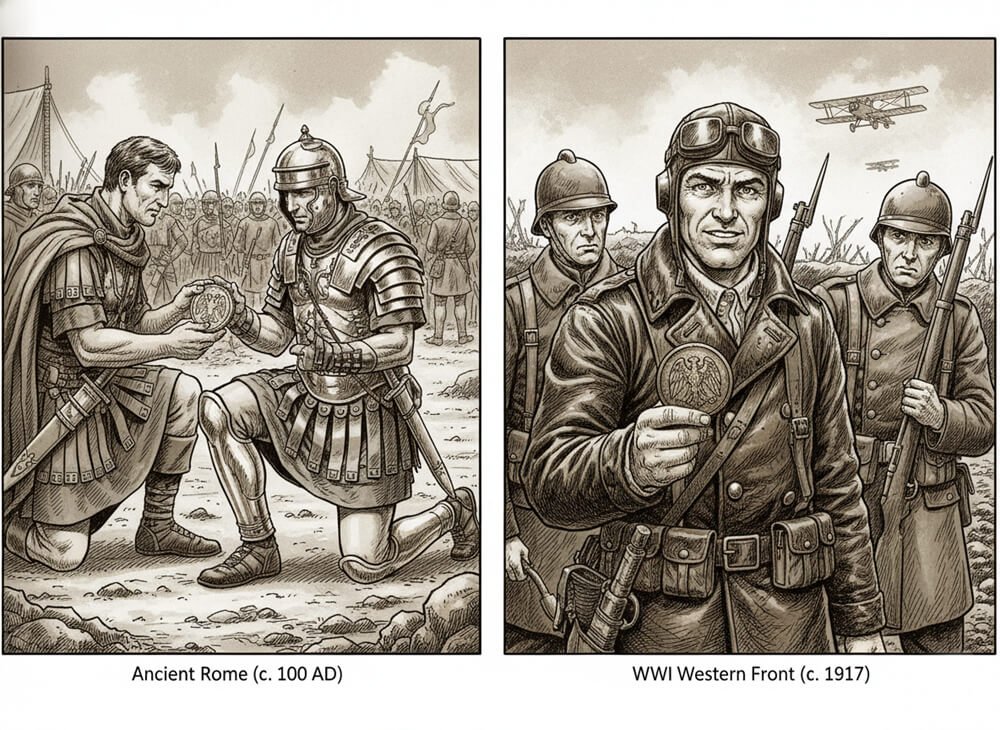
Mens moderne utfordringsmynter ofte er assosiert med det amerikanske militæret, går konseptet tusenvis av år tilbake. Historikere har funnet bevis på at i Romerriket ble soldater belønnet for sin tapperhet med mynter.
Etter en vellykket kamp eller kampanje, ville en romersk kommandør fordele lønnen deres. Men for de soldatene som hadde vist eksepsjonell tapperhet, ville sjefen bestille spesielle mynter preget med legionens insignier. Disse var ikke ment å brukes på det lokale markedet. De ble oppbevart som suvenirer – symboler på ære som en soldat kunne vise for å bevise at han var en del av en seirende legion. Dette etablerte de to grunnleggende aspektene ved utfordringsmynten: anerkjennelse av fortjeneste og et minne om tjeneste.
Renessansen: The “Portrettmynt”
Tradisjonen fortsatte å utvikle seg under renessansen. I løpet av denne epoken ville velstående og mektige familier oppdrag “Portrettmynter.” Disse metallmedaljongene liknet mottakeren eller familievåpenet. De ble begavet til venner, allierte og familiemedlemmer for å minnes viktige livsbegivenheter som ekteskap eller politiske allianser. Selv om det ikke var strengt militært, sementerte denne praksisen ideen om en mynt som et tegn på eksklusiv lojalitet og forbindelse mellom mennesker.
Den andre boerkrigen: Håndtrykkets fødsel
Hvorfor gir vi mynter under et håndtrykk? Dette spesifikke ritualet spores ofte tilbake til den andre boerkrigen i Sør-Afrika (1899–1902). Under denne konflikten ansatte den britiske hæren mange leiesoldater - soldater til leie.
Disse leiesoldatene kjempet tappert sammen med vanlige tropper, men fordi de teknisk sett ikke var en del av det britiske militæret, var de ikke kvalifisert til å motta formelle militærmedaljer. Britiske offiserer, som følte at dette var urettferdig, ønsket å anerkjenne tapperheten til disse innleide våpnene. Ifølge historien skulle offiserer konspirere for å snike medaljer eller spesiallagde symboler til leiesoldatene. For å unngå irettesettelse fra overkommando, ville de gjemme symbolet i håndflaten og sende det under et håndtrykk. Denne handlingen av skjult respekt er sannsynligvis dagens bestefar “hemmelig håndtrykk” overføre.
Legenden fra første verdenskrig: Mynten som reddet et liv
Dette er den mest kjente, mest gjentatte og mest elskede opprinnelseshistorien til den moderne utfordringsmynten. Det forklarer hvorfor mynten er mer enn bare et minnesmerke – det er en bokstavelig talt livredder.
Historien: I 1917 gikk Amerika inn i første verdenskrig. Mange velstående unge menn fra Ivy League-universiteter som Yale og Harvard meldte seg frivillig til å bli med i den nyopprettede Army Air Service. En av disse mennene var en velstående løytnant som tok kommandoen over en skvadron.
For å bygge enhet blant mennene sine beordret løytnanten å slå solide bronsemedaljer. Hver medaljong bar skvadronens insignier. Han ga en til hver pilot i enheten hans. En ung pilot var så stolt av medaljen sin at han plasserte den i en liten skinnpose og bar den rundt halsen for oppbevaring.
Kort tid etter, under et oppdrag over Tyskland, ble pilotens fly kraftig skadet av bakkebrann. Han ble tvunget til å krasjlande bak fiendens linjer. Han overlevde krasjet, men ble umiddelbart tatt til fange av en tysk patrulje. Tyskerne fratok ham alt - uniformen hans, legitimasjonen og personlige eiendeler. Men i kaoset savnet de den lille skinnvesken rundt halsen hans.
Piloten ble ført til et midlertidig holdeanlegg i en fransk by nær frontlinjene. Den natten, midt i et artilleribombardement, klarte han å rømme. Han fant noen sivile klær og tok på seg det for å blande seg inn, og tok seg sakte mot frontlinjene. Til slutt snublet han over en fransk utpost.
Problemet var at den franske hæren hadde vært plaget av tyske sabotører kledd som sivile. Da de franske soldatene så denne unge mannen i sivile klær snakke med en amerikansk aksent (som de ikke kjente igjen), antok de at han var en spion. De forberedte seg på å henrette ham umiddelbart ved å skyte lag.
Desperat og uten ID-merker husket piloten posen sin. Han rev den opp og produserte bronsemedaljen. Han kastet den mot fangerne sine. En av de franske soldatene kjente igjen skvadronens insignier stemplet på mynten. Han visste at den tilhørte en amerikansk enhet.
I det øyeblikket signaliserte soldaten at henrettelsen skulle stoppe. Mynten hadde bevist hans identitet. I stedet for en kule fikk piloten en flaske vin. Da han til slutt kom tilbake til skvadronen sin og fortalte historien, ble det en obligatorisk tradisjon for hvert medlem å bære mynten sin til enhver tid for å sikre deres sikkerhet. Dette blir ofte sitert som fødselen til “utfordring.”
Tyskland etter andre verdenskrig: The “Pfennig sjekk”
Tradisjonen tok en lettere vending etter andre verdenskrig. Amerikanske soldater stasjonert i det okkuperte Tyskland besøkte lokale barer. Den tyske valutaen på den tiden var “pfennig” (ligner på en krone).
En lokal skikk kjent som “Pfennig sjekk” dukket opp. Når noen ba om en sjekk, måtte alle vende ut lommene sine for å bevise at de hadde en Pfennig. Hvis en soldat ikke hadde en, antydet det at de var blakke og ikke kunne betale for drinkene sine. Straffen var å kjøpe en runde for gruppen. Amerikanske enheter tok i bruk dette spillet, men byttet ut den tyske pennyen for sine enhetsspesifikke mynter. Å slå mynten på bordet ble den nye måten å starte sjekken på.
Vietnamkrigen: Kuleklubber
Under Vietnamkrigen utviklet tradisjonen seg til noe farligere. Eliteenheter, spesielt spesialstyrker, ble dannet “Kuleklubber.” Regelen var enkel: du måtte bære en ubrukt kule fra våpenet ditt til enhver tid. Dette symboliserte at du alltid var klar for en kamp, selv om du var nede til siste runde.
Men å blande alkohol og skarp ammunisjon i barer er sjelden en god idé. Soldater slo ofte kulene sine ned på bordene for å utfordre hverandre. Kommandørene ble bekymret for utilsiktede utslipp og skader. For å beholde kameratskapet, men fjerne faren, forbød de kulene og erstattet dem med pregede metallmynter som bar enhetens emblem. Dette befestet den moderne æraen med militærutfordringsmynten.
Utfordre myntregler og etikette: Hvordan utføre en myntsjekk
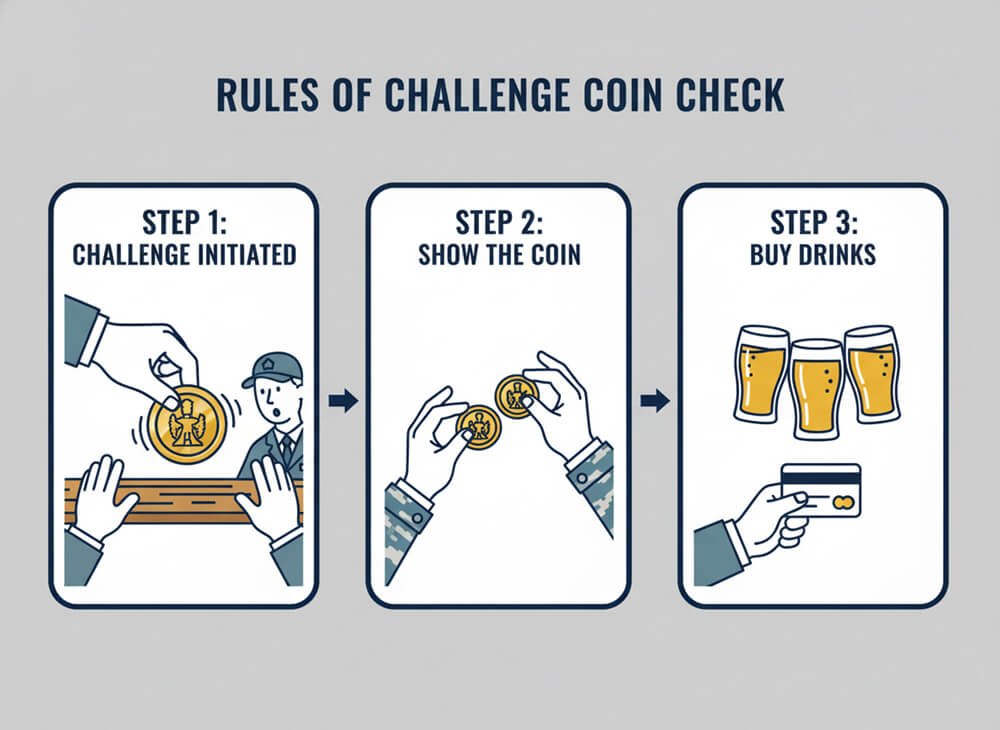
Å eie en mynt kommer med ansvar. Forstå riktig utfordre myntetiketten er avgjørende for å unngå å kjøpe en runde med drinker. Her er de offisielle utfordre myntreglene du må følge.
Så, hva gjør du med en utfordringsmynt? Du bærer det til enhver tid for å bevise ditt medlemskap, viser det for å hedre enheten din, og bruker det til å utfordre andre i en tradisjon for kameratskap kjent som “Myntsjekk.”
Hvordan en utfordring startes
EN “Myntsjekk” kan skje hvor som helst, når som helst. Det er mest vanlig i barer eller messehaller, men det kan skje under en treningsøkt eller et møte.
- Den visuelle utfordringen: En utfordrer trekker frem mynten sin og holder den oppe, og kunngjør en myntsjekk.
- The Audible Challenge (The Slam): Dette er den mest dramatiske metoden. Utfordreren slår mynten hardt ned på et bord eller en bar. Det distinkte “klirre” eller “dunk” av tung messing som treffer tre er signalet. Alle innen hørevidde vet hva den lyden betyr.
- Den utilsiktede utfordringen: Vær forsiktig! Hvis du ved et uhell slipper mynten og den treffer gulvet med en hørbar lyd, har du utilsiktet satt i gang en utfordring til alle i rommet. Tyngdekraften har ingen nåde.
Reglene for engasjement
Når utfordringen er live, har spillet strenge resultater:
| Situasjonen | Konsekvensen |
|---|---|
| Du mislykkes i utfordringen | Hvis du blir utfordret og ikke kan produsere mynten din umiddelbart, taper du. “Øyeblikkelig” er definert som et skritt og en rekkevidde. Du kan ikke løpe til bilen eller skapet ditt. Hvis det ikke er på deg, kjøper du. Du må kjøpe en runde med drinker til utfordreren (og alle andre som hadde mynten sin). |
| Du BESTÅR utfordringen | Hvis du, og alle andre som ble utfordret, lykkes med å produsere mynten deres, har utfordreren tapt. Utfordreren må da kjøpe en runde med drikke til hele gruppen. Dette hindrer folk i å utfordre frivillig bare for å se mynter. |
Kritisk etikette å huske
For å unngå krangel (og tape penger), må du følge disse fire gylne reglene for myntetikett:
- Bær det alltid: Dette er hele poenget. Du bør ha mynten i lommen, lommeboken eller hengt rundt halsen. Det er legender om soldater som blir utfordret i dusjen og produserer mynter fra såpeskåler eller sammenbitt tennene. Det er ingen unnskyldninger for antrekk.
- Gi den aldri: Hvis noen ber om å se mynten din, kan du vise den til dem, eller legge den på bordet. Men ikke gi den til dem. Tradisjonen sier at hvis du fysisk gir mynten din til noen andre, gir du den permanent til dem. Men hvis de tar den, er mynten nå deres ansvar. Vanligvis hold den i din egen besittelse.
- Ikke ødelegge det: Mynten din er et symbol på ære. Ikke bor et hull i den for å gjøre den om til en nøkkelring eller et halskjede. En ødelagt mynt anses som ugyldig og teller ikke under en myntsjekk.
- En utfordringsregel: Hvis du utfordrer noen og de mislykkes og kjøper en drink til deg, kan du ikke umiddelbart utfordre dem igjen bare for å få mer gratis drinker. Vær rettferdig.
Hvordan utfordringsmynter presenteres
Å gi en mynt er et ritual i seg selv. Det gjøres nesten aldri tilfeldig. Leveringsmåten forsterker båndet mellom giver og mottaker.
The Secret Handshake (The Palm Transfer)
Dette er den mest tradisjonelle og respekterte metoden, som går tilbake til Boerekrigen. Giveren (vanligvis en sjef eller seniorleder) legger mynten i håndflaten på høyre hånd. De strekker ut hånden for et håndtrykk. Når de griper mottakerens hånd, presser de mynten inn i mottakerens håndflate.
Denne overføringen er ofte usynlig for tilskuere. Det er et øyeblikk med privat, personlig anerkjennelse. Hvis du kjenner en mynt under et håndtrykk, ikke trekk deg unna eller se på den umiddelbart. Ta godt tak i den, fullfør håndtrykket, se giveren i øynene og nikk. Du kan undersøke mynten senere. Dette skjønnet understreker at æren er for deg alene.
Formell anerkjennelse
Mynter presenteres også åpent under seremonier. På slutten av Air Force Basic Military Training mottar nye flyvere “Airman's Coin” i en seremoni som markerer overgangen deres fra trainee til Airman. På samme måte blir mynter gitt ved forfremmelser eller pensjoneringer som en offentlig anerkjennelse av en karrieres verdi av tjeneste.
Beyond the Military: Hvem andre bruker utfordringsmynter?
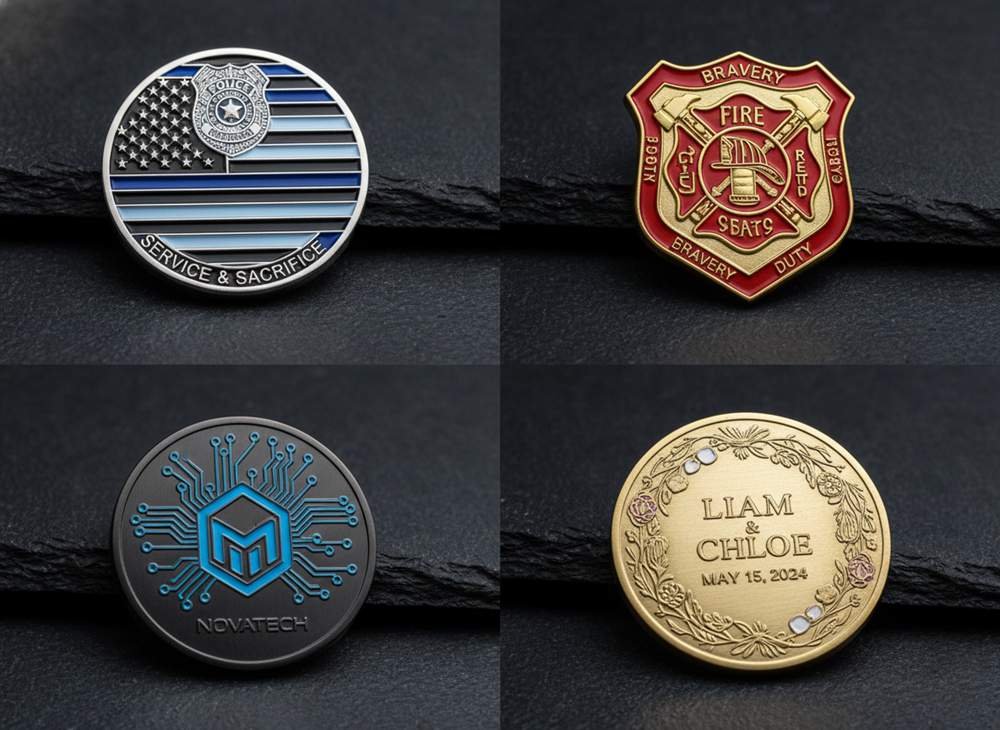
Mens tradisjonen ble smidd i brannene til militær konflikt, har utfordringsmynten overskredet sin opprinnelse. I dag er det et universelt symbol på takknemlighet som brukes av mange ulike sektorer i samfunnet.
First Responders (politi, brann, EMS)
Politifolk og brannmenn deler et lignende bånd av fare og brorskap med militæret. De har fullt ut omfavnet utfordringsmynttradisjonen. Politimynter har ofte distriktsnummeret “Tynn blå linje” flagg, eller spesifikke enhetslogoer som K-9 eller SWAT. Brannmenn bruker mynter for å markere stasjonstilhørighet eller for å minnes spesifikke store branner de kjempet sammen. For disse heltene representerer mynten delt risiko og gjensidig beskyttelse.
Bedriftsverdenen
Bedrifter har innsett at et papirvisitkort blir glemt på sekunder, men en tungmetallmynt blir oppbevart i årevis. Store selskaper bruker tilpassede mynter for merkevarebygging, anerkjennelse av ansatte og salgspriser.
- Ansatt anerkjennelse: I stedet for papirsertifikat får topputøvere en “Gulllag” mynt.
- Merkevarebygging: Selskaper som Google og Facebook har preget mynter for å gi til partnere på konferanser. Det etterlater et varig inntrykk av kvalitet og stabilitet.
- Teambuilding: Mynter gis på slutten av bedriftens retreater for å indikere at teamet har bundet seg og er klar for regnskapsåret som kommer.
Regjering og politikk
Tradisjonen går helt til topps. Presidenten i USA (POTUS) har en personlig utfordringsmynt, det samme har visepresidenten og forsvarsministeren. Disse blir ofte gitt til utenlandske dignitærer, sikkerhetsdetaljer eller militært personell som en diplomatisk gave på høyt nivå. En POTUS-mynt regnes som en av de sjeldneste og mest verdifulle myntene å holde.
Personlig og sivil bruk
Sivile har funnet kreative bruksområder for disse holdbare minnene:
- Bryllup: Par lager tilpassede mynter med navn og bryllupsdatoer som unike festgaver.
- Minnesmerker: Familier slår mynter for å hedre livet til en kjær som har gått bort.
- Geocaching: I dette globale scavenger hunt-spillet, “Geomynter” spores når de beveger seg fra cache til cache rundt om i verden.
- Samler inn: Numismatikk (myntinnsamling) har utvidet seg til å inkludere utfordringsmynter, med entusiaster på jakt etter sjeldne eller historisk betydningsfulle biter.
Design og tilpasning: Hvordan de er laget
En del av æren ved å motta en mynt er å kjenne til håndverket som lå i den. Moderne mynter er svært tilpassbare, slik at enheter kan fortelle sin spesifikke historie gjennom metall.
| Komponent | Detaljer |
|---|---|
| Uedle metaller | Mynter er vanligvis utstanset av tungmetaller som messing, kopper, eller sinklegering. Messing foretrekkes for sin vekt og førsteklasses følelse (den “dunk” lyd), mens sinklegering tillater intrikate utskårne former. |
| Plating & Fullfør | Metallet er belagt med gull, sølv, bronse eller svart nikkel. Antikke finisher er populære fordi de fremhever 3D-relieffet og gir mynten et kampslitt, historisk utseende. |
| Emalje | Hard emalje gir en jevn, smykkelignende finish der malingen er i flukt med metallet. Myk emalje etterlater metallryggene hevet, noe som gir en teksturert følelse. |
| Egendefinerte former | Mynter trenger ikke lenger være runde. De kan kuttes i form av jagerfly, hundemerker, skjold eller til og med staten Texas. |
| Funksjonelle oppgraderinger | Moderne design inkluderer ofte flaskeåpnere, spinnere eller skrutrekkere, noe som gir nytte til tradisjonen. |
Ofte stilte spørsmål (FAQ)
Spørsmål: Kan sivile eie eller kjøpe utfordringsmynter?
EN: Ja, absolutt. Mens noen enhetsspesifikke mynter er opptjent og begrenset til medlemmer, er det ingen lover som hindrer sivile i å eie, samle inn eller designe sine egne utfordringsmynter. Mange sivile mottar dem som gaver fra tjenestemedlemmer eller kjøper dem for å støtte militære veldedige organisasjoner.
Spørsmål: Slår en mynt fra en høyere rangering en lavere rangering i en myntsjekk?
EN: Generelt sett nei. I en standard myntsjekk er en mynt en mynt. Å ha en mynt holder deg rett og slett trygg fra å kjøpe drikke. Imidlertid, i noen livlige varianter av spillet, kan en mynt fra en høyere rangering (som en general eller POTUS) betraktes som en “trumfkort,” men dette varierer etter enhetstradisjoner.
Spørsmål: Hva skjer hvis jeg mister utfordringsmynten?
EN: Hvis du mister mynten din, er du sårbar! Inntil du erstatter den, vil du miste hver myntsjekk du møter. Det er best å erstatte den så raskt som mulig. Noen enheter lar deg kjøpe en erstatning; andre kan kreve at du tjener det igjen.
Spørsmål: Kan jeg bære mynten min i lommeboken?
EN: Ja, mange gjør det. Vær imidlertid oppmerksom på at tykkelsen på en metallmynt kan skade kredittkort eller strekke skinn over tid. Mange samlere foretrekker å bære dem i en dedikert lomme eller en liten skinnveske, for å hedre pilottradisjonen fra første verdenskrig.
Spørsmål: Er det respektløst å kjøpe en utfordringsmynt jeg ikke har tjent?
EN: Det avhenger av intensjon. Å kjøpe en mynt for å legge til en samling eller for å hedre en enhet er greit. Å kjøpe en mynt for å late som om du tjente i en enhet du faktisk ikke tjenestegjorde i (Stolen Valor) er svært respektløst og fordømt av samfunnet.
Konklusjon
Fra de støvete slettene under Boerekrigen til skyttergravene under første verdenskrig, og inn i dagens moderne styrerom og politistasjoner, har utfordringsmynten gått en lang og lang vei. Den har utviklet seg fra en enkel identifikator til et komplekst symbol på stolthet, overlevelse og brorskap.
Hva betyr det å få en utfordringsmynt? Det betyr at du har blitt sett. Det betyr at din innsats, din tapperhet eller din lojalitet har blitt anerkjent av dine jevnaldrende og ledere. Det er en tung, håndgripelig påminnelse om at du er en del av noe som er større enn deg selv. Det er et håndtrykk som varer evig.
Så hvis du noen gang er heldig nok til å føle den kalde messingen presset inn i håndflaten din, ta godt tak i den. Godkjenn historien du nå har. Og viktigst av alt - legg den i lommen. Du vet aldri når noen kan slå en mynt på baren, og du vil definitivt ikke være den som kjøper neste runde.