Wat stellt de Purple Awareness Ribbon Pin duer?
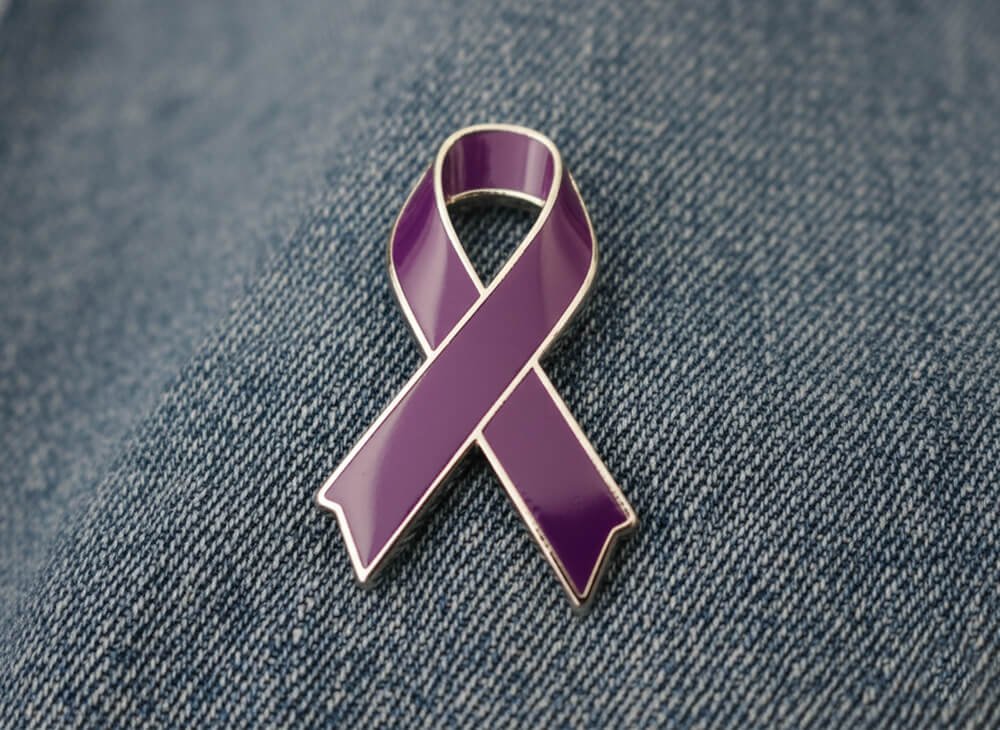
Op den éischte Bléck ass e Bändchen just eng Loop aus Stoff oder Metall. Awer schielen d'Schichten zréck, an Dir fannt eng räich Tapisserie vu Bedeitung. De purpurroude Sensibiliséierungsband Pin ass en universellt Symbol dat Grenzen a Sproochen iwwerschreift. Et ass haaptsächlech e Gespréichsstarter, e Wee fir ze soen “Ech këmmeren” oder “ech erenneren mech” ouni ze schwätzen.
De Kär Symbolismus
Firwat droe mir dës Pins? D'Grënn si sou variéiert wéi d'Leit déi se maachen, awer si falen allgemeng an dräi emotional Piliere:
- Courage an Iwwerliewe: Vill vun de Bedéngungen, déi mam purpurroude Band verbonne sinn - wéi Bauchspeicheldrüs Kriibs oder Gewalt am Stot - si formidabel Géigner. D'Pin droen bedeit d'Tapferkeet déi néideg ass fir all Dag z'erwächen an dës Schluechte ze kämpfen. Et Éieren den Iwwerliewensinstinkt vis-à-vis vun iwwerwältegend Chancen.
- Hoffnung a Solidaritéit: Fir Patienten an Affer kann d'Rees onheemlech isoléierend fillen. Anerer e purpurroude Pin ze gesinn, handelt als Beacon vu Solidaritéit. Et seet hinnen datt si net eleng sinn, datt et eng Gemeinschaft hannert hinnen ass, déi fir hir Erhuelung a Wuelbefannen roott.
- Éier an Dignitéit: De Pin gëtt dacks gedroen fir d'Erënnerung un déi verluer ze éieren. Et ass en Zeeche vu Respekt, fir datt hir Geschichten a Kämpf net vun der Gesellschaft vergiess ginn.
D'Psychologie vun der Faarf Purple
D'Wiel vu violett ass wäit vun zoufälleg. Faarfpsychologie spillt eng massiv Roll firwat dëse spezifesche Faarftéin fir sou komplex Ursaachen gewielt gouf. Historesch war purpurfarbstoff onheemlech deier ze produzéieren, aus rare Mieresschleeken gemaach. Dës Knappheet bedeit datt et fir d'Royalitéit an den Adel reservéiert war. Haut iwwersetzt dës Associatioun an Dignitéit. Mir benotze purpur fir ze weisen datt d'Patienten, onofhängeg vun hirem kierperlechen Zoustand, et verdéngen mat dem gréisste Respekt an Adel behandelt ze ginn.
Ausserdeem ass violett en eenzegaartegt Balance am Faarfspektrum. Et kombinéiert déi brennend, energesch Intensitéit vu roude mat der roueger, stabiler Stabilitéit vu blo. Dës Harmonie representéiert d'Gläichgewiicht déi néideg ass fir chronesch Krankheet oder Trauma ze navigéieren - d'Energie fir ze kämpfen kombinéiert mat der roueger Widderstandsfäegkeet fir z'erhalen. A ville Kulturen ass violett och mat Wäisheet, Spiritualitéit an Erliichterung verbonnen, wat et e passende Choix mécht fir neurologesch Bedéngungen wéi Alzheimer an Epilepsie, wou d'Geheimnisser vum Gehir zentral fir d'Ursaach sinn. Et stellt d'Komplexitéit vun dëse Konditiounen an d'Wäisheet duergestallt duerch déi schwiereg Rees fir se ze navigéieren.
Iwwergräifend Lëscht vun Ursaachen ënnerstëtzt vu Purple Ribbon Pins

Am Géigesaz zum rosa Bändchen, dee bal ausschliesslech un Broschtkriibs gebonnen ass, ass de purpurroude Bändchen eng “generalist” op déi bescht méiglech Manéier. Et gëtt seng Ënnerstëtzung fir eng grouss Gamme vu medizineschen a sozialen Themen. Hei ass eng detailléiert Decompte vun den Ursaachen, déi hannert dem purpurroude Banner rallyen.
1. Cancer Sensibiliséierung
De purpurroude Band ass e kritescht Symbol an der Onkologiegemeinschaft, representéiert e puer aggressiv an dacks iwwersinn Aarte vu Kriibs.
- Bauchspeicheldrüs Kriibs: Vläicht déi dréngendst Associatioun mam purpurroude Band. Bauchspeicheldrüs Kriibs gëtt dacks genannt “stille Killer” well Symptomer wéi Geelsucht a Gewiichtsverloscht selten erschéngen bis déi spéider Stadien. Et ass déi véiert Haaptursaach vu Kriibsverwandten Doud an den USA, mat engem Iwwerliewensquote deen häerzzerräissend niddereg bleift. Campagnen wéi “Loun Hoffnung” an “Purple fir en Zweck” vertrauen op dëse Pin fir Finanzéierung fir fréi Detektiounsfuerschung ze féieren.
- Testikulär Kriibs: Haaptsächlech am Abrëll unerkannt, de purpurroude (heiansdo violett) Bändchen hëlleft de Stigma ronderëm d'Gesondheet vun de Männer ze briechen, jonk Männer encouragéieren Selbstprüfungen fir fréizäiteg Erkennung ze maachen.
- Leiomyosarcoma: Dëst ass eng selten Form vu mëllen Tissue Kriibs. De purpurroude Band hëlleft e Liicht op dës “orphan Krankheeten” déi dacks manner Finanzéierung kréien wéi grouss Cancers.
- Schilddrüs Kriibs: Wärend heiansdo representéiert vun engem Teal / Pink / Blo Tricolor, gëtt de purpurroude Band och benotzt fir Halskontrollen ze encouragéieren fir Klumpen fréi z'entdecken.
- Hodgkin Lymphom: Dëse Kriibs vum Lymphsystem benotzt de purpurroude (dacks violett) Bändchen fir Patienten z'ënnerstëtzen, déi Chemotherapie a Bestrahlung maachen.
2. Neurologesch a Gehir Konditiounen
Well purpur de Geescht a Wäisheet symboliséiert, ass et de Standardträger fir vill Konditiounen déi d'Gehir beaflossen.
- Alzheimer Krankheet: Déi “Laang Äddi.” Purple Bänner symboliséieren hei déi verblendend Erënnerunge vu Patienten an déi immens Belaaschtung op d'Pfleegepersonal. D'Alzheimer Association adoptéiert violett fir de Kampf fir den éischten Iwwerliewenden vun der Krankheet ze bedeiten.
- Epilepsie: De 26. Mäerz ass “Purple Dag,” e globalt Basis Event gewidmet fir d'Bewosstsinn iwwer Epilepsie ze erhéijen. D'Band zielt d'Mythen iwwer Krampfungen ze verdreiwen an de soziale Stigma ze reduzéieren, deen d'Patiente konfrontéieren.
- Migränen a Kappwéi: Oft entlooss als “just e Kappwéi,” chronesch Migränen kënnen debilitéierend sinn. De purpurroude Band validéiert de Schmerz a Liewensqualitéit Impakt dës Konditiounen hunn.
- Chiari Malformatioun: Dëse strukturellen Defekt am Cerebellum (deen Deel vum Gehir, deen d'Gläichgewiicht kontrolléiert) gëtt duerch violett vertruede fir d'Publikum iwwer dës dacks onsichtbar Behënnerung ze educéieren.
- ADD/ADHD: De purpurroude Band ënnerstëtzt Neurodiversitéit, a plädéiert fir besser pädagogesch Ëmfeld fir Kanner an Erwuessener mat Opmierksamkeetsdefizitstéierungen.
3. Autoimmun a Chronesch Krankheeten
Fir Krankheeten wou de Kierper sech selwer attackéiert, oder wou Péng chronesch an onsichtbar ass, déngt de purpurroude Pin als Validatiounsbadge.
- Lupus: Am Mee gefeiert, Lupus Sensibiliséierung benotzt de purpurroude Band fir d'Geheimnis vun dëser Krankheet ze markéieren, déi all Deel vum Kierper (Haut, Gelenker, Organer) beschiedegen kann.
- Crohns Krankheet a Kolitis: Dës entzündlech Darmkrankheeten (IBD) beaflossen Millioune. De purpurroude Band hëlleft dës ze bréngen “Buedzëmmer Krankheeten” aus dem Schatten an an den ëffentlechen Discours.
- Cystesch Fibrose: Eng genetesch Stéierung déi d'Lunge an d'Verdauungssystem beaflosst. De purpurroude Band representéiert d'Widderstandsfäegkeet vun deenen, déi fir all Otem kämpfen.
- Fibromyalgie & Neuropathie: Fir Bedéngungen, déi duerch verbreet muskuloskeletal Schmerz charakteriséiert sinn, ass d'Band e Symbol datt de Schmerz wierklech ass, och wann et net op engem Röntgenstrahl gesi ka ginn.
4. Sozial an humanitär Ursaachen
Nieft der Gesondheet ass de purpurroude Band e staarke Verteideger vu Mënscherechter a Sécherheet.
- Gewalt am Stot Sensibiliséierung: Ugeholl an de spéiden 1980er, ass de purpurroude Bändchen dat primärt Symbol fir déi batter Fraebewegung. Et duerstellt d'Plooschteren op d'Affer, awer méi wichteg, d'Éier vun den Iwwerliewenden. Campagnen wéi “Keng Excuse fir Mëssbrauch” benotzt de Pin fir d'Stille ronderëm d'familiär Gewalt ze briechen.
- Déieremëssbrauch Präventioun: Esou wéi et déi vulnérabel Leit schützt, symboliséiert de purpurroude Bändchen en Engagement fir déi mënschlech Behandlung vun Déieren an de Kampf géint Grausamkeet.
- Elder Mëssbrauch: Dës Ursaach konzentréiert sech op eeler Erwuessener vu Vernoléissegkeet, kierperleche Schued a finanzieller Ausbeutung ze schützen.
- Opioid Kris: An de leschte Jore gouf purpur benotzt fir d'Sensibiliséierung iwwer d'Erhuelung vun der Sucht an d'Iwwerdosis-Epidemie z'erhéijen, wat signaliséiert datt d'Erhuelung méiglech ass.
- Spirit Day (Anti-Mobbing): Speziell bannent der LGBTQ+ Gemeinschaft, e purpurroude (oder e purpurroude Pin) am Oktober schéckt e Message vun Ënnerstëtzung un d'Jugend déi géint Mobbing a Belästegung konfrontéiert sinn.
De Bewosstsinnskalenner: Wann Dir Äre Purple Pin droen
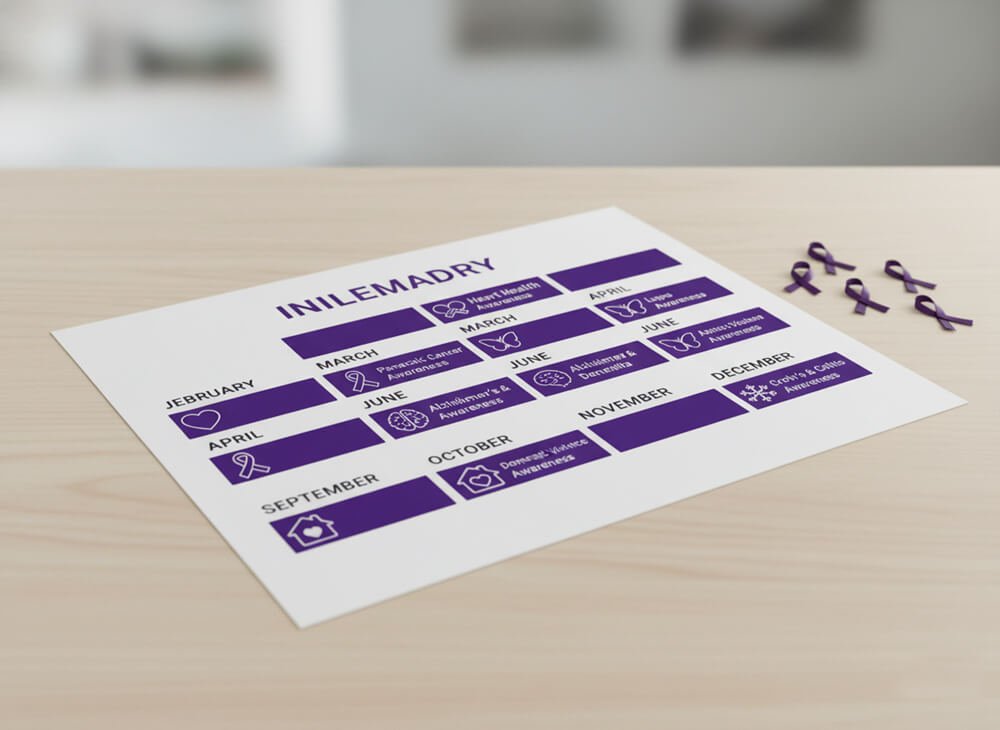
Och wann Dir sécher Är Sensibiliséierungspin d'ganzt Joer droe kënnt, sinn spezifesch Méint designéiert fir d'Stëmmen vun dësen Ursaachen ze verstäerken. Äre Pin an dësen Zäiten ze droen hëlleft zu enger globaler Welle vun Ënnerstëtzung bäidroen.
| Mount | Primär Purple Ribbon Ursaachen |
|---|---|
| Januar | Gebärmutterkriibs Bewosstsinn |
| Februar | Iessstéierunge Bewosstsinn |
| Mäerz | Epilepsie Sensibiliséierung (Purple Day ass de 26. Mäerz); Nier Kriibs; Multiple Myelom |
| Abrëll | Testicular Kriibs; Déieremëssbrauch Präventioun; Mount vum Militäresch Kand |
| Mee | Lupus Bewosstsinn; zystesch Fibrose; Brain Cancer (dacks Grey, awer Purple gëtt benotzt) |
| Juni | Alzheimer a Gehir Bewosstsinn; Migräne / Kappwéi Bewosstsinn; Elder Mëssbrauch Sensibiliséierung (15. Juni) |
| Juli | Sarcoidosis Bewosstsinn |
| August | Iwwerdosis Bewosstsinn; Spinal Muskelatrophie |
| September | Welt Alzheimer Mount; gynäologesche Kriibs; Suizidpräventioun (Purple/Teal Mix) |
| Oktober | Gewalt am Stot Bewosstsinn (Major Campagne); Liewer Kriibs (Smaragd / Purple) |
| November | Bauchspaicheldrüs Kriibs Bewosstsinn; National Epilepsie Mount; Prematuritéit Bewosstsinn |
| Dezember | Crohns a Kolitis Bewosstsinn |
D'Geschicht an d'Evolutioun vun der Bewosstsinn Ribbon
D'Konzept fir e Bändchen ze droen fir Ënnerstëtzung ze signaliséieren ass keng modern Erfindung. Seng Wuerzelen ginn zréck an d'19. Joerhonnert, wou giel Bänner vun de Familljen vun Zaldoten gedroe goufen fir Hoffnung op hire séchere Retour ze bedeiten. Dës Traditioun gouf a Marschlieder a Folklore veréiwegt. Wéi och ëmmer, déi modern Iteratioun vum Sensibiliséierungsbändchen - d'Schleife vu faarwege Stoff, deen op eng Këscht gedréckt ass - huet wierklech an den 1970er Jore Form gemaach. Dëst gouf vum Penne Laingen ausgeléist, déi giel Bänner ëm Beem gebonnen huet fir hire Mann, e Geisel am Iran, z'ënnerstëtzen.
D'1990er hunn eng Explosioun vu visuelle Plädoyer gesinn. De roude Bändchen gouf e Symbol fir d'HIV/AIDS Kris am Joer 1991, fir eng visuell Sprooch fir Aktivismus ze kreéieren. Kuerz drop gouf de rosa Bändchen fir Brustkrebs adoptéiert. De purpurroude Band entstanen an dëser Ära vu faarwege Plädoyer.
Eng schrecklech Geschicht iwwer d'Verbindung vum purpurroude Bändchen zu Bauchspeicheldrüs Kriibs betrëfft d'Rose Schneider. No hirer Diagnostik huet hir Duechter eng Glamourfoto gemaach vun hirem purpurroude Droen fir hir trotz der Krankheet un hir Schéinheet ze erënneren. Nom Rose säi Passage ass dëst perséinlecht Familljesymbol zu enger nationaler Bewegung gewuess, schlussendlech vum Pancreatic Cancer Action Network adoptéiert. Ähnlech huet déi batter Fraebewegung violett adoptéiert fir d'Faarf vu Plooschteren als Badge vu Courage an Iwwerliewe zréckzekréien, en Zeeche vu Péng an e Symbol vu Kraaft ze transforméieren.
Fabrikatioun: Zorte vu Purple Email Pins
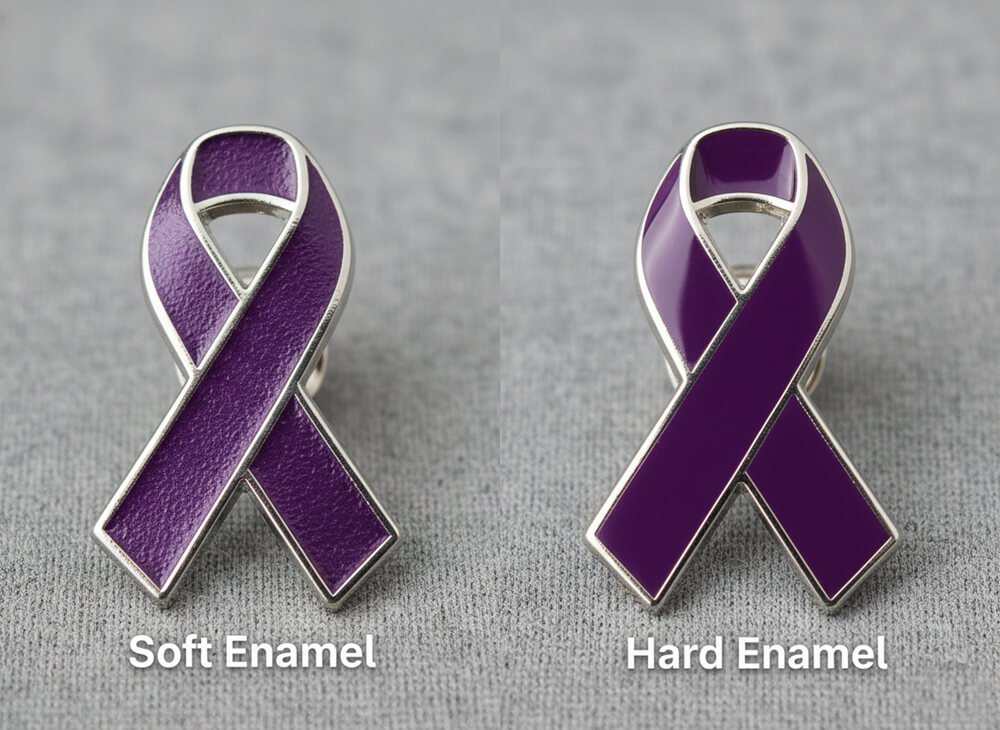
Wann Dir décidéiert fir e purpurroude Band Pin ze kafen oder ze designen, wäert Dir séier Industriebedéngunge begéinen iwwer wéi se gemaach ginn. Den Ënnerscheed tëscht mëllen an haarde Email ze verstoen ass entscheedend fir de Look an d'Haltbarkeet ze kréien déi Dir wëllt.
1. Soft Email Pins
Dëst ass dee meescht üblechen a kosteneffektive Stil. A mëllen Emaille Pins ginn d'Metalllinnen opgehuewen, an de purpurroude Emaillelack füllt d'Verzéckt Gebidder. Dëst erstellt eng texturéiert, dimensional Uewerfläch déi Dir fille kënnt wann Dir den Daum driwwer leeft.
Bescht fir: Spendenaktiounen, grouss-Skala Verdeelung, an Design wou Dir wëllt e “3D an” fillen. D'Liicht fënnt d'Rippen, mécht den Design Pop.
2. Hard Emaille Pins (Cloisonné)
Wann Dir no Bijouqualitéit sicht, ass dëst d'Wiel. Wärend der Fabrikatioun gëtt den Emaille liicht méi héich wéi d'Metalllinnen gefüllt an duerno bei enger héijer Temperatur gebak. Duerno gëtt d'Pin gemoolt a poléiert bis d'Metall an d'Faarf flauscheg an eben sinn. D'Resultat ass e glat, glasähnlechen Finish.
Bescht fir: Firmenkaddoen, Joer-vun-Service Auszeechnunge, a Pins geduecht fir laangfristeg alldeeglech Droen op Lapels oder Poschen. Si sinn héich kraazbeständeg.
3. Aner Fabrikatioun Stiler
- De Schlag: Dës Pins benotzen guer keng Faarf. Si sinn aus Metall (wéi antik Gold oder Sëlwer) dat mam Bändchen Design gestempelt ass. Si bidden e klassesche, understated Look.
- Offset gedréckt: Wann Ären Design e Gradient enthält (ofbleckt vu hell bis donkel purpur) oder eng Foto (wéi e Bild vun engem beléiften op der Band), dréckt dës Method d'Bild direkt op d'Metall an iwwerdeckt et mat enger kloerer Epoxykuppel.
- 3D Besetzung: Dëst sinn skulptural Pins. Amplaz vun enger flaacher Zeechnung gesäit de Pin aus wéi eng Miniaturstatu vun engem Bändchen, vläicht ëm en Häerz oder eng Dauf gewéckelt.
Personnalisatioun: Designt Ären eegene Purple Ribbon Pin
Wärend e einfache purpurroude Band mächteg ass, personaliséiere se eng Schicht vu perséinlecher narrativ. Egal ob Dir fir e Charity Spadséiergank oder e Memorial Service bestellt, Dir kënnt den Design personaliséieren fir Är spezifesch Geschicht ze erzielen.
Symbolesch Elementer addéieren: Dir musst net nëmmen un d'Band hänken.
Päiperleken: Dacks bäigefüügt fir Lupus (symboliséiert d' “Schmetterlingsausschlag” an Transformatioun) oder allgemeng Hoffnung.
Gehir Ikonen: Perfekt fir Alzheimer oder Mental Health Plädoyer.
Puzzlestécker: Dacks benotzt fir d'Komplexitéit oder d'Geheimnis vu Bedéngungen wéi Autismus ze representéieren (obwuel d'Gemeinschaftsvirléiften iwwerpréift) oder onbekannt medizinesch Krankheeten.
Engel Wings: Eng beréierend Ergänzung wann de Pin e Gedenkminutt fir e verluerene beléiften ass.
Text an Typographie:
Text dobäizemaachen mécht de Message explizit. Dir kënnt Gebuerts- a Vergaangenheetsdatum enthalen, den Numm vun engem Iwwerliewenden oder mächteg Slogans wéi “Hoffnung,” “Iwwerliewenden,” “Break the Silence,” oder “Krieger.”
Backing Attachments:
Wéi de Pin befestegt ass wichteg.
Päiperlek Kupplung: Standard Pinch Spannung. Gutt fir alldeeglech Gebrauch.
Magnéitescht Réck: Wichteg wann Dir de Pin op deiere Stoffer wéi Seidblousen oder Kostüm-Revers dréit, well et verhënnert datt d'Material stécke Lächer.
Sécherheet Pin: Besser fir schwéier Mäntel oder aktive Kleedung, wou eng Kupplung kéint ofbriechen.
Decoding Multi-Color Ribbon Bedeitungen
Heiansdo ass d'Liewen net monochrom. Dir kënnt violett gesinn mat anere Faarwen op engem eenzege Pin. Dës Kombinatioune representéieren spezifesch intersektionell Ursaachen oder Konditiounen.
- Purple + Téi: Dës Kombinatioun ass d'Symbol fir Suizidpräventioun Sensibiliséierung. Et representéiert d'Hoffnung op Erhuelung (Teal) an d'Trauer vum Verloscht (violett). Et gëtt och fir sexuell iwwerfalen Sensibiliséierung a bestëmmte Kontexter benotzt.
- Purple + Blo: Oft benotzt fir Pädiatresch Stroke Sensibiliséierung oder Rheumatoid Arthritis.
- Purple + Gréng: Representéiert Hospice a Palliativfleeg, symboliséiert Komfort an Dignitéit um Enn vum Liewen.
- Purple + Schwaarz: E somber Symbol fir Trauer Affer vu Gewalt oder Mord benotzt.
- Purple + Gold: Eng mächteg Kombinatioun representéiert Epilepsie (Purple) nieft Kandheet Kriibs (Gold).
- Purple + Sëlwer: Benotzt fir Parkinson Krankheet an International Iwwerdosis Sensibiliséierung.
- Rainbow + Purple: Speziell fir LGBTQ+ Spirit Day benotzt fir géint Mobbing ze stoen.
Wéi benotzt Dir Purple Pins fir Plädoyer an Ënnerstëtzung
De Pin ze besëtzen ass Schrëtt eent. Benotzt et fir Ännerung ze féieren ass Schrëtt zwee. Hei ass wéi Dir dës Metallembleme benotze kënnt fir maximal Impakt.
Individuell Aktioun:
Maacht Äre Pin op Ärem Revers, Halsband oder Lanyard op der Aarbecht. Et handelt als “roueg Handschlag.” Wann Dir en aneren Iwwerliewenden oder Familljemember begéint, erkennen se d'Symbol direkt, a kreéiert eng direkt Vertrauensbindung. Et invitéiert och Froen vun deenen déi et net wëssen, wat Iech eng Ouverture gëtt fir se ze educéieren.
Gemeinschaftsevenementer:
Fundraising: Pins sinn exzellent bëlleg, héich Belounungsartikele fir ze verkafen. Organisatiounen wéi PanCAN oder d'Alzheimer Association verkafen dacks Pins fir vital Fuerschung ze finanzéieren.
Erënnerungen: D'Verdeelung vu personaliséierte Pins bei engem Begriefnes ass e beréierende Wee fir d'Schluecht vun engem geliebten ze honoréieren. Et gëtt de Participanten e kierperlecht Token vun Erënnerung fir heem ze huelen.
Spazéieren/Lafen: Benotzt Pins als “Medaillen” fir Participatioun oder als Ureiz fir Spendenaktiounsziler z'erreechen.
Institutional Notzung:
Schoulen kënnen purpurroude Pins um Spirit Day verdeelen fir eng Anti-Mobbing Kultur ze förderen. D'Spideeler an d'Hospizen hunn dacks d'Personal droen fir Solidaritéit mat Patienten a Familljen ze weisen, wat signaliséiert datt d'medizinescht Team emotional an d'Betreiung investéiert ass.
Kafen Guide: Bulk vs Individuelles
Individuell kafen:
Wann Dir no engem eenzegen Pin fir Iech selwer oder e Kaddo sicht, fokusséiert op Qualitéit. Sich no Hard Email (Cloisonné) Pins. Si kucken wéi Bijouen a wäerte fir Joer daueren ouni ze verschwannen oder ze kraazt.
Kaaft a Bulk (100+):
Wann Dir e Spadséiergank oder e Fundraiser organiséiert, ass deen eenzege Wee fir a bulk ze kafen.
Käschte Effizienz: De Präis pro Eenheet fällt drastesch wann Dir 100 oder méi bestellt. E Pin deen $ 10 individuell kascht kann op manner wéi $ 1 am bulk falen.
Konsistenz: Eng Partie bestellen garantéiert datt jidderee genau dee selwechte Schatt vu purpur huet, a schafft eng vereenegt visuell Front.
Source: Fir personaliséiert Designen, spezialiséiert Pin Hiersteller si bescht. Fir Standardbänner kënnen Online Maartplaze gutt Offeren ubidden, awer oppassen op Qualitéit. Gleeft net de Mythos dat “bëlleg heescht schlecht Qualitéit”-vill bezuelbare Pins ginn op haltbar Zinklegierungsbasen gemaach déi onheemlech gutt halen.
Oft gestallte Froen (FAQ)
1. Wat bedeit e purpurroude Bändchen op enger Begriefnes ze droen?
E purpurroude Bändchen op engem Begriefnes ze droen bedeit normalerweis datt de Verstuerwenen aus engem Zoustand assoziéiert mat der Faarf gestuerwen ass, wéi Bauchspeicheldrüs Kriibs, zystesch Fibrose oder Komplikatioune vun Alzheimer. Et kann och en Doud am Zesummenhang mat Gewalt am Stot oder Iwwerdosis bedeiten. Et ass e Geste fir hir spezifesch Schluecht ze honoréieren.
2. Gëtt et en Ënnerscheed tëscht dem purpurroude a violett Bändchen?
Am Kontext vu Sensibiliséierungsbänner ginn d'Begrëffer dacks austauschbar benotzt. Wéi och ëmmer, speziell fir Hodgkin's Lymphom, gëtt de Band heiansdo als beschriwwen “violett.” Fir déi meescht allgemeng Zwecker (Alzheimer, Lupus, etc.), “mov” ass de Standard Begrëff benotzt.
3. Kann ech meng eegen Sensibiliséierungskampagne mat engem purpurroude Bändchen erstellen?
Jo. Sensibiliséierungsbänner sinn Public Domain Symboler. Wann Dir Iech fir eng selten Krankheet oder eng lokal Ursaach plädéiert, déi mat der Symbolik vu purpurroude (Dignitéit, Hoffnung, Iwwerliewe) ausgeriicht ass, kënnt Dir d'Band adoptéieren. Text oder eng eenzegaarteg Ikon op de Pin ze addéieren kann hëllefen, Är spezifesch Kampagne z'ënnerscheeden.
4. Stellt de purpurroude Band Sucht Erhuelung duer?
Jo, speziell iwwer d'Opioid Kris an allgemeng Iwwerdosis Sensibiliséierung. Wärend Teal heiansdo fir Sucht Erhuelung allgemeng benotzt gëtt, ass violett wäit vun der Erhuelungsbewegung ugeholl fir déi spirituell a wierdeg Rees fir d'Sucht ze iwwerwannen.
5. Wou soll ech meng purpurroude Bändchen op meng Kleeder leeën?
D'Standardplazéierung fir all Sensibiliséierungsstift ass op der lénker Revers oder der lénkser Säit vun der Këscht, iwwer d'Häerz. Dës Placement symboliséiert datt d'Ursaach Iech gär ass. Wéi och ëmmer, si kënnen och op Halsbanden, Hüts oder Lanyards fir Visibilitéit gedroe ginn.
Conclusioun
De purpurroude Emaille Sensibiliséierungsband Pin ass kleng a kierperlecher Gréisst, awer säin Impakt ass massiv. Et ass e Symbol dat d'Gewiicht vun der Erënnerung, d'Hellegkeet vun der Hoffnung an d'Kraaft vum Iwwerliewe dréit. Egal ob Dir et drot fir en Elterendeel ze honoréieren, deen an den Niwwel vun der Alzheimer verschwannen, e Frënd deen den alldeegleche Schmerz vu Lupus kämpft, oder eng perséinlech Victoire iwwer Kriibs oder Mëssbrauch, Dir hutt net nëmmen e Stéck Metall. Dir hutt eng Geschicht un.
Dir sidd mat enger globaler Gemeinschaft vu Krieger an Affekoten, déi refuséieren ze bleiwen iwwer d'Themen déi wichteg sinn. Andeems Dir d'Geschicht an déi verschidden Ursaachen versteet, déi dëst Bändchen duerstellt, gitt Dir dem Symbol méi déif Bedeitung.