Avaimenperän evoluutio ja merkitys
Ennen kuin sukeltaamme materiaalien teknisiin eritelmiin, on tärkeää ymmärtää avaimenperän rooli kulttuurissamme ja historiassamme. Avaimenperät eivät ole vain pidikkeitä; ne ovat historiallisia merkkejä.
Matkamuistoista statussymboleihin
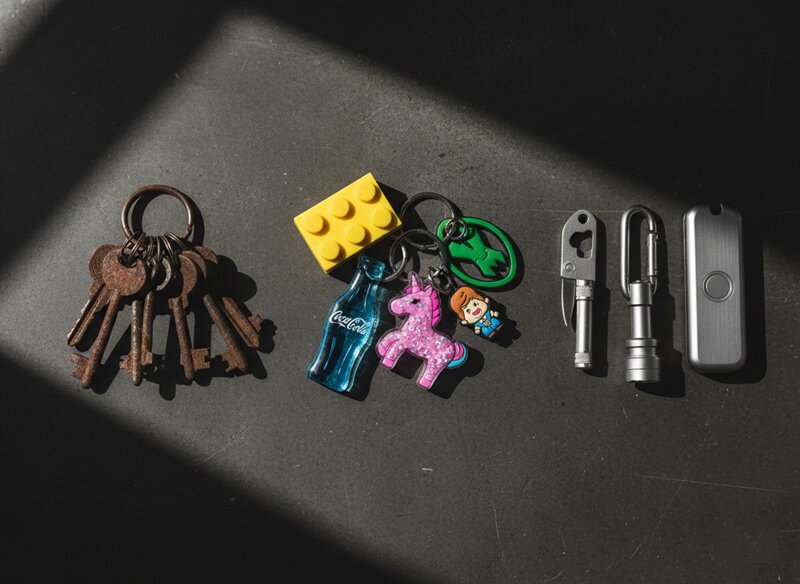
Historiallisesti avaimenperät olivat yksinkertaisia onnenkoruja. Nykyään ne toimivat mm “konkreettisia muistoja.” Kuten matkailukulttuurissa todetaan, matkamuistoavaimenperä Pariisista tai teemapuistosta ei ole vain metallipala; se on fyysinen ankkuri muistiin. Kun olet vuorovaikutuksessa sen kanssa päivittäin – avaat etuoven lukituksen tai käynnistät auton – olet alitajuisesti uudelleen yhteydessä siihen hetkeen. Tämä emotionaalinen yhteys tekee heistä niin voimakkaita lahjoja.
The “nyytti” Vallankumous
Avaimenperäistä on tullut perustarpeet “nyytti” (Stuff We All Get). Mutta kaikkia swageja ei ole luotu tasa-arvoisiksi. Teollisuus on siirtynyt halvoista kertakäyttötuotteista korkeahyödyllisiin tuotteisiin.
Intel Pentium -kotelo: Yksi kuuluisimmista esimerkeistä avaimenperän historiasta tapahtui vuonna 1995. Kun Intelin täytyi palauttaa vialliset Pentium P5 -sirut, se ei vain tuhonnut niitä. He koteloivat vialliset sirut muoviin ja muuttivat niistä työntekijöiden avaimenperät, joihin oli kaiverrettu lainaus toimitusjohtajalta Andy Grovelta. Tämä teki yrityksen epäonnistumisesta keräilykappaleen historiaa.
The “Poista ennen lentoa” Tag: Alun perin nämä olivat tiukasti toimivia punaisia nauhoja, joita maahenkilöstö käytti varmistaakseen, että hakaneulat poistettiin lentokoneesta ennen lentoonlähtöä. Silmiinpistävä punainen väri ja valkoinen teksti muuttuivat ikonisiksi. Muotimerkit ja moottoripyöräharrastajat omaksuivat ne. Miksi? Koska ne ovat suuria, pehmeitä (eivät naarmuta pyörän bensasäiliötä) ja visuaalisesti silmiinpistäviä. He siirtyivät teollisuusturvallisuustyökaluista katuvaatekuvakkeisiin.
Materiaalitiede – metallien hierarkia
Useimpien avainnippujen ydin on metallia. Se tarjoaa tarvittavan lujuuden avainten turvalliseen pitämiseen. Ero 1 dollarin avaimenperän ja 50 dollarin avaimenperän välillä johtuu kuitenkin usein metallurgiasta.
1. Titaaniseos: Apex-materiaali
Titaani on kiistaton huippuluokan avainnippujen kuningas. Sitä suositaan luksuslahjoissa ja vakavissa EDC-varusteissa.
Tiede: Titaanilla on kaikista metallielementeistä korkein lujuus-tiheyssuhde. Se on noin 45 % kevyempi kuin teräs, mutta yhtä vahva.
Korroosionkestävyys: Titaani on käytännössä immuuni ympäristön hyökkäyksille. Se ei ruostu suolaisessa vedessä, joten se on ihanteellinen rannikkoasumiseen.
Biologinen yhteensopivuus: Se on hypoallergeeninen. Jos sinulla on herkkä iho tai nikkeliallergia, titaani on turvallisin valinta.
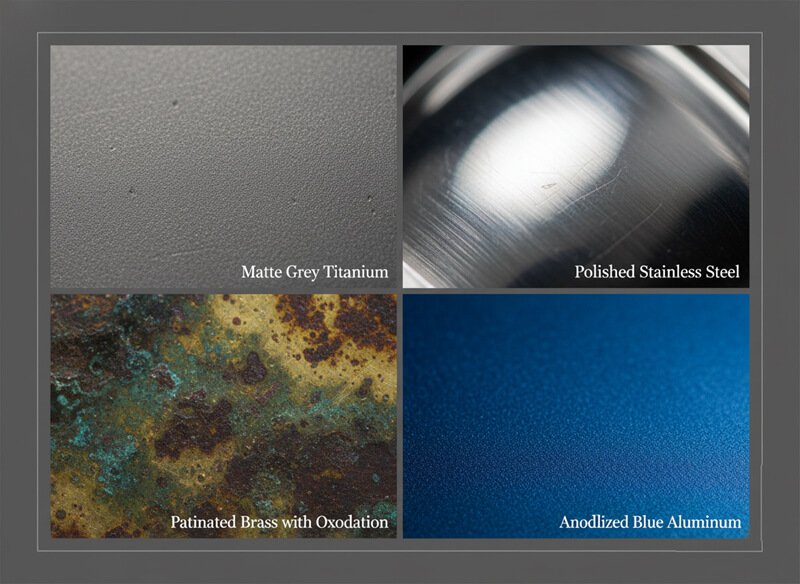
Ulkonäkö: Siinä on erottuva mattaharmaa viimeistely, joka huutaa “tekninen tarkkuus.”
2. Ruostumaton teräs: Luotettava työhevonen
Jos Titanium on ylellinen valinta, ruostumaton teräs on pragmaattinen valinta. Se on raudan, hiilen ja kromin seos. Kromi muodostaa passiivisen näkymätön kerroksen, joka estää ruostetta.
Kustannustehokkuus: Se tarjoaa parhaan tasapainon kestävyyden ja hinnan välillä. Se on raskaampaa kuin titaani, josta jotkut käyttäjät itse asiassa pitävät, koska se lisää tunnetta “aine” avaimiin.
Viimeistelyvaihtoehdot: Se voidaan kiillottaa peilikiiltoon tai harjata satiinisen ilmeen saamiseksi. Se on yleisin materiaali korkealaatuisissa kaupallisissa avaimenperäissä.
3. Kupari ja messinki: “Eläminen” Metallit
Kupari ja sen seos, messinki (kupari + sinkki), on valittu luonteensa vuoksi.
Patina vaikutus: Toisin kuin teräs tai titaani, jotka näyttävät ikuisesti samalta, kupari ja messinki reagoivat ympäristöön. Happi, kosteus ja käsistäsi tulevat öljyt saavat pinnan hapettumaan. Viikkojen ja kuukausien aikana kirkkaan kiiltävä messinkiavaimenperä tummuu ja kehittää ainutlaatuisia raitoja ja värejä. Tämä “patina” on keräilijöiden arvostama, koska se tekee jokaisesta kappaleesta ainutlaatuisen.
Antimikrobiset ominaisuudet: Kupari on luonnostaan oligodynaamista, mikä tarkoittaa, että se tappaa bakteerit joutuessaan kosketuksiin, mikä on mukava bonus esineelle, jota kosket päivittäin.
4. Sinkkiseos: The Customizer's Dream
Sinkkiseos (usein Zamak) on kaikkialla myynninedistämismaailmassa.
Valmistuksen etu: Sinkillä on alhainen sulamispiste ja se virtaa kuin vesi sulana. Tämän ansiosta valmistajat voivat ruiskuvalaa siitä uskomattoman monimutkaisia 3D-muotoja – ajatelkaa pienoisautoja, logoja tai monimutkaisia hahmoja – joita olisi mahdotonta työstää teräksestä.
Vaihtoehto: Se on hauras. Jos pudotat raskaan sinkkiavaimenperän betonille, se saattaa katketa. Se luottaa myös galvanointiin (kulta-, hopea-, nikkelipinnoitus) korroosionkestävyyteen. Jos pinnoituslastut halkeavat, alla oleva sinkki syöpyy (patametallimätä).
5. Alumiiniseos: kevyt koloristi
Alumiini on kolmasosa teräksen painosta. Se sopii karabiineille ja pullonavaajille, joissa paino on huolenaihe.
Anodisointi: Alumiini voidaan käsitellä sähkökemiallisesti väriaineen imemiseksi pintahuokosinsa. Tämä mahdollistaa loistavia metallivärejä – punaisia, sinisiä, vihreitä – jotka eivät halkeile kuten maali. Se on kuitenkin pehmeämpi kuin teräs, ja siinä näkyy naarmuja ajan myötä.
Yksityiskohtainen metallivertailumatriisi:
| Attribuutti | Titaaniseos | Ruostumaton teräs | Kupari / Messinki | Alumiiniseos |
|---|---|---|---|---|
| Korroosionkestävyys | #1 (yliluokkainen) | #2 (erinomainen) | #4 (mies) | #3 (erittäin hyvä) |
| Kovuus | #1 (vaikein) | #2 (korkea) | #3 (Keskitaso) | #4 (pehmein) |
| Painoprofiili | Ultrakevyt | Raskas | Erittäin raskas | Höyhenen kevyt |
| Hintapiste | $$$$ (korkea) | $$ (keskikokoinen) | $$$ (korkea) | $ (matala) |
| Paras käyttökotelo | Luksus / EDC | Päivittäinen kestävyys | Vintage estetiikka | Värikäs promo |
Synteettinen vallankumous – muovit, PVC ja kumi
Kun metalli on liian raskasta, liian kallista tai väriltään liian rajoittavaa, teollisuus siirtyy synteettiseen materiaaliin. Nämä materiaalit mahdollistavat äärettömän luovuuden ja ovat massamarkkinoiden kampanjoiden selkäranka.
1. PVC (polyvinyylikloridi): Soft Rubber Standard
Jos näet värikkään, kumisen sarjakuvahahmon tai tuotemerkin logon avaimenperän, se on todennäköisesti PVC.
Prosessi: Soft PVC keychains are made by dispensing liquid PVC into metal molds. The colors are added in layers. This allows for “2D” mallit (tasainen selkä, korotettu teksti) tai “3D” mallit (täysin pyöristetty).
Plussat: Väri on materiaalille ominaista, joten se ei haalistu tai hankaudu pois. Ne ovat vedenpitäviä, kestäviä eivätkä naarmuta muita taskussasi olevia esineitä (kuten puhelintasi).
Miinukset: Heillä on hieman “tahmea” tuntuu ja voi houkutella pölyä. Monien vuosien aikana heikkolaatuinen PVC voi haurastua.
2. Silikoni: Premium Soft Touch
Silikoni sekoitetaan usein PVC:hen, mutta se on korkealaatuista materiaalia.
Ero: Silikoni on piistä ja hapesta valmistettu polymeeri. Se on myrkytön, hajuton ja lämmönkestävä. Se tuntuu pehmeämmältä ja “silkkisempi” kuin PVC.
Paras käyttö: Koska se on turvallinen (käytetään vauvan tuteissa) ja ympäristöystävällinen, sitä suositellaan lastentarvikkeille tai ympäristötietoisille merkeille. Se on hieman kalliimpi kuin PVC, mutta välittää korkeamman laadun.
3. Akryyli (pleksilasi): Crystal Clear Canvas
Acrylic keychains are rigid, transparent, and glass-like.
Rakenne: Yleensä korkearesoluutioinen painettu kuva asetetaan kahden kirkkaan akryylikerroksen väliin. Tämä suojaa tulostetta naarmuilta ja haalistumiselta.
Monipuolisuus: Tämä on ainoa materiaali, joka mahdollistaa valokuvalaadun. Jos haluat avaimenperän, jossa on valokuva koirastasi, monimutkainen gradienttilogo tai animehahmo, akryyli on vastaus. Se on kevyt ja halpa, vaikka se voi halkeilla, jos siihen astutaan.
4. ABS-muovi: teollinen valinta
ABS on kovaa muovia, jota käytetään LEGO palikkojen valmistukseen. Avaimenperässä sitä käytetään toiminnallisissa koteloissa, kuten LED-valon, digitaalisen kaukosäätimen tai hotellihuoneen kotelossa. Se on iskunkestävä ja halpa, sopii erinomaisesti suurten volyymien tuotantoon, jossa vaaditaan värisovitusta (Pantone matching).
Luomu- ja tekstiilivaihtoehdot
Niille, jotka etsivät lämpöä ja rakennetta, metalli ja muovi voivat tuntua steriililtä. Orgaaniset materiaalit tarjoavat erilaisen aistikokemuksen.
1. Nahka: johtajan valinta
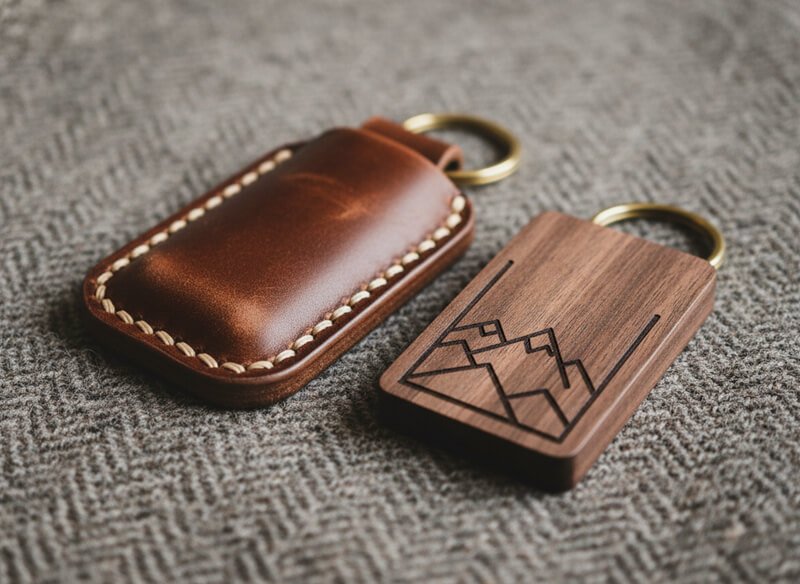
Nahka ilmaisee hienostuneisuutta. Se on valittu materiaali “päätöslahjoja” kiinteistö- ja autokaupassa.
Aito nahka vs. PU: Aito lehmännahka on kestävää ja tuoksuu rikkaalta. Lampaannahka on pehmeämpi, mutta herkempi. Moderni PU (polyuretaani) tai “Tekninen nahka” on edennyt pisteeseen, jossa se jäljittelee täydellisesti nahkaa, samalla kun se on vedenpitävä, vegaaninen ja halvempi.
Kestävyysluokitus: Lehmännahka > Tekninen nahka > Lampaannahka > Keinotekoinen nahka.
2. Puu: maalaismainen kosketus
Wooden keychains are popular for boutique brands and eco-friendly promotions.
Massiivipuu: Pähkinä, kirsikka ja tammi ovat yleisiä. Ne ovat kovia ja kestäviä.
Valmistus: Ne on yleensä laserkaiverrettu. Laser polttaa puuta luoden tumman, upotetun kuvion, joka erottuu kauniisti syyn kanssa.
Komposiittipuu: Valmistettu puulastuista ja sideaineista. Se on halvempi ja yhtenäisempi, mutta siitä puuttuu massiivipuun sielu.
3. Kangas ja kirjonta
Kangasavaimenperät ovat joustavia ja pehmeitä.
Kudottu vs. brodeerattu: Kirjontaompeleet ompelevat langan pohjakankaaseen luoden kuvioidun 3D-tuntuman. Kudotut etiketit kutovat kuvion itse kankaaseen, mikä mahdollistaa hienommat yksityiskohdat, mutta tasaisemman viimeistelyn. Nämä ovat suosittuja, koska ne ovat suuria (helppo löytää), mutta kevyitä ja murskattavina taskussa.
Toiminnalliset avaimenperät – suunnittelutyökalu
Nykyaikainen filosofia “Everyday Carry” (EDC) sanelee, että jokaisen taskussasi olevan esineen tulee ansaita säilytys. Avaimenperät ovat kehittyneet koristeellisista fobeista pienoistyökalupakkauksiksi.
1. Pullonavaaja: universaali niitti
Yleisin toiminnallinen lisäosa. Olipa kyseessä hienovarainen lovi leikattu teräsfob tai täysikokoinen alumiinikynsi, kyky avata pullo on yleisesti arvostettu. Se on juomayhtiöiden ja tapahtumien lahjatavaroiden perusvaruste.
2. Tekniset gadgetit
LED valot: Nykyaikaiset LEDit ovat pieniä ja tehokkaita. Avaimenperäinen taskulamppu voi tuottaa tarpeeksi valoa polun valaisemiseen, mikä tekee siitä aidon turvatyökalun.
USB-asemat: “Dataa liikkeellä.” Vaikka pilvitallennus on suosittua, fyysiset asemat ovat edelleen tärkeitä opiskelijoille ja IT-ammattilaisille.
Latauskaapelit: Lyhyet, taitettavat kaapelit, joiden avulla voit ladata puhelimesi mistä tahansa USB-portista. Hengenpelastaja lentokentällä.
3. Anti-Loss Technology
Bluetooth Trackers: Brändit, kuten Tile- tai AirTag-pidikkeet, ovat mullistaneet avaimenperät. Ne antavat sinulle mahdollisuuden “rengas” avaimet puhelimestasi tai nähdä niiden viimeisin tunnettu sijainti kartalla.
RFID/NFC: ABS-kaukosääteisiin upotetut passiiviset sirut mahdollistavat avainnipun toimimisen pääsykorttina kuntosaleihin, toimistoihin tai kerrostaloihin.
4. Turvatyökalut
Karabiini: Alun perin kiipeilijöille, nyt kaikille. Sen avulla avaimet voidaan kiinnittää vyölenkkiin, mikä varmistaa, että ne eivät koskaan putoa taskusta.
Paracord: Nämä avaimenperät on kudottu sotilasluokan laskuvarjolangasta. Hätätilanteessa ne voidaan purkaa, jolloin saadaan useita jalkoja vahvaa köyttä varusteiden sitomista, ensiapua tai korjauksia varten.
Markkinointipsykologia – Kuinka brändit käyttävät avainnippuja
Miksi miljardin dollarin yritykset lahjoittavat 2 dollarin avaimenperät? Koska ne toimivat. Promootiotuotteiden psykologia perustuu “Vastavuoroisuus” ja “Muista.”
Tapaustutkimus 1: Aldi “Quarter Keeper”
Aldi-ruokakaupat vaativat neljäsosaa ostoskorin lukituksen avaamiseen. Tämä säästää rahaa kärryjen hakemisessa. Auttaakseen asiakkaita he myyvät “Quarter Keeper” avaimenperät – pienet paikat, joihin mahtuu yksi kolikko.
The Brillance: Se ratkaisee tietyn asiakkaan kipupisteen. Joka kerta kun asiakas käyttää sitä, hän on brändille kiitollinen. Se varmistaa, että asiakkaalla on aina tarvittavat työkalut tehdäkseen ostoksia *myymälässään.
Tapaustutkimus 2: Sonicin kanta-asiakaskortti
Sonic Drive-In myyty a “Punainen lokero” avaimenperä 2 dollarilla. Tämän avaimenperän näyttäminen sai asiakkaalle alennuksen juomista.
The Brillance: Se muuttaa avaimenperän jäsenkortiksi. Se on fyysisesti asiakkaan taskussa, ja se on jatkuva muistutus vierailla Sonicissa kilpailijan sijaan.
Tapaustutkimus 3: Wendy’s Frosty Tag
Samoin kuin Sonic, Wendy's myy vuosittain avaintunnisteen (2 dollaria), joka antaa ilmaisia Frosties-tuotteita.
The Brillance: Se ohjaa jalkaliikennettä. Ilmaisen jäätelön hinta on mitätön verrattuna täyteen ateriaan, jonka asiakas todennäköisesti ostaa lunastaessaan sen.
Laitteistomekaniikka – käyttöliittymä
Avainnipun käyttökokemuksen määrää sen laitteisto – rengas, pidike ja kääntö.
1. Ring Innovations
Jaettu rengas: Klassinen kela. Turvallinen, mutta kipeä avata.
Litteä halkaistu rengas: Moderni esteettinen päivitys, leimattu litteäksi tyylikkään ilmeen saamiseksi.
Titaaninen halkaistu rengas: Vahvempi kuin teräs. On “muisti,” eli voit venyttää sitä lisätäksesi paksun avaimen, ja se napsahtaa takaisin täydellisesti ilman muotoaan.
2. Clasp-ekosysteemi
Hummerilukitus: Jousikuormitteinen vipu. Tyylikäs ja helppokäyttöinen.
Langallinen portti: Minimalistinen lankajousi. Löytyy usein huippuluokan titaaniklipsistä.
Kääntyvä: Kriittinen ominaisuus. Sen avulla avaimet voivat pyöriä 360 astetta, estäen avaimenperää kiertymästä epämukavaksi palaksi taskussasi.
3. Quick Release Systems
Irrotettavat avaimenperät: Näiden avulla voit jakaa avaimet kahteen ryhmään. Yleensä auton virta-avain on toisella puolella ja talon/toimiston avaimet toisella. Näin voit irrottaa auton avaimen palvelijalta tai mekaaniolta ilman, että luovutat koko elämäsi. Se myös suojaa autosi sytytyssylinteriä raskaan avaimenperän painolta.

Parhaiksi arvioidut avaimenperätuotteet
Asiantuntijatestausten ja markkinoiden palautteen perusteella tässä on erottuvia tuotteita, jotka määrittelevät nykyisen maiseman.
1. Paras minimalisti: Craighill Wilson avaimenperä
Materiaali: Messinki- tai ruostumaton teräslanka.
Konsepti: Yksinkertainen, taivutettu lanka, jossa ei ole liikkuvia osia. Se perustuu metallin jännitykseen pysyäkseen kiinni. Se pitää avaimet turvallisesti, mutta mahdollistaa niiden levittämisen tasaisesti. Se on pohjimmiltaan toiminnallisia koruja.
2. Paras järjestäjä: KeySmart Mini
Konsepti: The “Sveitsin armeijan veitsi” avaimia varten. Se asettaa avaimesi kahden alumiini- tai polykarbonaattilevyn väliin.
Hyöty: Se eliminoi “avaimen jyrinä” täysin. Se estää myös näppäinten rosoisia hampaita naarmuttamasta puhelimen näyttöä taskussasi.
3. Paras huippuluokan EDC: Handgrey Knox
Materiaali: Ti6Al4V Titaani.
Konsepti: Mittatilaustyönä valmistettu halkaistu rengas, jossa on kymmenkulmainen (10-sivuinen) muoto. Suunnittelun ansiosta avaimet erottuvat luonnollisesti niputuksen sijaan. Se on kivellä ruiskutettu kestävän lopputuloksen saavuttamiseksi.
4. Paras lukitusrengas: Orbitkey Ring v2
Konsepti: Jaetun renkaan uusintakeksintö. Siinä on lukitusmekanismi, jota puristat ja kierrät avataksesi.
Hyöty: Se säästää kynnet. Avainten lataaminen ja purkaminen on uskomattoman helppoa, mutta niitä on mahdotonta avata vahingossa.
5. Paras nahka: Nomad Key Clip
Materiaali: Horween Leather (USA) ja PVD-pinnoitettu ruostumaton teräs.
Konsepti: Turvallinen klipsi yhdistettynä maailmanluokan nahkaan. Nahka patinautuu kauniisti ajan myötä, jolloin se näyttää paremmalta kolmantena vuonna kuin ensimmäisenä.
Huolto ja hoito
Jotta avaimenperäsi kestäisi koko eliniän, eri materiaalit vaativat erilaista hoitoa.
- Nahka: Pidä se kuivana. Jos se kastuu, anna sen kuivua ilman suoraa lämpöä. Käytä kerran vuodessa nahkahoitoainetta, jotta se pysyy joustavana ja estää halkeilua.
- Messinki/kupari: Jos et pidä tummasta patinasta, voit kiillottaa sen takaisin kiiltäväksi metallikiillotusaineella (kuten Brasso) tai luonnollisella sitruunamehun ja suolan sekoituksella.
- PVC/Silikoni: Nämä voidaan pestä lämpimällä saippuavedellä. Jos nukkaa tarttuu silikoniin, teipin pala nostaa sen pois välittömästi.
- Titaani/teräs: Lähes huoltovapaa. Jos ne likaantuvat, pelkkä pesu astianpesuaineella riittää.
Kuinka valita - Ostajan tarkistuslista
Ennen kuin ostat tai valmistat, käy läpi tämä tarkistuslista:
- Väestötiedot: Kenelle se on tarkoitettu?
- Lapset: Valitse turvallisuus (silikoni/PVC) ja näkyvyys (kirkkaat värit).
- Johtajat: Siirry kohtaan Status (nahka/titaani).
- Tapahtumat: Valitse Volume (muovi/akryyli).
- Ympäristö: Missä se asuu?
- Ulkona / rakentaminen: Sen on oltava ruosteenkestävä (titaani/ruostumaton) ja iskunkestävä.
- Toimisto/lompakko: Voi olla koristeellinen (emali/kristalli).
- Tehtävä: Mitä työtä se tekee?
- Vain avaimet pitämällä: Yksinkertainen jaettu rengas tai lankasilmukka.
- Ongelmien ratkaiseminen: Pullonavaaja tai Light.
Avainnippujen tulevaisuus – trendejä ja innovaatioita
Avaimenperäteollisuus ei ole staattinen. Kun kuluttajien arvot siirtyvät kohti kestävää kehitystä ja teknologia integroituu entistä enemmän jokapäiväiseen elämäämme, vaatimaton avaimenperä kehittyy. Tämän lisävarusteen tulevaisuus näyttää nykyisten valmistustietojen ja markkinatrendien perusteella.
1. Vihreä vallankumous: Kestävä valmistus
Yksi alan merkittävimmistä muutoksista on siirtyminen kohti ympäristöystävällisiä materiaaleja. Kuten puuta ja nahkaa koskevassa analyysissä todettiin, kuluttajat ovat yhä tietoisempia ostojensa ympäristövaikutuksista.
Kierrätysmuovit (rPET)
Valmistajat ovat siirtymässä pois uusista muoveista. rPET (Recycled Polyethylene Terephthalate) avaimenperät on valmistettu kierrätetyistä vesipulloista. Ne tarjoavat saman kestävyyden ja värin monipuolisuuden kuin perinteiset muovit, mutta niillä on huomattavasti pienempi hiilijalanjälki. Tästä on tulossa standardi suurille yritystapahtumille, joissa brändit haluavat osoittaa sitoutumisensa kestävään kehitykseen.
Biohajoavat materiaalit
Näemme PLA-avainnippujen (polymaitohappo) nousun. Maissitärkkelyksestä tai sokeriruo'osta johdetut tuotteet näyttävät ja tuntuvat muovilta, mutta ovat kompostoitavia teollisissa olosuhteissa. Lisäksi, Bambu korvaa hitaasti kasvavat lehtipuut. Bambu kasvaa uskomattoman nopeasti ja sitoo enemmän hiiltä, joten se on erinomainen valinta “puinen” avaimenperät myynninedistämisalalla.
Vegaaniset nahat
Vaikka “PU” nahka on ollut olemassa jo jonkin aikaa, uusi vegaanisten nahkajen aalto on valmistettu orgaanisesta jätteestä. Ananasnahka (Piñatex) ja Sieninahka (rihmasto) ovat tulossa huippuluokan markkinoille. Nämä tarjoavat ylellisen eläimen nahan tekstuurin ilman eettisiä huolenaiheita ja vetoavat nuorempaan, sosiaalisesti tietoisempaan väestöryhmään.
2. Biometriset tiedot ja turvallisuus
Kun siirrymme kohti avaimetonta yhteiskuntaa, “avaimenperä” on tulossa a “avain” itse.
Sormenjälkitunnistimet: Olemme ottamassa käyttöön biometrisiä kaukosäätimiä. Nämä pienet laitteet skannaavat sormenjälkesi ja vahvistavat maksuja tai avaavat älylukot NFC:n kautta. Fyysisen avainliuskan sijaan avainnippu on valtakirja.
Terveysturvallisuus: Pandemian jälkeinen, “Ei kosketusta” Avaimenperä tuli peruskiveksi. Yleensä antimikrobisesta messingistä tai kuparista valmistettujen koukun muotoisten työkalujen avulla käyttäjät voivat avata ovia, painaa hissin painikkeita ja allekirjoittaa kosketusnäyttöjä ilman suoraa ihokosketusta. Vaikka välitön kiireellisyys on hiipunut, ne ovat edelleen suosittuja niiden hyödyllisyyden vuoksi julkisessa hygieniassa.
Tee-se-itse vs. ammattimainen valmistus – mitä tietä valita?
Valmistajakulttuurin nousun myötä monet ihmiset joutuvat tekemään oman avaimenperänsä ja hankkimaan ne ammattivalmistajilta. Prosessin ja laadun eron ymmärtäminen on ratkaisevan tärkeää.
1. Tee-se-itse-reitti: käsityötä ja luovuutta
Harrastajille tai pienten Etsy-kauppojen omistajille tee-se-itse on varteenotettava tie.
3D-tulostus: Home PLA printers allow for the creation of custom plastic keychains. While they lack the smooth finish of injection molding, they allow for rapid prototyping and one-off customization.
Hartsin valu: Silikonimuottien ja kaksiosaisen epoksihartsin avulla luojat voivat koteloida kukkia, glitteriä tai valokuvia kirkkaisiin avaimenpereihin. Tämä jäljittelee “Akryyli” näyttää mutta käsintehdyllä charmilla.
Nahantyöstö: With basic tools (a cutter, punch, and stamps), high-quality leather keychains can be made at home. These often have a rugged, handmade appeal that mass-produced items lack.
2. Ammattimainen valmistus: mittakaava ja tarkkuus
Brändeille ja yrityksille ammattimainen valmistus on ainoa skaalautuva vaihtoehto.
Loistava: Et voi toistaa metallin korkeapaineleimausta kotona. Ammattimaiset tehtaat käyttävät tonnia voimaa luodakseen teräviä, teräviä viivoja ruostumattomasta teräksestä tai messingistä, joita itse-valamalla ei voida saavuttaa.
Täyte emali: The “Kova emali” prosessi vaatii korkean lämpötilan uuneja ja teollisia kiillotuslaikkoja saavuttaakseen litteän, lasimaisen viimeistelyn. Tee-se-itse emalisarjat (jotka käyttävät usein hartsia) saavuttavat harvoin saman kestävyyden tai kiillon.
Tilavuuden johdonmukaisuus: Jos tarvitset 500 avaimenperää häihin tai 50 000 tuotteen lanseeraukseen, ammattimainen ruiskupuristus varmistaa, että yksikkö 1 ja 50 000 ovat identtisiä. Tee-se-itse-prosesseissa on luonnostaan vaihteluita.
3. Tuomio
Jos tarvitset alle 50 yksikköä ja arvostan tarinaa “käsintehty,” Tee-se-itse tai hankinnat paikallisilta käsityöläisiltä on erinomaista. Jos tarvitset yli 100 yksikköä, vaativat tarkan merkkivärin sovituksen (Pantone) tai metallin kestävyyden, ammattimainen valmistus on välttämätön reitti.
FAQ: Asiantuntevat vastaukset kysymyksiisi
1. Mitä eroa on “Pehmeä emali” ja “Kova emali”?
Pehmeällä emalilla on kuvioitu pinta; metalliviivat kohoavat ja maali asettuu syvennyksiin (laaksoihin). Kova emali (Cloisonné) täytetään tasaisesti metallin kanssa ja kiillotetaan sitten sileäksi. Kova emali on kestävämpi ja korumainen; Pehmeä emali on halvempi ja siinä on enemmän “klassinen” pin look.
2. Miksi titaani on niin paljon kalliimpaa kuin teräs?
Titaania on vaikea jalostaa ja se on uskomattoman vaikea työstää. Se syö CNC-työkalut paljon nopeammin kuin teräs. Maksat korkeista materiaalikustannuksista ja valmistuksen vaikeudesta, vastineeksi kevyemmistä, vahvemmista, ruosteenkestävästä tuotteesta.
3. Kuinka suunnittelen mukautetun avaimenperän yritykselleni?
Aloita logostasi. Jos se on monimutkainen gradientin kanssa, valitse Akryyli tai Photodome painatus. Jos se on yksinkertainen lihavoituin viivoin, Die Struck Metal tai PVC on parempi. Päätä apuohjelma – pullonavaajan lisääminen lisää todennäköisyyttä, että vastaanottaja pitää sen.
4. Pyyhikö magneettinen avaimenperä luottokorttini?
Yleensä ei. Pikalukitusavaimenperän magneetit ovat vahvoja, mutta yleensä suojattuja tai ne eivät ole tarpeeksi tehokkaita sekoittamaan luottokortin magneettiraitaa, ellei niitä pidetä suoraan sitä vasten pitkään. On kuitenkin parasta säilyttää ne erillisissä taskuissa.
5. Mikä on paras avaimenperä auton avaimille?
A Pikajulkaisu tai Irrotettava avaimenperä. Nykyaikaiset auton rattaat ovat isoja. Pikavapauttimen avulla voit irrottaa kaukosäätimen ajamista varten, mikä suojaa autosi kojelautaa naarmuuntumiselta ja sytytystä painon vaikutukselta.
Johtopäätös
Avaimenperä on henkilökohtaisen valinnan mikrokosmos. Se kattaa 50 sentin promootiolahjan ja 100 dollarin tarkasti suunnitellun titaanikorun välisen kuilun. Se on yksi harvoista esineistä, joka tarjoaa hyödyllisyyttä, identiteettiä ja muistia riittävän pienessä pakkauksessa mahtumaan taskuun.
Olemme tutkineet metallien kestävää kestävyyttä, synteettisten materiaalien värikästä monipuolisuutta, nahan orgaanista lämpöä ja nykyaikaisten työkalujen nerokasta käyttökelpoisuutta. Halusitpa sitten virtaviivaistaa taskujasi minimalistisella järjestelyllä, suojata avaimesi tukevalla karbiinihaarukalla tai mainostaa brändiäsi eloisalla PVC-maskotilla, vaihtoehdot ovat rajattomat.
Avaimesi antavat sinulle pääsyn arvokkaimpiin varoihin – kotiisi, autoosi, toimistoosi. He ansaitsevat harjoittaa jotakin, joka kuvastaa heidän tärkeyttä. Älä tyydy avaimen mukana tulleeseen yleiseen renkaaseen. Valitse materiaali, joka tuntuu oikealta, toiminto, joka palvelee elämääsi, ja tyyli, joka puhuttelee sinua.