Mikä on mukautetun haastekolikon keskimääräinen hinta?
Kun alat ostaa mukautettuja kolikoita, huomaat sen nopeasti “keskimäärin” on suhteellinen käsite. Kolikon hinta riippuu suuresti tilattavien kolikoiden kokonaismäärästä. Valmistajilla on asennuskustannukset, jotka on katettava, mikä tarkoittaa, että pienemmillä tilauksilla on korkeampi hintalappu yksikköä kohti verrattuna suurempiin ajoihin.
Pienet tilaukset (50-100 kolikkoa)
Pienryhmissä tai eksklusiivisissa tapahtumissa saatat tarvita vain 50–100 kolikkoa. Tässä luvussa sinun pitäisi odottaa maksavasi palkkion. Keskimääräinen hinta vaihtelee yleensä 5,00 dollarista yli 10,00 dollariin kolikkoa kohden. Tämä korkeampi hintapiste on olemassa, koska koneiden asentamiseen ja mukautettujen muottien luomiseen tarvittava työvoima jakautuu harvemmille tuotteille. Esimerkiksi 50 kolikon tilaus 1,5 tuuman kolikolle voi maksaa noin 5,43 dollaria kolikkoa kohden yksinkertaisella stanssatulla mallilla, mutta värin lisääminen molemmille puolille voi nostaa sen yli 6,65 dollariin per kolikko.
Keskikokoiset tilaukset (100-500 kolikkoa)
Tätä kutsutaan usein nimellä “makea paikka” monille organisaatioille, mukaan lukien poliisilaitokset ja pienet yritykset. Kun tilaat 100-500 kolikkoa, hinta laskee huomattavasti. Voit odottaa maksavasi välillä 3,00 dollaria ja 6,00 dollaria kolikkoa kohden. Tällä tasolla monet alkuasennusmaksuista imetään tehokkaammin. Esimerkiksi tavallisen 1,75 tuuman kolikon, jonka toisella puolella on väri, voi pudota lähes 7,00 dollarista (50 kpl) noin 4,22 dollariin, kun tilaat 100 kappaletta.
Joukkotilaukset (500–5000+ kolikkoa)
Jos etsit ehdottoman alhaisinta hintaa, bulkki on oikea tapa. Yli 500 kappaleen tilausten ja varmasti tuhansien tilausten hinnat voivat laskea välillä 2,00 dollaria ja 4,00 dollaria kolikkoa kohden. Jotkut valmistajat tarjoavat jopa 1,90 dollarin hinnoittelun erittäin suurille tavallisten 1,5 tuuman kolikoiden tilauksille. Tämä tekee massatilauksesta ihanteellisen suuriin promootiotapahtumiin, messuihin tai suuriin sotilasyksiköihin.
The “Halpa” vs. “Laatu” Keskustelu
On tärkeää huomata, että halvin hinta ei aina ole paras hinta-laatusuhde. Jotkut erittäin halvat kolikot voivat olla valmistettu kevyistä materiaaleista, jotka tuntuvat muovilta. Todellisen haastekolikon pitäisi olla tyydyttävä “kolina” kun se pudotetaan pöydälle. Muutaman sentin enemmän sijoittaminen kolikkoon raskaaseen messinkipohjaan kevyen metalliseoksen sijaan voi tehdä eron arvokkaan muiston ja roskan välillä.
7 avaintekijää, jotka vaikuttavat kolikoiden hinnoitteluun
Perushinnan ymmärtäminen on hyödyllistä, mutta saadaksesi tarkan tarjouksen sinun on ymmärrettävä seitsemän vipua, jotka nostavat tai laskevat hintaa. Jokainen tekemäsi suunnitteluvalinta metallipinnoituksesta reunatyyppiin vaikuttaa loppulaskuun.
1. Tilausmäärä (suurin tekijä)
Kuten mainittiin, tilauksesi määrä on tärkein yksittäinen tekijä yksikköhintaa määritettäessä. Valmistajat kannustavat suurempia tilauksia, koska tuotantoprosessiin liittyy kiinteitä kustannuksia, pääasiassa muotin (tai muotin) luomista. Kun muotti on valmistettu, 1000 kolikon lyöminen on suhteellisen nopeaa asennusaikaan verrattuna.
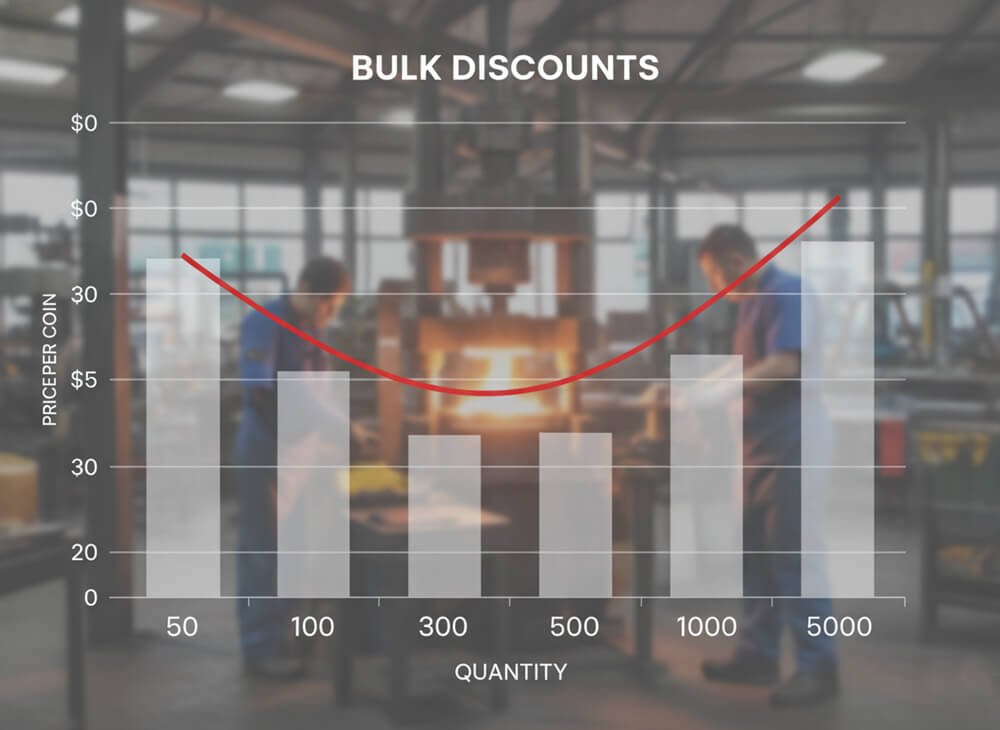
Eri toimittajilta saadut tiedot osoittavat dramaattisen hintakäyrän. 1,5 tuuman kolikon, jonka molemmilla puolilla on väri, hinta voi olla karkeasti 6,65 dollaria jos ostat vain 50. Kuitenkin, että täsmälleen sama kolikko putoaa karkeasti 3,99 dollaria 100 yksikössä ja edelleen 3,36 dollaria 1000 yksiköllä. Se on lähes 50 % säästö pelkällä äänenvoimakkuuden lisäämisellä.
2. Kolikon koko ja halkaisija
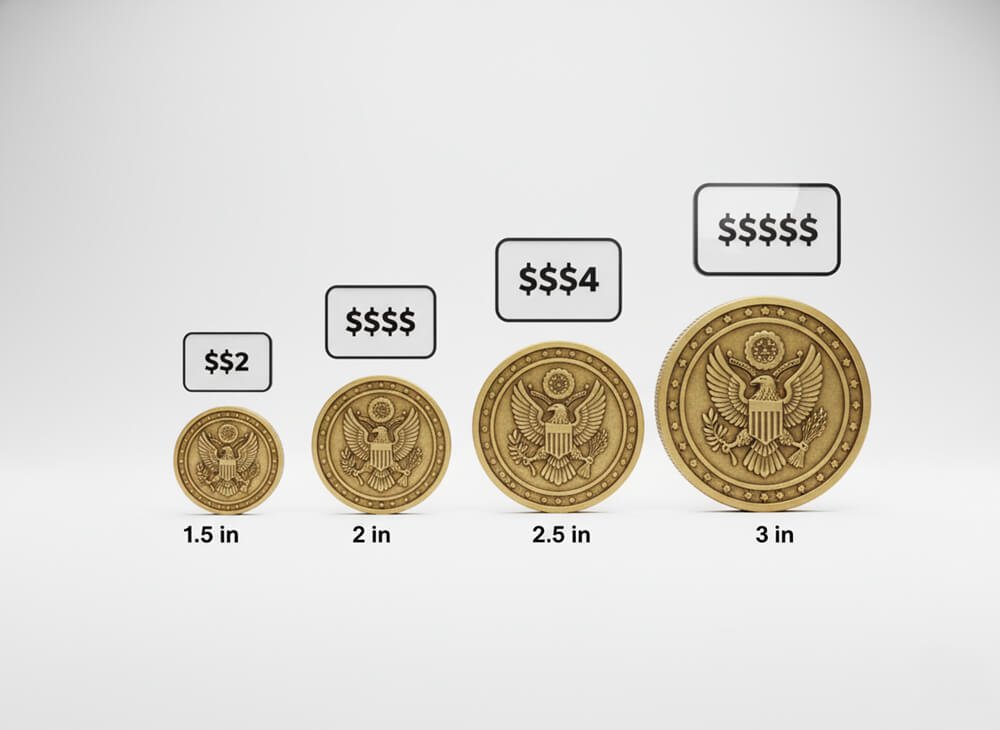
Koolla on valtava merkitys. Haastekolikoiden vakiokoot ovat yleensä 1,5–2 tuumaa. Nämä koot ovat mukavat pitää ja mahtuvat helposti taskuun. Kuitenkin, kun lisäät halkaisijaa, raaka-aineen (messinki, sinkki jne.) määrä kasvaa, samoin kuin lähetyksen paino.
- 1,5 tuumaa: Budjettiystävällisin vakiokoko.
- 1,75 tuumaa: Hyvin yleinen standardi sotilas- ja poliisikolikoilla.
- 2,0 tuumaa: On tulossa yhä suositumpi malleissa, jotka vaativat enemmän yksityiskohtia.
- 3,0 tuumaa+: Näitä mietitään usein “komentaja” kolikoita tai esittelykappaleita. Näiden suurten kolikoiden hinnat voivat olla kaksin- tai kolminkertaiset tavalliseen kolikkoon verrattuna. Esimerkiksi 3 tuuman kolikon perushinta voi alkaa 10,00–15,00 dollaria määrästä riippuen.
3. Materiaalin ja perusmetallin valinta
Kolikon ydinmateriaali sanelee sen painon ja kestävyyden.
Sinkkiseos: Tämä on suosittu ja kustannustehokas vaihtoehto erityisesti painevaletuille kolikoille, jotka vaativat 3D-muotoja tai ainutlaatuisia leikkauksia. Se on kevyempi kuin messinki, mutta silti kestävä.
Messinki/pronssi/kupari: Nämä ovat perinteisiä korkealaatuisia raskasmetalleja. Ne ovat tiheämpiä ja tarjoavat laadukkaan, raskaan tunteen, jota monet keräilijät haluavat. Odottaa maksavansa noin 20–30 % enemmän messingistä kuin sinkkiseoksesta.
Keraaminen: Täysin erilaisen ulkonäön ja halvemman hinnan saamiseksi jotkut valmistajat tarjoavat keraamisia siruja, jotka voivat maksaa vain 0,64 dollaria suurissa määrissä, vaikka niiltä puuttuu perinteinen metallituntuma.
4. Suunnittelun monimutkaisuus (2D vs. 3D)
Useimmissa tavallisissa kolikoissa on 2D-kuviointi. Tämä tarkoittaa, että pinnalla on kaksi tasoa: korotettu tasainen taso (metalliviivat) ja upotettu taso (johon väri menee).
3D-mallit: Jos haluat muotoiltua ilmettä – kuten realistiset kasvot, patsas tai muotoiltu ajoneuvo – tarvitset 3D-muotin. Tämä lisää merkittävästi syvyyttä ja realistisuutta, mutta se maksaa. 3D-muotteja on vaikeampi työstää. Voit odottaa maksavasi ylimääräisen muottimaksun (usein +150 dollaria per puoli) ja mahdollisesti korkeammat yksikkökustannukset valuprosessista.
5. Väritys (emalityypit)
Värin levitys on työvoimavaltaista.
Ei väriä (stanssattu): Nämä kolikot luottavat kontrastiin kiillotetun metallin ja hiekkapuhalletun taustan välillä. Ne ovat edullisin vaihtoehto, koska niihin ei tarvita käsinmaalausta.
Yksipuolinen väri: Pehmeän emalimaalin lisääminen toiselle puolelle lisää kustannuksia hieman.
Kaksipuolinen väri: Maalaus molemmilta puolilta on yleisin kokoonpano, mutta vaatii kaksinkertaisen maalaustyön.
Kova emali (Cloisonné): Tämä on ensiluokkainen päivitys, jossa emali täytetään tasan metallin kanssa ja kiillotetaan sileäksi. Se luo korumaisen viimeistelyn, mutta lisää noin 1,00 dollaria kolikkoa kohden ylimääräisten kiillotusvaiheiden ansiosta.
6. Mukautetut muodot
Vaikka pyöreä kolikko on perinteinen, monet organisaatiot haluavat nyt kolikoita, jotka on muotoiltu merkiksi, osavaltioksi, kilveksi tai maskotiksi. Mukautetut muodot vaativat ainutlaatuisia muotteja. Jotkut valmistajat veloittavat saman muottimaksun muodosta riippumatta, kun taas toiset voivat veloittaa palkkion epäsäännöllisistä ääriviivoista, koska leikkuumuotit ovat monimutkaisempia valmistaa. Jos haluat säästää rahaa, pyöreän muodon pitäminen on yleensä turvallisin vaihtoehto, mutta mukautettu muoto tarjoaa a “vau” tekijä, joka on usein ylimääräisen investoinnin arvoinen.
7. Valmistuspaikka ja nopeus
Aika on rahaa. Räätälöityjen kolikoiden vakiotuotanto kestää yleensä noin 10–15 päivää sekä toimitusaika. Nämä kolikot valmistetaan tyypillisesti ulkomailla, missä käsin emaloinnin työkustannukset ovat alhaisemmat. Jos tarvitset Yhdysvalloissa valmistettuja kolikoita tai tarvitset a “kiire” tilaus (toimitus 7 päivässä tai vähemmän), odota hinnan hyppäävän merkittävästi. Kiireiset maksut voivat lisätä 15–30 % kokonaissummasta, ja Yhdysvalloissa valmistetut kolikot voivat maksaa 7,50 dollarista yli 175,00 dollariin kappaleelta riippuen metallista (kuten kiinteä hopea) ja kiireellisyydestä.

Yksityiskohtainen hinnoittelumatriisi: Kolikon hinta koon mukaan
Antaaksemme sinulle konkreettisen käsityksen budjetoinnista olemme koonneet hinnoittelutiedot useilta alan johtajilta vuodelle 2025. Nämä luvut edustavat vakiooptioiden keskiarvoja. Huomaathan, että hinnat vaihtelevat raakametallien markkinahinnan mukaan.
1,5 tuuman kolikon kustannukset
1,5 tuuman kolikko on kompakti ja edullinen, joten se sopii täydellisesti kaupankäyntiin tai suuriin promootioihin.
| Tilausmäärä | Ei väriä (die Struck) | Väri Yksi puoli | Väri molemmilla puolilla |
|---|---|---|---|
| 50 | 5,26 dollaria – 5,71 dollaria | 5,69 dollaria – 6,18 dollaria | 6,03 dollaria – 6,65 dollaria |
| 100 | 3,23 dollaria – 3,52 dollaria | 3,45 dollaria – 3,83 dollaria | 3,66 dollaria – 3,99 dollaria |
| 300 | 2,73 dollaria – 3,01 dollaria | 2,97 dollaria – 3,27 dollaria | 3,24 dollaria – 3,53 dollaria |
| 1000 | 2,61 dollaria – 2,89 dollaria | 2,86 dollaria – 3,14 dollaria | 3,08 dollaria – 3,36 dollaria |
Kuten näet, 100 kolikon tilaaminen 50 kolikon sijaan lähes puolittaa yksikköhinnan.
1,75 tuuman kolikon kustannukset (vakiokoko)
Tämä on yleisin koko sotilasyksiköissä. Se tarjoaa tarpeeksi pinta-alaa yksityiskohtaisille logoille ilman, että se on liian painava.
| Tilausmäärä | Ei väriä (die Struck) | Väri Yksi puoli | Väri molemmilla puolilla |
|---|---|---|---|
| 50 | 5,80 dollaria – 6,47 dollaria | 6,32 dollaria – 6,77 dollaria | 6,83 dollaria – 7,35 dollaria |
| 100 | 3,51 dollaria – 3,87 dollaria | 3,79 dollaria – 4,22 dollaria | 4,16 dollaria – 4,58 dollaria |
| 300 | 3,05 dollaria – 3,34 dollaria | 3,40 dollaria – 3,74 dollaria | 3,74 dollaria – 4,12 dollaria |
| 1000 | 2,94 dollaria – 3,21 dollaria | 3,27 dollaria – 3,60 dollaria | 3,64 dollaria – 3,99 dollaria |
2,0 tuuman kolikon kustannukset
Kahden tuuman kolikoiden suosio kasvaa, koska ne mahdollistavat selkeämmän tekstin ja monimutkaiset 3D-yksityiskohdat.
| Tilausmäärä | Ei väriä (die Struck) | Väri Yksi puoli | Väri molemmilla puolilla |
|---|---|---|---|
| 50 | 6,29 dollaria – 6,77 dollaria | 6,93 dollaria – 7,47 dollaria | 7,61 dollaria – 7,91 dollaria |
| 100 | 3,83 dollaria – 4,22 dollaria | 4,27 dollaria – 4,65 dollaria | 4,63 dollaria – 5,05 dollaria |
| 300 | 3,34 dollaria – 3,90 dollaria | 3,84 dollaria – 4,46 dollaria | 4,29 dollaria – 4,82 dollaria |
| 1000 | 3,20 dollaria – 3,51 dollaria | 3,69 dollaria – 4,04 dollaria | 4,18 dollaria – 4,58 dollaria |
Suuret kolikot (2,5–4,0 tuumaa)
Kun siirryt suurelle kolikkoalueelle, hinnat nousevat eksponentiaalisesti painon vuoksi. 3,0 tuuman kolikon kohdalla pieni 50 euron tilaus saattaa maksaa sinulle enemmän 11,40–15,00 dollaria per kolikko. Vaikka määrä on 100, katsot silti karkeasti 7,00–8,00 dollaria per kolikko. Jos valitset erittäin suuren, kuten 4,0 tuuman kolikon, pienten erien hinnat nousevat helposti 18,00–21,00 dollaria yksikköä kohti.
Piilotetut ja lisämaksut, jotka sinun on tiedettävä
Yksikköhinta ei ole ainoa asia, jonka maksat. Välttääksesi tarrashokin, kun saat loppulaskun, sinun on oltava tietoinen asennusmaksuista.
1. Muottimaksut (muottimaksut)
Mukautetun kolikon valmistamiseksi terässuulake on leikattava tietyllä mallilla. Tämä on kertamaksu.
Vakiohinnat: Muottimaksut vaihtelevat tyypillisesti 50-300 dollaria kolikon koosta riippuen. Tavallinen 1,5 tuuman muotti voi maksaa 50 dollaria yksipuolisesta kolikosta tai 100 dollaria kaksipuolisesta kolikosta. Suurempien 3 tuuman kolikoiden muottimaksut voivat olla yli 150 dollaria per puoli.
The “Ilmainen muotti” Kynnys: Tämä on tärkeä alan standardi muistaa. Useimmat valmistajat tekevät luopua muottimaksusta jos tilaat tietyn määrän, yleensä 300 kappaletta tai enemmän. Tämä on valtava säästö, joka voi tehdä 300 kolikon tilaamisesta melkein yhtä kustannustehokasta kuin 200 kolikon tilaamisesta.
Homevakuutus: Jotkut yritykset tarjoavat homevakuutusta pientä maksua vastaan (esim. 39 dollaria). Tämä varmistaa, että ne säilyttävät muotisi ikuisesti. Ilman sitä tehtaat yleensä kierrättävät muotit 2 tai 3 vuoden käyttämättömyyden jälkeen.
2. Asennus- ja taidemaksut
Hyvä uutinen on, että nykypäivän kilpailluilla markkinoilla arvostetuimmat kolikkoyhtiöt tarjoavat haasteita ilmaiset taide- ja suunnittelupalvelut. Tämä sisältää rajattomat versiot, kunnes olet tyytyväinen digitaaliseen todisteeseen. Ole kuitenkin varovainen; Muutamat yritykset voivat veloittaa, jos pyydät liiallisia muutoksia (esim. yli 6 versiota) tai jos suunnittelu on uskomattoman monimutkainen.
3. Toimituskulut
Metallin toimitus on kallista, koska se on raskasta. Onneksi monet yritykset sisällyttävät tämän kotimaisten tilausten hinnoittelurakenteeseensa.
Normaali toimitus: Ilmainen UPS Priority Air -toimitus Yhdysvalloissa sijaitseviin osoitteisiin on suurimpien toimittajien yleinen etu.
Kansainvälinen/DDP: Jos lähetät kansainvälisesti, maksat toimituskulut ja mahdolliset tullimaksut (DDP). Tämä voi lisätä päiviä toimitusaikaan ja dollareita budjettiin.
Räätälöintipäivitykset: kuinka paljon lisäosat maksavat?
Vakiokolikot ovat mahtavia, mutta päivitykset tekevät niistä mieleenpainuvia. Tässä on yleisten lisäosien hinnoitteluvalikko.
Reunan asetukset
- Vakio/tasainen reuna: Yleensä Ilmainen.
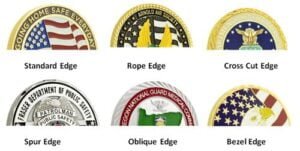
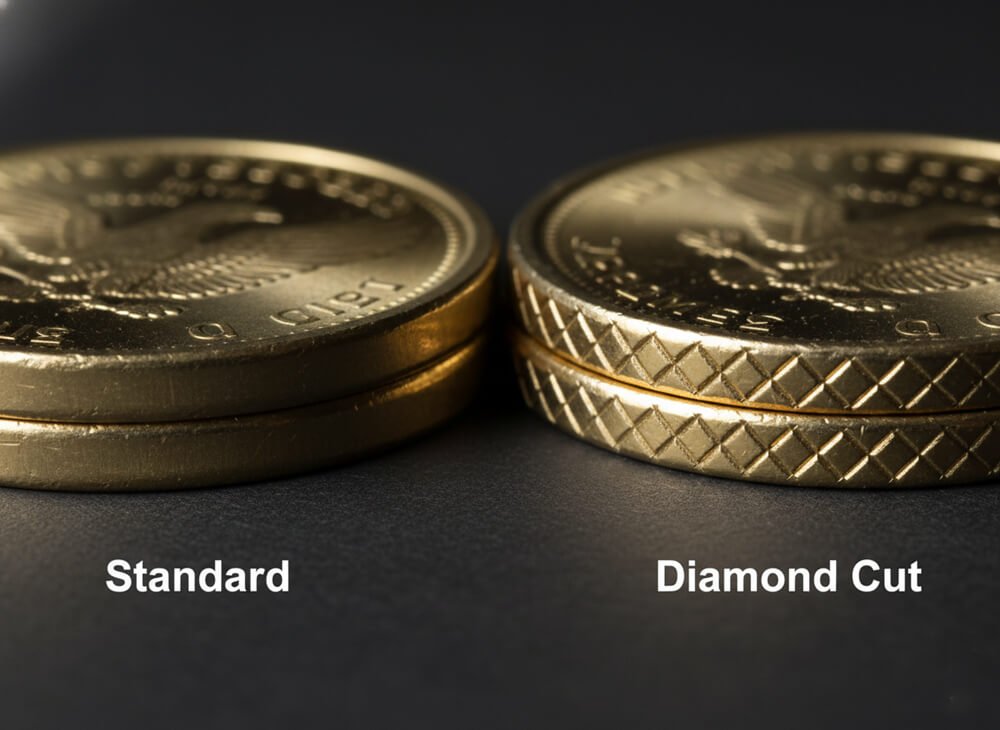
- Köysi, Spur tai Cross Cut Edge: Nämä koristeelliset reunat lisäävät tekstuuria ja kiiltoa. Odottaa maksavansa ylimääräistä 0,70 dollaria per kolikko.
- Kaiverrettu teksti reunaan: Motton tai nimen lisääminen kolikon reunaan lisää karkeasti 0,70 dollaria per kolikko.
Pinnoituspäivitykset
- Vakiopinnoitus: Kiillotettu kulta, hopea tai musta nikkeli sisältyy yleensä perushintaan.
- Antiikki viimeistely: Antiikkipesu antaa kolikolle vintage-ilmeen ja korostaa yksityiskohtia. Tämä maksaa usein ylimääräistä 0,30–0,60 dollaria kolikkoa kohden.
- Kaksoispinnoitus: Haluatko kolikon, joka on sekä kultaa että hopeaa? Tämä kaksisävyinen ulkoasu on upea, mutta vaatii ylimääräisiä vaiheita, mikä maksaa ylimääräisen 0,70–1,50 dollaria kolikkoa kohden.
- Hiekkapuhallus: Kuvioidun taustan lisääminen voi maksaa noin 0,45 dollaria per kolikko.
Erikoistehosteet
- Hehku pimeässä: Valoisan emalin lisääminen maksaa noin 0,20–0,50 dollaria kolikkoa kohden.
- Epoksikupu: Kirkas suojapinnoite, joka antaa sileän tunteen, maksaa karkeasti 0,30–0,35 dollaria per puoli.
- Leikkaukset: Sisäisten metalliosien poistaminen reikien luomiseksi maksaa noin 0,15 dollaria per katkaisu.
- Peräkkäinen numerointi: Rajoitettujen sarjojen valmistaminen laserkaiverrusnumeroilla (001, 002 jne.) maksaa välillä 0,25 dollaria ja 0,70 dollaria kolikkoa kohden.
- Pyörät/liikkuvat osat: Nämä monimutkaiset mekanismit lisäävät merkittävästi työvoimaa, usein lisäämällä 4,00 dollaria tai enemmän per kolikko.
Pakkauskustannukset: Ilmaisesta Premium-hintaan
Se, miten kolikot esittelet, on melkein yhtä tärkeää kuin itse kolikko.
- PVC-pussi: Lähes jokaisen tilauksen mukana tulee ilmainen läpinäkyvä muovinen kirjekuori. Se suojaa kolikkoa kuljetuksen aikana, mutta ei ole hyvä esittelyyn.
- Kolikkokapselit: Nämä kovat muoviset pyöreät kotelot suojaavat kolikkoa naarmuilta ja ilmalta. Ne maksavat n 0,60 dollaria kappale.
- samettilaukut: Mukava askel lahjaksi, maksaa välillä 0,55 ja 0,75 dollaria kumpikin.
- Akryylikotelot: Magneettiset tai napsautustiiviit kotelot esittelyyn maksavat noin 1,00 dollaria kappale.
- Velvet-esittelylaatikot: Äärimmäistä luksusta. Sininen tai musta samettilaatikko maksaa välillä 3,50 ja 4,00 dollaria kumpikin.
- Kolikkotelineet: Yksinkertaiset muovitelineet pöytänäytölle vaihtelevat 0,25–0,95 dollaria kappale.
Yritysten hintavertailut (vuoden 2025 tiedot)
Julkaistujen tietojen perusteella tässä on nopea katsaus siihen, kuinka jotkut suuret kilpailijat keräävät tavallista 100 kolikon tilausta, kooltaan 1,75 tuumaa ja toisella puolella väriä.
- USDOD-kolikot: ~4,22 dollaria per kolikko. Tunnettu toimituksista APO/FPO-osoitteisiin ja sotilaalliseen erikoistumiseen.
- Allekirjoituskolikot: ~4,33 dollaria per kolikko. Tunnettu asiakaspalvelusta ja monipuolisista vaihtoehdoista.
- Lone Star Challenge -kolikot: ~3,79 dollaria per kolikko. Tarjoaa kilpailukykyisen hinnoittelun ja veteraanihallinnon.
- Haaste kolikot 4 vähemmän: ~4,02 dollaria kolikkoa kohden. Kiinteä keskitievaihtoehto.
- MetalPromo: ~5,72 dollaria kolikkoa kohden (50 kappaletta) putoaa ~3,46 dollariin 100 kappaleella. Sopii kiireisiin tilauksiin.
Paras pienille tilauksille: Jos tarvitset hyvin vähän kolikoita (alle 50), etsi yrityksiä, kuten Ainutlaatuiset mukautetut nastat tai Lapel Pins Maker jotka mainostavat “Ei vähimmäistilausmäärää” (MOQ) tai erittäin alhainen MOQ, vaikka yksikköhinta on korkeampi.
Paras Rushille: Logotunnisteet ja MetalPromo Niitä mainitaan usein pikapalveluistaan, joissa käytetään yhdysvaltalaista tuotantoa tai nopeutettuja ulkomaisia kanavia.
Projektin kokonaiskustannusten laskeminen
Lasketaan kahdella hypoteettisella järjestyksellä, jotta näet, kuinka loppulasku muodostuu.
Skenaario A: Edullinen tapahtumakolikko
Tarvitset 100 kolikkoa yrityksen retriitiin. Valitset 1,5 tuuman vakiokoon, vakioreunan ja pehmeän emalivärin toiselta puolelta.
- Yksikköhinta: 100 kolikkoa x 3,45 dollaria = 345,00 dollaria
- Muottimaksu: 1 puoli = 50,00 dollaria
- Toimitus: Ilmainen
- Kokonais: 395,00 dollaria (yhteensä noin 3,95 dollaria per kolikko)
Skenaario B: Premium-juhlaraha
Tarvitset 300 kolikkoa yksikön vuosipäivää varten. Voit valita suuremman 2,0 tuuman koon, timanttileikatun reunan, 3D-listan edessä ja kovan emalin.
- Yksikköhinta: 300 kolikkoa x 4,29 dollaria (perus) + 1,00 dollaria (kova emalipäivitys) = 5,29 dollaria x 300 = 1 587,00 dollaria
- Muottimaksu: Luopunut (tilaus > 300) = 0 dollaria
- 3D-muotin päivitys: 150,00 dollaria
- Diamond Edge -päivitys: 300 x 0,70 $ = 210,00 $
- Kokonais: 1 947,00 $ (yhteensä noin 6,49 dollaria kolikkoa kohden)
Rahansäästövinkkejä haastaville kolikon ostajille
Jos yllä olevat hinnat näyttävät korkeilta, älä huoli. On olemassa tapoja leikata kustannuksia laadusta tinkimättä.
- Tilaa joukkona: Tämä on kultainen sääntö. Jos arvelet tarvitsevasi 250 kolikkoa, yritä venyttää budjettia 300:aan. 300 kappaleen kynnyksen saavuttaminen usein luopuu muottimaksusta ja säästää jopa 150 dollaria välittömästi.
- Yksinkertaista suunnittelua: Pysy 2D-suunnitelmissa 3D:n sijaan. 2D-kolikot ovat klassisia, luettavia ja huomattavasti halvempia muovata.
- Valitse sinkkiseos: Ellei välttämättä tarvitse messingin raskasta painoa, sinkkiseos on loistava materiaali. Se on kestävä, kestää hyvin pinnoitusta ja on paljon kevyempi lähettää.
- Vältä ruuhkamaksuja: Ennakkosuunnittelu on helpoin tapa säästää. Tilaamalla 3-4 viikkoa etukäteen vältyt 15-30 %:n ruuhkalisalta.
- Rajoitusvärit: Useimmat lainaukset sisältävät jopa 5 tai 7 väriä ilmaiseksi. Tämän rajan sisällä pysyminen välttää värikohtaiset lisäkulut.
- Pysy vakioreunoissa: Vaikka köyden reuna näyttää siistiltä, tavallinen tasainen reuna on ilmainen. Kun ohitat hienon reunan, säästät 0,70 dollaria jokaisesta kolikosta.

Ihmiset myös kysyvät (FAQ-osio)
K: Mikä on haastekolikoiden vähimmäistilausmäärä (MOQ)?
V: Alan standardi MOQ on tyypillisesti 50 tai 100 kolikkoa. Jotkut valmistajat, kuten Unique Custom Pins, tarjoavat kuitenkin a “Ei MOQ:ta” käytäntö, jonka avulla voit tilata vain yhden kolikon, vaikka yksikköhinta on huomattavasti korkeampi (10 dollaria+).
K: Onko haastekolikoilla todellista rahallista arvoa?
V: Haastekolikot eivät ole valuuttaa eikä niillä ole ostovoimaa. Niillä on kuitenkin valtava tunteellinen, historiallinen ja keräilyarvo. Harvinaiset kolikot, erityisesti korkea-arvoisten virkamiesten tai erikoisyksiköiden kolikot, voivat myydä satoja dollareita keräilijöille.
K: Mitä eroa on Die Struckin ja Enamelin hinnoittelulla?
V: Die Struck -hinnoittelu viittaa kolikoihin, joissa ei ole väritäyttöä – vain raakametallia, jossa on kohotetut ja upotetut alueet. Tämä on yleensä halvin vaihtoehto. Emalihinnoittelu sisältää kolikon maalaamisen työ- ja materiaalikustannukset, mikä tekee siitä kalliimman.
K: Kuinka paljon muottimaksut ovat?
V: Muottimaksut vaihtelevat 50 dollarista pienistä yksipuolisista kolikoista yli 300 dollariin suurista, monimutkaisista kaksipuolisista kolikoista. Muista, että useimmat yritykset luopuvat tästä maksusta yli 300 kolikon tilauksissa.
K: Miksi messinkikolikot ovat kalliimpia kuin sinkki?
V: Messinki on kuparipohjainen metalliseos, joka on luonnollisesti raskaampaa ja tiheämpää kuin sinkki. Raaka-ainekustannukset ovat korkeammat ja sitä pidetään usein laadukkaampana “perinteinen” metallia kolikoihin, 20-30 %:n palkkio.
K: Voinko saada hyvityksen muottimaksusta?
V: Yleensä ei. Muottimaksu kattaa teollisuusmuotin valmistamiseen käytetyn työn ja teräksen. Valmistajat kuitenkin pitävät muottiasi tyypillisesti tiedostossa 2–3 vuotta. Jos tilaat saman mallin uudelleen kyseisessä ikkunassa, sinun ei tarvitse maksaa muottimaksua uudelleen.
Johtopäätös
Joten kuinka paljon haastekolikon tekeminen maksaa? Vaikka yksinkertainen vastaus on keskiarvo 3–5 dollaria kolikkoa kohden, todellisuus on, että olet kuljettajan istuimella. Kokoa, määrää ja monimutkaisuutta koskevat valinnat sanelevat lopullisen hintalapun. Voit luoda arvokkaan, budjettiystävällisen kolikon irtotavarana alle 3,00 dollarilla tai voit valmistaa raskaan jalokivikoristeisen mestariteoksen yli 10,00 dollarilla.
Avain on tasapaino. Punnitse budjettiasi “tuntea” haluat vastaanottajan kokevan. Haastekolikko on kiitollisuuden ja kuulumisen symboli – sen pitäisi tuntua tärkeältä. Oletpa sitten valmis aloittamaan suunnittelun tai vain tarkistamaan numeroita, seuraava vaihe on yksinkertainen. Useimmat taideteokset ovat ilmaisia, eivätkä lainaukset maksa mitään.