Mikä on hoitoneula? Enemmän kuin vain koruja
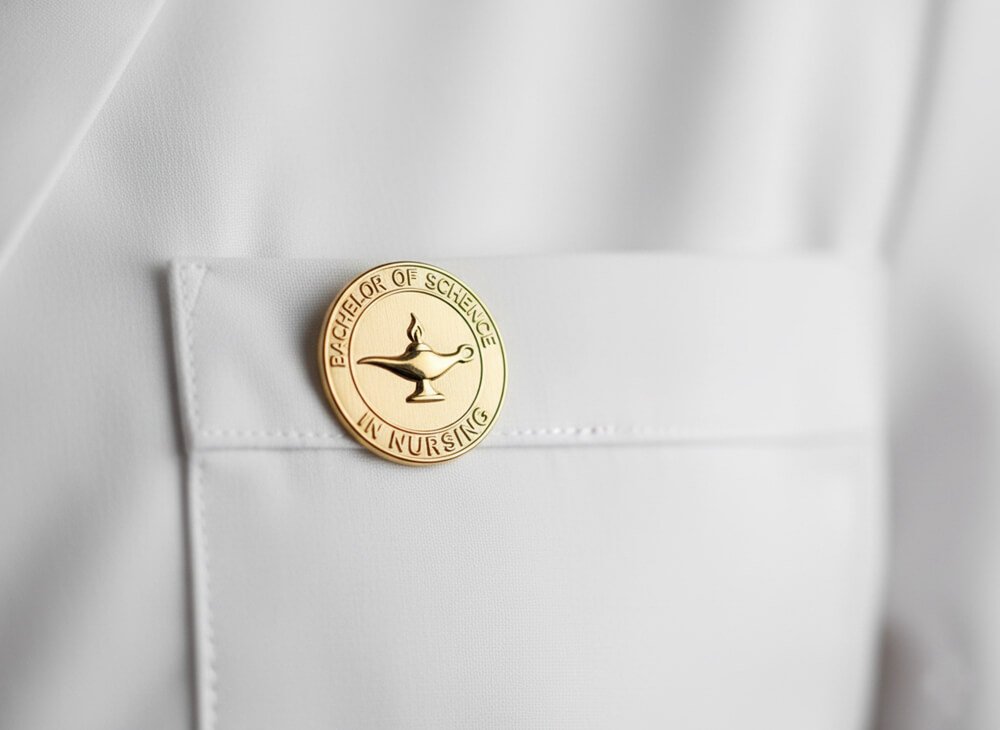
Hoitoneula on koristeellinen rintanappi, jota sairaanhoitajat käyttävät, tunnistamaan sairaanhoitajakoulun, josta he valmistuivat, ja osoittamaan heidän tuloaan ammattimaailmaan. Kuitenkin määritellä se yksinkertaisesti “tunnistaminen” on kaipaamaan sen henkeä. Se on huippuosaamisen mitali, saavutuksen merkki ja julkinen pätevyysilmoitus.
Toisin kuin korkeakoulututkinto, joka todistaa, että opiskelija on läpäissyt akateemiset vaatimukset, hoitoneula symboloi siirtymistä teoriasta käytäntöön. Se on julkinen vakuutus siitä, että käyttäjällä on kliiniset taidot ja eettinen rohkeus hoitaa potilaita. Se edustaa kulkurituaalia, joka muuttaa a “sairaanhoitaja opiskelija” osaksi a “sairaanhoitaja.”
Historiallisesti neulalla oli hyvin käytännöllinen tarkoitus. Menneinä vuosisatoina, jolloin univormut olivat vähemmän standardoituja ja lukutaito ei ollut yleistä, sairaanhoitajan merkki (tai merkki) erotti koulutetun, koulutetun sairaanhoitajan maallikosta tai kouluttamattomasta vapaaehtoisesta. Se oli visuaalinen signaali, joka sanoi: “Olen koulutettu auttamaan sinua.” Nykyään sairaalan henkilöllisyystodistukset suorittavat laillisen tunnistustehtävän, mutta hoitoneula on edelleen emotionaalinen ja historiallinen tunniste sairaanhoitajasta. Se yhdistää nykyaikaisen sairaanhoitajan vuosisatojen taakse ulottuvaan omaishoitajien linjaan.
Jokainen merkki on yksilöllinen sen myöntäneelle koululle. Vaikka monilla on yhteisiä symboleja (jotka tutkimme myöhemmin), erityinen muotoilu – mukaan lukien muoto, koulun harja, värit ja motto – toimii elinikäisenä yhteyden hoitajan alma materiin. Ei ole harvinaista, että sairaanhoitajat katsovat kollegansa käännettä ja huomaavat heti, missä he harjoittelivat, mikä herättää keskustelun ja välittömän yhteisen kokemuksen.
Kattava historia: ristiretkeläisistä nykyaikaisiin seurakuntiin
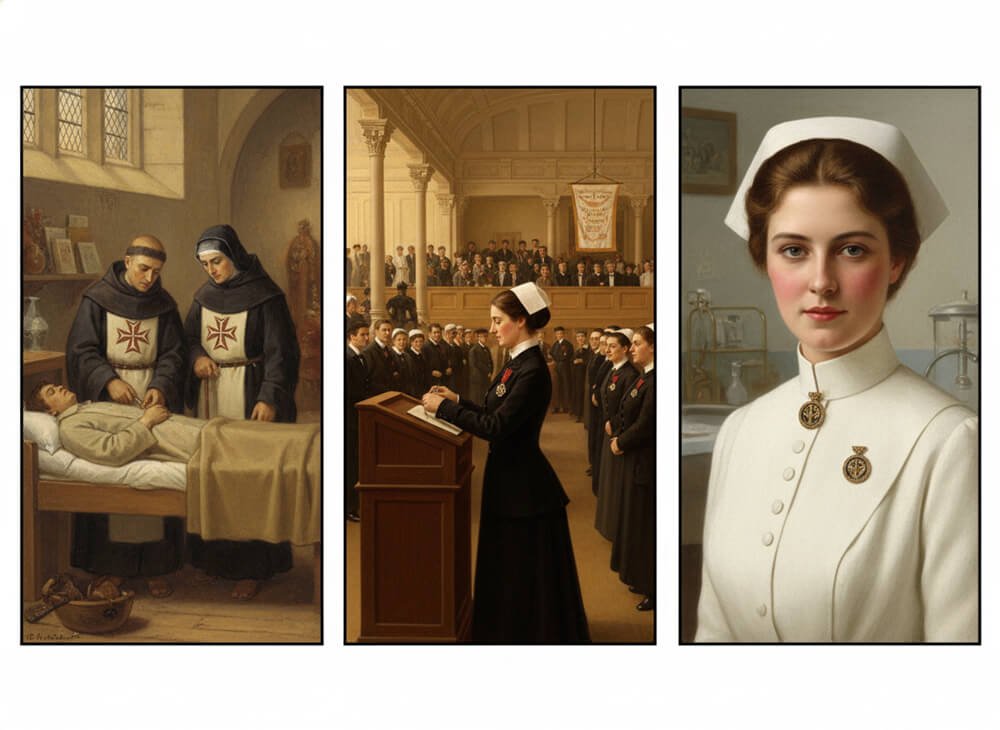
Imetysneulan historia on kiehtova matka, joka kietoutuu sotahistoriaan, uskonnollisiin luokkiin ja taisteluun naisten ammatillisesta tunnustuksesta. Se on perinne, joka edelsi nykyaikaista lääketiedettä ja juurtuu ammatin perintöön ritarillisuudesta ja palvelusta.
1100-luku: Knights Hospitaller
Imetysneulan alkuperä voidaan jäljittää 1100-luku ristiretkien aikana. Kun armeijat kohtasivat, sairaiden ja haavoittuneiden sotilaiden ja pyhiinvaeltajien määrä nousi pilviin. Uskonnollinen sotilasjärjestys, joka tunnetaan nimellä Pyhän Johannes Kastajan sairaalan ritarikunnan ritarit (tunnetaan yleisesti nimellä Knights Hospitaller) perustettiin huolehtimaan näistä henkilöistä.
Nämä aikaisin “sairaanhoitajat” olivat munkkeja, jotka vannoivat köyhyyttä, siveyttä ja kuuliaisuutta sekä lupauksen palvella “herramme sairaat.” Kun uusi munkki vihittiin ritarikuntaan, hänelle ei annettu tutkintotodistusta; hänelle annettiin a Maltan risti. Tätä rintamerkkiä käytettiin hänen tavat (tunika) hänen lupauksensa julkisena symbolina. Tätä Maltan ristiä pidetään laajalti ensimmäisenä “imetysneula.” Se edusti kahdeksaa autuaaksi sanottavaa ja epäitsekästä palvelua, jota vaadittiin niiltä, jotka pyrkivät kuoleviin.
Krimin sota ja “Lady lampun kanssa”
Perinne oli hieman lepotilassa 1800-luvun puoliväliin saakka Florence Nightingale saapui Krimille. Hänen löytämät olosuhteet olivat kauheita – saasta, sairaudet ja laiminlyönti. Nightingale ja hänen sairaanhoitajien tiimi organisoivat uudelleen sotilassairaalat ottamalla käyttöön sanitaation ja järjestäytyneen hoidon. Hänen ponnistelunsa pelasti lukemattomia ihmishenkiä ja nosti hoitotyön vähäpätöisestä tehtävästä arvostetuksi ammattiksi.
Tunnustuksena hänen palveluksestaan Kuningatar Victoria palkittiin Nightingale Pyhän Yrjön Punainen Risti. Nightingale arvosti tätä tunnustusta syvästi. Kun hän myöhemmin perusti Nightingale School of Nursingin St. Thomasin sairaalaan Lontooseen, hän halusi juurruttaa saman kunnian tunteen opiskelijoihinsa. Hän aloitti palkitsemisen “huippuosaamisen mitalit” harjoittelijoille, jotka ovat osoittaneet korkeinta taitoa ja omistautumista. Näihin varhaisiin mitaleihin sisältyi usein Maltan risti, joka yhdisti hänen nykyaikaiset sairaanhoitajansa vanhan ajan ritariin.
Amerikan evoluutio: Sisällissota vuoteen 1916
Yhdysvalloissa sairaanhoitajan ammatti sai vetovoimaa sisällissodan aikana, jolloin naispuoliset vapaaehtoiset osoittautuivat välttämättömiksi sotatoimissa. Sodan jälkeen muodollisia sairaanhoitajakouluja alkoi avata Nightingalen järjestelmän mallin mukaisesti.
Bellevuen sairaala (1880): Bellevue Hospital School of Nursing New Yorkissa oli tämän perinteen edelläkävijä. Vuonna 1880 he suunnittelivat pinssin, joka myönnettiin valmistuneilleen. He kuitenkin erosivat “ylittää” perinne ja valitsi a nosturi, valppauden symboli, jota ympäröi unikkoseppele (kivunlievitykseen) ja muratti. Ratkaisevaa on, että Bellevue myönsi tämän pinssin joka valmistuneet, eivät vain muutamat parhaat. Tämä demokratisoi pinssin, mikä teki siitä itse ammatin symbolin eikä vain eliittiä.
Standardointi (1916): Vuoteen 1916 mennessä valmistuneiden kiinnittämisestä oli tullut vakiomenettely sekä Yhdysvalloissa että Isossa-Britanniassa. Siitä tuli hyväksytty tapa toivottaa uudet sairaanhoitajat tervetulleiksi alalle.
Maailmanlaajuinen terminologia: Pins vs. Badges
Vaikka Yhdysvallat asettui termiin “pin,” muualla maailmassa, kuten Australiassa ja Isossa-Britanniassa, käytetään usein termiä “kunniamerkki.” Näissä järjestelmissä sairaanhoitajat voisivat myös ansaita “baareja”-pienet emaloidut suorakulmiot, jotka on kiinnitetty rintanappiin ketjuilla, mikä merkitsee ylimääräistä pätevyyttä. A “Kolmoissertifioitu sisar” Australiassa kolmella palkilla (General, Kätilöys, Infant Welfare) merkityssä rintanahassa oli valtava auktoriteetti, joka herätti kunnioitusta jo kävelemällä käytävää pitkin.
Symbolien dekoodaus: Visuaalinen kieli
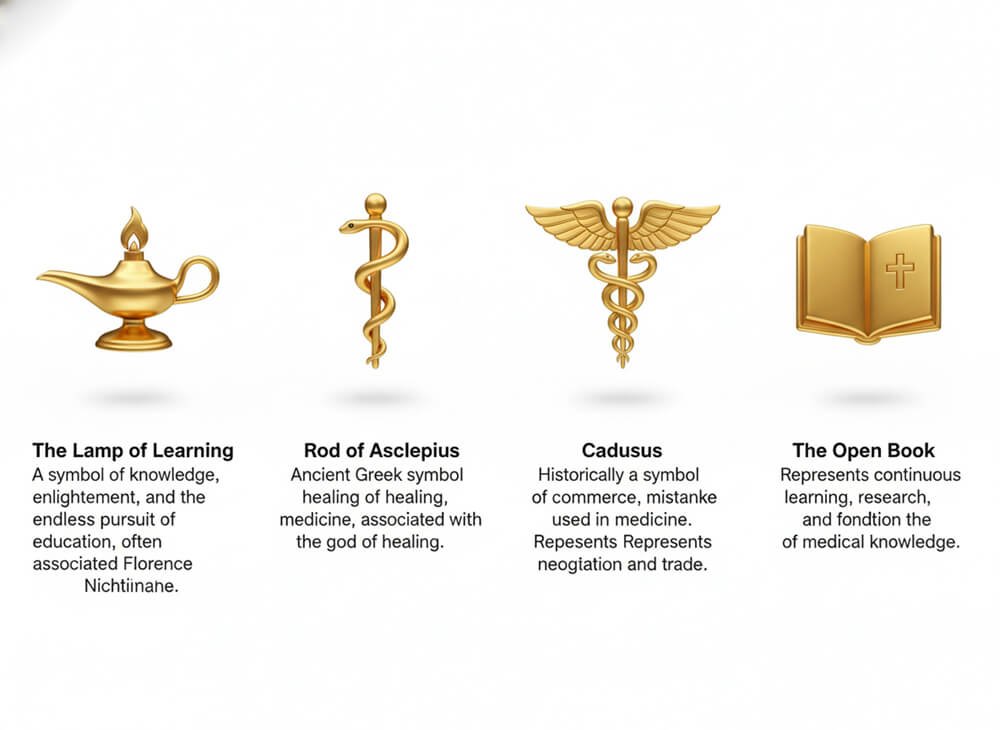
Imetysneula on harvoin yksinkertainen metallirengas. Se on symboliikkaa. Jokainen pintaan kohokuvioitu kuva kertoo osan hoitotyön tarinasta. Puretaan yleisimmät näistä nastaista löytyvät symbolit.
Florence Nightingale -lamppu
Ikonisin ja kestävin symboli on öljylamppu (muistuttaa usein genien lamppua). Tämä on suora viittaus Florence Nightingaleen. Krimin sodan aikana hänet tunnettiin nimellä “Lady lampun kanssa” koska hän käveli kilometrien pituisia sairaalakäytäviä öisin yksin ja tarkkaili sotilaita muun maailman nukkuessa.
Neulassa lamppu edustaa:
- Tiedon valo: Koulutus valaisee tietämättömyyden ja sairauden pimeyttä.
- Valppaus: Sairaanhoitaja on aina tarkkailemassa, aina välittämässä, 24 tuntia vuorokaudessa.
- Toivoa: Haavoittuneelle sotilaalle lamppu merkitsi turvaa ja huolenpitoa lähellä.
Tarina kahdesta sauvasta: Caduceus vs. Asclepius
Näet usein käärmeitä imetysneuloissa, mutta siitä, mikä symboli on oikea, on olemassa suuri historiallinen kiista.
Asklepiuksen esikunta: Tämä symboli sisältää a yksittäinen käärme kietoutunut karkean henkilökunnan ympärille. Asklepios oli kreikkalainen parantamisen ja lääketieteen jumala. Käärmeen ihon irtoaminen edusti uudistumista ja toipumista. Historioitsijat hyväksyvät tämän laajasti “totta” lääketieteen symboli.
Caduceus: Tämän symbolin ominaisuuksia kaksi käärmettä kietoutunut siivekäs sauvan ympärille. Mytologiassa tämä oli sanansaattajajumalan Hermeksen sauva. Hermes oli kaupan, kauppiaiden, matkailijoiden ja - ironista kyllä - varkaiden suojelija. Sillä ei ollut mitään tekemistä lääketieteen kanssa. Kuitenkin 1900-luvun alussa Yhdysvaltain armeijan lääketieteellinen joukko ottivat Caduceuksen tunnusmerkikseen todennäköisesti ikonografian väärinymmärryksen vuoksi. Tämän sotilaallisen adoption ansiosta Caduceus juurtui syvästi amerikkalaiseen lääketieteelliseen kulttuuriin ja on nyt tavallinen symboli “lääketieteellistä tietoa” monissa imetysnastoissa kaupallisesta alkuperästään huolimatta.
Muut avainsymbolit
| Symboli | Historiallinen & Moderni merkitys |
|---|---|
| Risti | Usein Maltan tai Punaisen Ristin. Se symboloi palvelua, uhrautumista ja ammatin juuria uskonnollisissa järjestöissä. Se edustaa “taakka” sairaanhoitajan hoitamasta hoidosta. |
| Avoin kirja | Löytyy yleisesti korkeakouluohjelmien pinneistä. Se tarkoittaa, että hoitotyö on sekä tiedettä että taidetta. Se edustaa “Tiedon kirja” ja näyttöön perustuva käytäntö. |
| Kädet | Symboli hoitotyön kosketeltavasta luonteesta. Toisin kuin muut lääketieteen ammatit, jotka saattavat luottaa etäisyyteen tai tekniikkaan, hoitotyön määrittelee ihmisen kosketus – käden pitäminen, pulssin tarkistaminen ja mukavuuden tarjoaminen. |
| Maapallo | Käytetään symboloimaan terveydenhuollon universaalisuutta. Sairaudet eivät tunne rajoja, eikä myöskään sairaanhoitajan myötätunto. Se edustaa sitoutumista maailmanlaajuiseen palveluun. |
| Kyyhkynen / Oliivinoksa | Universaalit rauhan symbolit. Hoitotyön yhteydessä ne edustavat hoitajan potilaalle tuomaa kärsimyksen mukavuutta ja helpotusta. |
Epätavalliset ja ainutlaatuiset symbolit
Kaikki nastat eivät pysy vakioskriptissä. Historialliset kertomukset paljastavat joitain kiehtovia suunnitteluvaihtoehtoja. Esimerkiksi yhdessä sairaalan sairaanhoitajakoulussa oli a majava niiden pinnoilla. Logiikka? Majavat ovat ahkeria, ahkeria ja muokkaavat ympäristöään ratkaistakseen ongelmia – täydellinen metafora kiireiselle sairaanhoitajalle. Toisessa pinssissä oli a hirven pää. Vaikka se saattaa tuntua oudolta, perustelu oli järkevä: hirven kypsyminen kestää kolme vuotta, mikä vastaa kyseisen tutkinto-ohjelman kolmen vuoden pituutta. Se symboloi myös “leveät hartiat” ja voimaa, joka tarvitaan selviytymään työn fyysisistä vaatimuksista.
Kiinnitysseremonia: Intiimi kulkurituaali
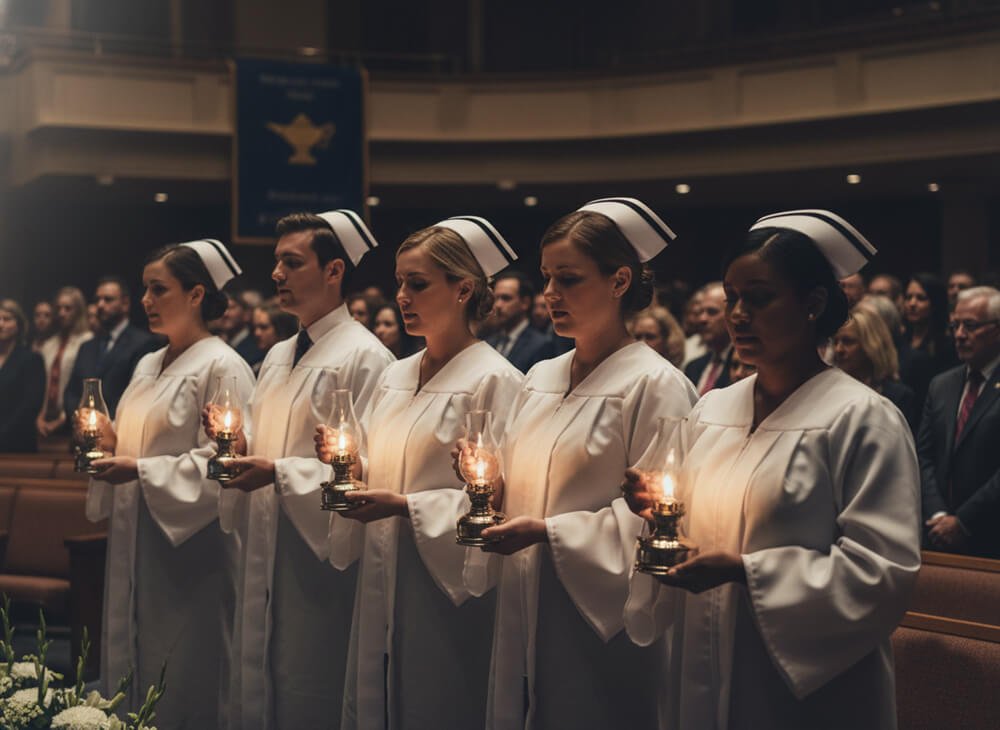
Kysy keneltä tahansa sairaanhoitajalta heidän yliopiston valmistumisestaan, ja heillä saattaa olla epämääräisiä muistoja kuumalla stadionilla istumisesta. Kysy heiltä heidän Kiinnitysseremonia, ja ne todennäköisesti repeytyvät. Tämä erillinen seremonia on sairaanhoitajakoulukokemuksen sydän.
Valmistuminen juhlii akateemista menestystä (tutkinnon saamista), kun taas kiinnitysseremoniassa juhlitaan ammatillista vihkimistä (sairaanhoitajaksi tulemista). Se on tapahtuma, joka on täynnä perinteitä, läheisyyttä ja tunteita.
Seremonian anatomia
Useimmat kiinnitysseremoniat noudattavat samanlaista, kunnioitettua rakennetta:
- Vierailu: Toisin kuin valmistujaisissa, joissa lippuja saattaa olla rajoitettu, opiskelijat kutsuvat usein koko tukijärjestelmänsä – vanhemmat, lapset, puolisot ja mentorit. Tunnelma on vähemmän muodollinen kuin alku, mutta pyhämpi.
- Alkuhuomautukset & Puheet: Seremonia alkaa yleensä tiedekunnan saapuessa. Puheita eivät pidä vain dekaanit, vaan usein myös opiskelijoiden edustajat, jotka kertovat kohortin yhteisistä kamppailuista – vaikeista kokeista, ensimmäisistä kliinisistä kierroksista ja muodostuneista siteistä.
- Palkinnot ja tunnustukset: Ennen kiinnitystä palkinnot jaetaan usein akateemisesta huippuosaamisesta, kliinisestä johtajuudesta tai “Florence Nightingale -palkinto” opiskelijalle, joka parhaiten edustaa myötätuntoa.
- Kiinnitys: Tämä on huipentuma. Opiskelijoita kutsutaan nimellä. He kävelevät lavan poikki kantaen usein omistautumiskorttia. Tiedekunnan jäsen tai läheinen asettaa neulan nauhaansa tai käänteeseensä. Tämä on hetki, jolloin opiskelija liittyy virallisesti ammattiin.
- Omistautuminen: Ainutlaatuinen piirre monissa nykyaikaisissa seremonioissa on omistuskirjoitusten lukeminen. Kun oppilas on kiinnitettynä, kertoja lukee opiskelijan kirjoittaman lyhyen kiitoskirjeen. Näissä muistiinpanoissa kiitetään usein vanhempia taloudellisesta uhrauksesta tai lapsia kärsivällisyydestä (“Kiitos, että ymmärrät, miksi äiti ei voinut pelata, koska hänen piti opiskella”).
- Lampun syttyminen: Kun kaikki opiskelijat on kiinnitetty, auditorion valot himmennetään. Tiedekunnan jäsenet sytyttävät kynttilöitä (tai paristovalaisimet), joita opiskelijat pitävät. Liekki siirtyy ihmisestä toiseen luoden valomeren. Tämä symboloi tiedon siirtoa opettajalta oppilaalle ja Nightingalen valoa.
- Lupaus: Lamppujen hehkussa seisovat uudet sairaanhoitajat lausuvat Florence Nightingalen lupaus (tai vastaava vala). He lupaavat “viettää elämäni puhtaana,” “harjoitan ammattiani uskollisesti,” ja “omistautua heidän hyvinvoinnilleni.”
Kuka kiinnittää sinut? Auktorista perheelle
Yksi kiinnitysseremonian kauneimmista evoluutioista on muutos WHO suorittaa kiinnityksen.
Perinteinen tapa: Historiallisesti kiinnitys oli jäykkä, arvovaltainen teko. Sen suoritti hoitotyön johtaja tai sairaalan johtaja. Se oli a “ritarit” esimiehen toimesta. Se merkitsi, että laitos hyväksyi sinut.
Moderni tapa: Nykyään monet koulut antavat valmistuneen valita pinnerinsä. Tämä avaa oven syvälle tunteisiin hetkiin.
- Mentori: Monet opiskelijat valitsevat kliinisen ohjaajan tai professorin, joka on vaikuttanut heidän koulutukseensa – jonkun, joka rohkaisi heitä, kun he halusivat lopettaa.
- Perheen perintö: On uskomattoman liikuttavaa, kun valmistuneen vanhemman tai isovanhemman, joka on myös sairaanhoitaja, piinaa. Tämä symboloi “soihdun ohittaminen” perheen sisällä. Tarinoita on runsaasti äideistä, jotka kiinnittävät tyttäriä ja luovat visuaalisen hoitolinjan.
- Tukijärjestelmä: Jotkut opiskelijat valitsevat puolison tai lapsen. He eivät ehkä ole sairaanhoitajia, mutta he ovat niitä, jotka uhrasivat aikaa ja energiaa tukeakseen opiskelijan unelmaa. Nähdä 6-vuotiaan lapsen kiusallisen yrittävän kiinnittää vanhemmansa käännettä on puhdasta ilon hetkiä, joka vangitsee ammatin inhimillisen puolen.
Koulukohtaiset perinteet: Identiteettimerkki
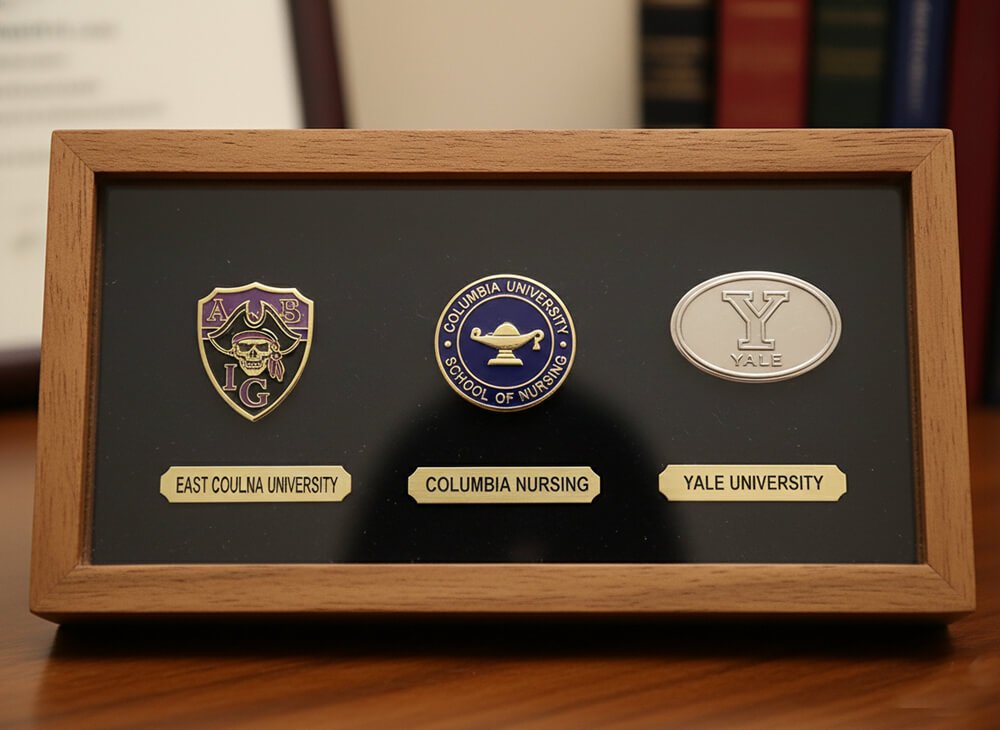
Vaikka symboliikka on universaalia, neulan muotoilu on voimakkaasti paikallista. Se sitoo sairaanhoitajan heidän erityiseen alma materiinsa. Tässä on esimerkkejä siitä, kuinka eri instituutiot lähestyvät pinnisuunnitteluaan:
East Carolina University (ECU): The Shield of Trust
ECU College of Nursing pin on täynnä symboliikkaa. Se perustuu modifioituun “luottamuksen kilpi.” Siinä on kolme pistettä, jotka edustavat rakkautta, armoa ja ymmärrystä. Pinssissä on myös maapallo (maailmanlaajuinen palvelu), kirja ja sulka (tieto) sekä ainutlaatuisesti lampun liekkiin asetettu rubiini, joka symboloi “vilkasta elämää.” Yliopiston motto “Palvella” (To Serve) on koristeltu keskellä.
Columbia University: Nimen evoluutio
Columbia University School of Nursing pin on kehittynyt heijastamaan opiskelijoidensa identiteettiä. Alkuperäinen teksti “Columbian yliopisto,” se päivitettiin hiljattain luettavaksi “Columbia Hoitotyö.” Tämä pieni muutos oli merkittävä alumneille, joiden mielestä se edusti paremmin heidän omaa yhteisöään. Alumnit kuvailevat merkkiä muistutukseksi siitä “hoitotyö on todella hienointa taidetta,” käyttävät sitä ylpeänä osoituksena omistautumisestaan koululle.
Yalen yliopisto: Unity in Adversity
Yalen yliopistolle nastasta tuli vakauden majakka COVID-19-pandemian aikana. Perinteisiä konfettipoppereja sisältäviä juhlia lievennettiin, mutta imetysneulan jakaminen pysyi pyhänä vakiona. Tiedekunta ja opiskelijat kuvailevat neulaa a “yhtenäisyyden symboli,” edustaa sitoutumista kokonaisvaltaiseen hoitoon kaikille ihmisille rodusta tai sukupuolesta riippumatta, jopa keskellä globaalia kriisiä.
Lakeview College of Nursing: vuosisadan historiaa
Vuonna 1894 perustettu Lakeview College of Nursing ylläpitää runsasta arkistoa pinsseistä. He esittelevät ylpeänä nastat vuodelta 1929 – jolloin koulu oli vielä sidoksissa Lakeview Hospitaliin – ja vuodelta 1944, jolloin juhlittiin 50-vuotispäivää. Nykyiset tiedekunnan jäsenet, kuten se, joka kirjoitti ANA:lle, pitävät omat nastansa kirjahyllyissä, jotka on kiinnitetty imetyskorkkiinsa, ja pitävät seremoniaa uusien kollegoiden tervetulotoivotuksena pikemminkin kuin vain valmistumistapahtumana.
Omistusrekisteri: Tarinoita hoitotyöyhteisöstä
Imetysneulan todellinen arvo ei löydy sen metallisisällöstä, vaan tarinoista, joita se kantaa. Illinois Nurses Foundation ja erilaiset hoitotyöblogit ovat koonneet koskettavia kertomuksia, jotka paljastavat, kuinka paljon tämä esine merkitsee sen omistajille. Tässä on todellisia tarinoita sairaanhoitajista, jotka käyttävät neulaa.
1 “Elämää antava” Pin: Gary L.C. Reschak
Gary L.C.:lle Reschak, hänen rintaneulansa on hänen elämänsä tärkein esine. Hän on käyttänyt sitä 46 vuotta valmistumisestaan vuonna 1979. Garylle neula edustaa hänen toimeentuloaan – sen ansiosta hän pystyi elättämään perheensä ja samalla elättämään “elämää” tuhansille potilaille. Hän jäi äskettäin eläkkeelle ystävänpäivänä vuonna 2025 täyttyään 70 vuotta. Vaikka hänellä on muita maisterin tutkintoa edustavia rintaneuloja, hänen alkuperäinen hoitoneula on se, jota hän arvostaa, sillä se avasi oven elinikäiseen palvelukseen.
2. Lost and Found Pin: Laurie Behrendt
Laurie Behrendt palasi yliopistoon 33-vuotiaana kolmen lapsen kanssa. Sairaanhoitajakoulu oli hämärä kotitehtäviä, kliinisiä ja osa-aikatöitä. Kun hän valmistui vuonna 1999, hänen kiinnitysseremoniansa merkitsi hänelle enemmän kuin yliopiston valmistuminen. Hän käytti neulaansa ylpeänä uudessa työpaikassaan päivystyspoliklinikalla – kunnes menetti sen tuhoisasti. Hän tunsi menettäneensä fyysisen todisteen saavutuksestaan. Vuosia myöhemmin hänen kolme lastaan yllättivät hänet. He olivat ottaneet salaa yhteyttä hänen yliopistoon, varmentaneet hänen valmistumisensa ja tilannut korvaavan nastan. Kun he lahjoittivat sen hänelle, Laurie huomautti, että tämä uusi pinssi merkitsi jopa enemmän kuin ensimmäinen, koska se kantoi hänen lastensa rakkautta ja huomaavaisuutta.
3. Muotoiluvuodet: Jeannine Haberman
Jeannine Haberman jakoi kuvan äitinsä neulasta St. Joseph's School of Nursingista Jolietissa, IL:n luokasta vuonna 1960. Noihin aikoihin nunnat johtivat ohjelmaa, ulkonaliikkumiskielto oli tiukka ja hameet mitattiin ennen vuoroja. Jeanninen oma pinssi on peräisin MacMurray Collegesta, koulusta, jota ei enää ole. Hän muistelee tärkkelysvalkoisten univormujen, valkoisen letkun ja skotlantilaisen tartaaniraidan korkkien aikakautta. Hänen neulansa muistuttaa häntä siitä, että hänen hattunsa oli jäänyt IV-letkuun, ja toveruusluokkaa, joka luotti sähköisiin kirjoituskoneisiin ja kirjastovierailuihin. Se symboloi seikkailunhaluisen elämän perustaa.
4. Opettaja palaa: Joanne Whiteside
Joanne valmistui Loyola University Chicagosta vuonna 1994. Hänen pinssi edustaa paikkaa, joka muodosti hänen ammatillisen identiteettinsä. Yhteys oli niin vahva, että 30 vuotta myöhemmin hän palasi samaan yliopistoon Simulaatiolaboratorion tiedekunnan jäseneksi. Nyt hän käyttää merkkiä ei vain valmistuneena, vaan mentorina, joka auttaa seuraavaa sukupolvea ansaitsemaan omansa.
5. 86 vuoden perintö: Melanie Reynolds
Melanie Reynolds jakoi voimakkaan valokuvan toukokuussa 2024. Siinä hänen tyttärensä Grace oli kiinnitettynä St. John's College of Nursingiin. Mutta Grace ei ollut tuntematon; hänet kiinnittivät hänen isoäitinsä Virginia Long (luokka 1968) ja hänen äitinsä Melanie (luokka 1997). Yhdessä kolme naista edustavat 86 vuoden hoitotyötä. Neula tässä perheessä on perinnöllinen kunnianimi.
6. Vuoden 1920 perintö: Margaret Miller
Margaret Millerillä on yli 100 vuotta vanha neula. Se kuului hänen isoäidilleen Lulu Crawshawlle, joka valmistui vuonna 1920 “Illinoisin osavaltion sairaanhoitajien koulutuskoulu” Annan valtion sairaalassa. Koulu suljettiin vuonna 1929, jolloin neulasta tuli harvinainen historiallinen esine. Valtionsinetillä kaiverrettu se yhdistää Margaretin isoäitiin, joka imetti vuonna aikakaudella “vähäpätöisiä tehtäviä” ja tiukka kurinalaisuus. Margaret aikoo lahjoittaa tämän arvokkaan esineen museolle säilyttääkseen sen historian.
7. Pääsy ja mahdollisuus: Linda Ruholl
Vuonna 1964 valmistuneelle Linda Ruhollille neula oli köyhyyden voittamisen symboli. Köyhällä maatilalla kasvatettu isä odotti hänen työskentelevän hansikastehtaassa. Sen sijaan hän työskenteli sihteerinä 127 dollarilla kuukaudessa ja säästi jokaisen pennin voidakseen maksaa 1 200 dollarin lukukausimaksua sairaanhoitajakoululle. Hänen pinssi edustaa “pääsy ja mahdollisuus”-todiste siitä, että maalaistytöstä voi tulla ammattilainen karkeuden ja päättäväisyyden kautta. Myöhemmin hän ansaitsi tohtorin tutkinnon, mutta alkuperäinen hoitoneula on edelleen hänen työelämänsä perusta.
8. Daavidin tähti: Denise Pang Hong
Denise Pang Hong jakoi pinssinsä Michael Reese Hospital School of Nursingista (1890-1981). Neula on muotoiltu Daavidin tähden. Tämän koulun perusti juutalainen yhteisö palvelemaan juutalaisia potilaita, ja se oli yksi harvoista ohjelmista, joissa ei syrjitty rodun perusteella 1940-luvulla. Denise valitsi tämän ohjelman, koska hänellä ei ollut varaa yliopisto-opetukseen ja vähemmistöjen apurahat olivat niukat. Neula edustaa kestävyyttä ja tasa-arvon taistelua terveydenhuollon koulutuksessa.
9. Lohduttava läsnäolo: Kandie Halleran
Kandie Halleranista tuli sairaanhoitaja pinin takia. 25-vuotiaana, kun hän joutui kauhistuttavan kohdun poistoon, hän itki hallitsemattomasti sairaalahuoneessaan. Sairaanhoitaja nimeltä Ella astui sisään, istui hänen vierellään, piti häntä kädestä ja rauhoitti hänen pelkonsa. Ellan myötätunto inspiroi Kandien menemään sairaanhoitajakouluun. Vuosia myöhemmin, kun Ella kuoli, hänen perheensä lahjoitti Ellan imetysneulan ja lippalakin Kandielle. Kandie arvostaa nyt tätä nastaa sen perimmäisenä symbolina “sairaanhoitajan sydän” hän pyrkii jäljittelemään.
10. Valtuutusmerkki: “Old Fool RN”
Eläkkeellä oleva sairaanhoitajabloggaaja, joka tunnetaan nimellä “Old Fool RN” kuvaili neulaa psykologiseksi ankkurina. Uransa alkuaikoina, kun hän tunsi olevansa epävarma tai hämmentynyt, hän katsoi neulaansa alas. Se muistutti häntä siitä, että kirurgin päällikkö oli kiinnittänyt sen häneen ja sanoi, että hän oli niin “tarpeeksi hyvä.” Epäselvinä hetkinä nasta oli ulkoinen vahvistus, jota hän tarvitsi jatkaakseen. Hän kirjoittaa, “Pinni on päässyt minut läpi helvetin menneisyydessä, ja mielestäni on luultavasti järkevä idea haudata minut sen kanssa.”
Pins-tyypit ja mukauttaminen
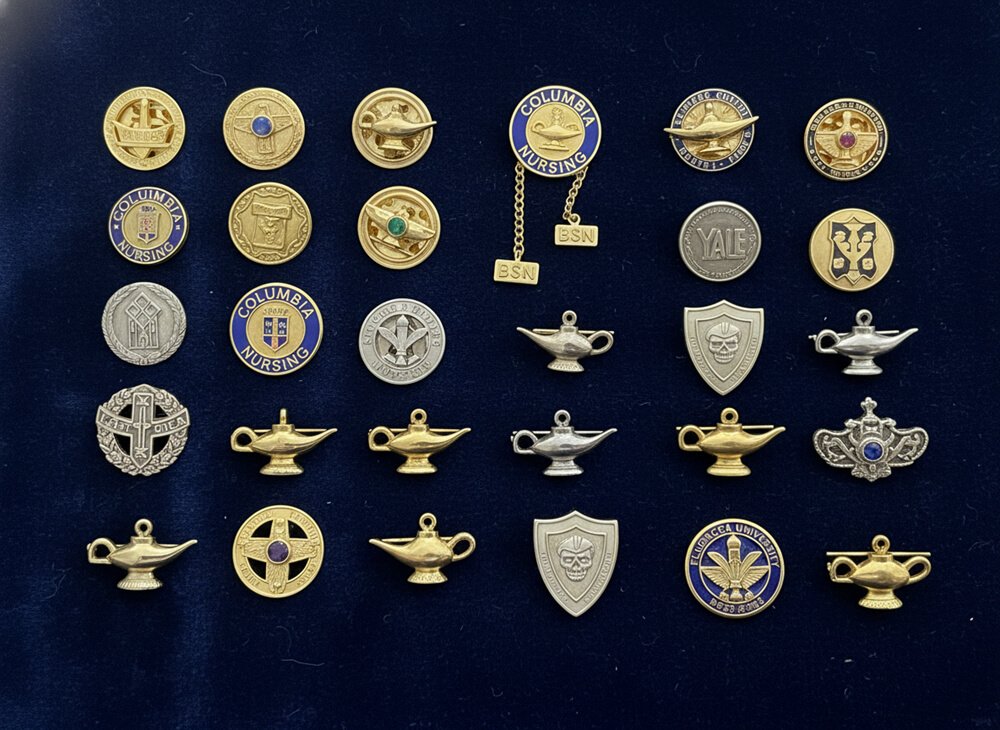
Suunnittelu on sidottu kouluun, mutta neula on henkilökohtaista omaisuutta, ja valmistuneilla on usein valinnanvaraa sen koostumuksen ja yksityiskohtien suhteen.
Pinssit roolin ja tutkinnon mukaan
- RN-nastat (rekisteröity sairaanhoitaja): Nämä ovat yleisimpiä. Niissä on usein koulun harja tai lampun symboli.
- LPN/LVN-nastat (lisensoitu käytännön/ammatillinen sairaanhoitaja): Nämä nastat kunnioittavat käytännön hoitotyöohjelmien suorittamista ja ovat erillisiä LPN-roolissa.
- BSN Pins (Bachelor of Science): Neljän vuoden tutkinnon suorittaneet saavat usein nastat, jotka osoittavat tätä korkeampaa akateemista saavutusta.
- NP-nastat (Nurse Practitioner): Niille, joilla on edistynyt tutkinto, nämä nastat – usein kullanväriset – merkitsevät korkeaa asiantuntemusta ja erikoistumista.
Materiaalivalinnat
- 14K kultaa: Kultastandardi. Nämä ovat perintöesineitä, jotka on suunniteltu kestämään eliniän ja siirrettäväksi. Ne eivät tahraa ja niillä on merkittävää rahallista ja tunnearvoa.
- Kullattu tai päällystetty: Edullisempi vaihtoehto, joka tarjoaa kultaisen ulkonäön.
- Sterlinghopea: Klassinen, lääketieteellinen ilme. Hopea on kestävää ja kaunista, ja hopeakoruja käyttävät suosivat sitä usein.
- Emali: Useimmat nastat käyttävät kovaa emalia koulun värien näyttämiseen (esim. siniset reunat, punaiset ristit).
Räätälöintiasetukset
Neulan tekeminen ainutlaatuiseksi on vaalittu perinne.
- Kaiverrus: Useimpien sairaanhoitajien nimikirjaimet ja valmistumisvuosi on kaiverrettu taakse. Jotkut lisäävät opiskelijatunnuksensa.
- Jalokivet: On yleistä lisätä syntymäkivi tai koulun värinen kivi neulaan. Kuten ECU-esimerkistä nähdään, näillä kivillä voi olla symbolinen merkitys (kuten elinvoimaisuuden rubiini).
- Vartijat: A “vartija” on pieni koru, joka kiinnittyy päätappiin pienen ketjun kautta. Niillä on käytännöllinen tarkoitus (pitää tappi turvassa, jos lukko epäonnistuu) ja kuvaava. Vartijat puhuvat usein “BSN,” “RN,” “MSN,” tai näytä nuija (opiskelijahallinnolle) tai risti.
Etiketti: Pinssin käyttö ja pitäminen
Missä sitä kannattaa käyttää
Imetysneula on aina päällä vasen käänne, sijoitettu lähellä sydäntä. Tämä sijoitus ei ole sattumaa; se korostaa, että hoitotyö on sekä sydämen että mielen ammatti. Neulaa on tarkoituksenmukaista käyttää ammatillisissa pääkuvauksissa, valmistujaisissa, sairaanhoitajakonferensseissa ja erityisissä sairaalatapahtumissa.
Turvallisuusnäkökohdat
Vuonna “vanhat ajat,” sairaanhoitajat käyttivät neuloja valkoisissa univormuissaan joka vuorossa. Nykyään käyttö vaihtelee. Infektioiden torjuntaprotokollat monissa sairaaloissa estävät koruja, joissa voi olla bakteereja. Lisäksi metallinastat voivat naarmuttaa potilaita siirron tai läheisen kosketuksen aikana. Sairaanhoitajat aktiivisilla alueilla, kuten päivystyspoliklinikalla tai pediatriassa, siirtävät neulansa usein turvalliseen paikkaan ja käyttävät niitä vain erityistilanteissa menetysten tai loukkaantumisten estämiseksi.
Pin-koodin näyttäminen
Koska sitä ei aina käytetä päivittäin, monet sairaanhoitajat luovat näytöksiä pinsseilleen. Varjolaatikot ovat suosittuja, joissa neula yhdistyy sairaanhoitajan stetoskooppiin, valmistumistupsuun ja tutkintoon. Toiset kiinnittävät neulan vanhanaikaiseen sairaanhoitajan lippikseen (jos heillä on) ja näyttävät sen kirjahyllyssä.
Virstanpylvään juhliminen: lahjat ja juhlat
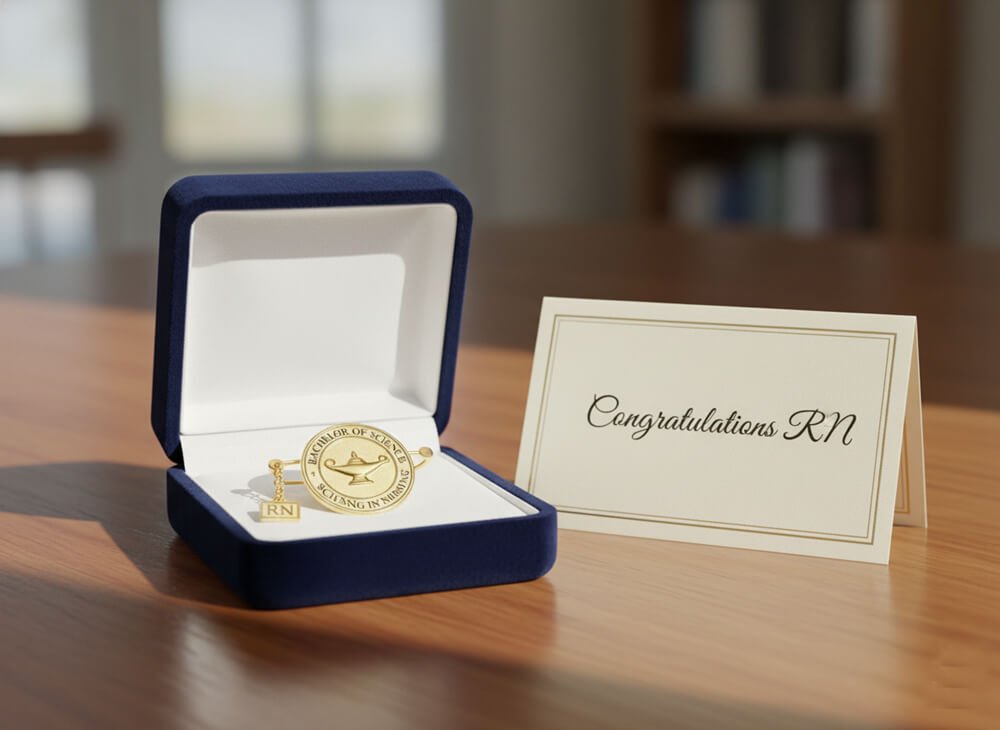
Sairaanhoitajakoulun valmistuminen on monumentaalinen saavutus. Koska kiinnitysseremonia eroaa valmistumisesta, se vaatii usein erillisen juhlan, joka tunnetaan nimellä a “Kiinnitysjuhlat.”
Pinning Party
Tämä on opiskelijaa tukeneiden ystävien ja perheen intiimi tapaaminen. Kyse on vähemmän tutkinnosta vaan enemmän urasta. Se on loistava tilaisuus antaa ammattikohtaisia lahjoja.
Lahjaideoita uudelle sairaanhoitajalle
- Pin-päivitys: Jos koulu tarjoaa epäjaloa metallineulaa, 14K kullan päivityksen maksaminen on lahja, joka kestää eliniän.
- Pinsuojit: Ketjusuoja on harkittu lahja, joka osoittaa, että haluat auttaa heitä suojaamaan kovalla työllä ansaittua merkkiään.
- Vintage-lamput: Pieni keramiikka “Nightingale lamput” ovat perinteisiä lahjoja, jotka symboloivat seremoniaa.
- Suojaus: Laadukas korurasia tai samettitasku, joka pitää pinn turvassa, kun sitä ei käytetä.
Johtopäätös: Ikuinen valo
Ristiretkien pölyisiltä teiltä nykypäivän korkean teknologian teho-osastoihin, hoitoneula on säilynyt tehokkaana palvelun symbolina. Se on paljon enemmän kuin metallipala; se on konkreettinen esitys “valoa” sairaanhoitajat tuovat maailmaan.
Neula edustaa unettomia öitä anatomian opiskeluun, vapisevia käsiä, jotka oppivat aloittamaan IV:n, ja rohkeaa sydäntä, joka vaadittiin istuakseen kuolevaisen potilaan kanssa. Se yhdistää jokaisen modernin sairaanhoitajan Florence Nightingaleen ja Knights Hospitalleriin luoden katkeamattoman hoitoketjun, joka kattaa vuosituhannen.
Valmistuneille: Käytä neulaasi sen ansaitsemalla valtavalla ylpeydellä. Et ole juuri oppinut ammattia; olet vastannut puheluun. Perheille: Tietäkää, että tämä pieni kunniamerkki on korkein kunnia, jonka uusi sairaanhoitaja voi saada. Se ei ole vain symboli siitä, mitä he ovat tehneet; se on lupaus siitä, mitä he tekevät.
Usein kysytyt kysymykset (FAQ)
Onko kiinnitysseremonia sama kuin valmistuminen?
Ei, ne ovat erillisiä tapahtumia. Valmistuminen (alkaminen) on yliopistonlaajuinen akateeminen seremonia, jossa jaetaan tutkintoja. Pinning Ceremony on erikoistunut, intiimi ammatillinen perehdytys erityisesti hoitotyön opiskelijoille. Sairaanhoitajat pitävät kiinnitysseremoniaa usein mielekkäämpänä, koska se juhlistaa heidän aloittamistaan ammattiin eikä vain kurssien suorittamista.
Pitääkö minun ostaa oma imetysneula?
Riippuu koulusta. Jotkut ohjelmat sisältävät tavallisen epäjalometallineulan kustannukset lukukausimaksuihin tai valmistumismaksuihin. Monet koulut antavat kuitenkin opiskelijoille mahdollisuuden ostaa omia nastansa. Tätä pitävät usein parempana opiskelijat, jotka haluavat siirtyä käyttämään jalometalleja, kuten sterlinghopeaa tai 14K kultaa, tai jotka haluavat lisätä takaosaan henkilökohtaisia kaiverruksia.
Mitä minun pitäisi pukeutua kiinnitysseremoniaan?
Perinne sanelee, että valmistuneet käyttävät sairaanhoitajan univormuja (kuorintoja) tai valkoista laboratoriotakkia seremoniassa. Tämä symboloi heidän valmiuksiaan työvoimaan. Jotkut koulut voivat sallia ammattimaisen pukeutumisen, mutta univormu on klassinen valinta. Vieraiden tulee pukeutua puolimuotoiseen tai liikeasuun.
Miksi imetysnastassa on lamppu?
Valaisin on kunnianosoitus Florence Nightingalelle, modernin hoitotyön perustajalle. Hän oli kuuluisa siitä, että hän kiersi yöllä Krimin sodan aikana öljylamppu kädessään. Neulassa oleva lamppu symboloi “tiedon valo,” valppautta ja lohdutusta sairaanhoitajat tuovat potilaille heidän synkimpinä aikoina.
Voinko mukauttaa imetysneulaani?
Kyllä. Vaikka etuosan suunnittelu on yleensä koulun määrittelemä (jossa on koulun harja), voit mukauttaa metallin laatua (kulta vs. hopea) ja lisätä persoonallisia yksityiskohtia. Yleisiä mukautuksia ovat nimikirjainten ja valmistumisvuoden kaiverrus takana, jalokiven (kuten syntymäkiven) lisääminen tai “vartija” viehätys (kuten “BSN” tai “RN”) ketjulla.
Mitä eroa on imetysneulan ja valkoisen takkiseremonian välillä?
Valkotakkin seremonia tapahtuu yleensä klo alku opiskelijan koulutuksesta tai kliinisistä kierroksista, mikä symboloi hänen pääsyään lääketieteen/sairaanhoitajan opiskeluun. Kiinnitysseremonia tapahtuu klo loppu ohjelman osa, joka symboloi koulutuksen suorittamista ja pääsyä ammatilliseen työvoimaan.